Marketplace development is more than stitching listings and payments together. We shape product, service, or rental models around clear commission logic, vendor KYC, and the trust signals that make repeat buyers come back. From peer-to-peer marketplaces to curated B2B exchanges, our team builds clean APIs, split-payment flows, and rating systems that actually do something.
You focus on growing both sides of the market. We keep the engine fast, secure, and ready when traffic doubles.


Instant KYC, transparent commission display, and a guided dashboard so sellers start listing in minutes instead of giving up on the signup.
Stripe Connect handles automatic split payouts, refunds without manual intervention, and audit-ready transaction logs for tax season.

Scalable APIs that add categories, regions, and promotions without core rewrites every time the business model shifts.

languages from day one
Webshop for custom printed socks, without a checkout

organic traffic grow in 3 months
Custom B2B WordPress website for Pine Tree Lane

average session length, up 61%
Resay: custom web application for smarter workflows

increase in monthly website visits
Book subscription website design and custom development for House of Books
more user actions after redesign
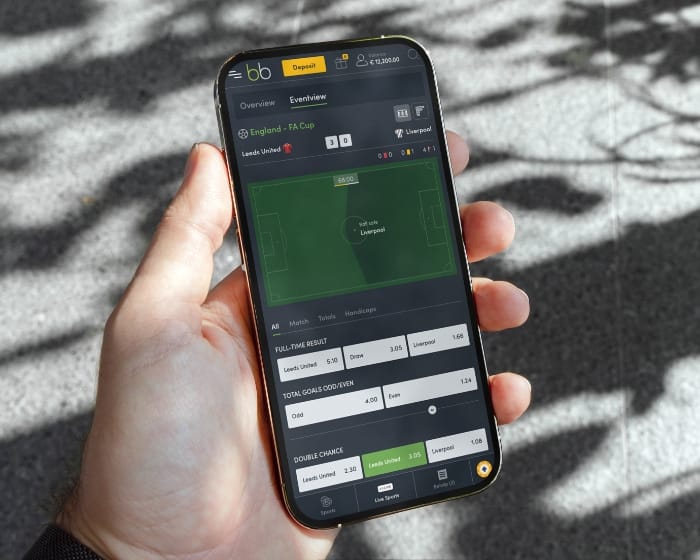
Custom sportsbook platform UX/UI design and development

drop in job listing bounce rates
FlevoDirect: recruitment website with ATS integration
A successful multi-vendor marketplace relies on strong APIs, user trust, and expert marketplace development. Here’s how we ensure seamless performance.
01
We map supply, demand, commission logic, and trust signals into user stories for buyers and vendors. Output is a clear marketplace rules document before code starts, so scoping decisions don’t haunt the build later.
02
Laravel or Node for the core depending on team familiarity and integration requirements, React for the front end, Stripe Connect for split payments. Tech choices match the project, not the agency’s preference.
03
Signup, KYC, and product listing screens that vendors can complete before their coffee cools. We measure drop-off at each step in early testing and iterate before launch, not after.
04
Instant payouts, escrow options, fraud checks, and PSD2 SCA compliance built into the payment flow. Card disputes and chargebacks routed to a clear admin workflow rather than a customer-support inbox.
05
Load tests on ratings, messaging, dispute flows, and search performance at expected peak traffic. We document failure modes (what breaks first, what degrades second) so launch day isn’t where you discover the bottleneck.
06
Deploy with monitoring in place, track conversion funnels on both sides of the marketplace, ship feature changes every sprint. The metrics that matter (vendor activation, buyer return rate, transaction volume) drive the roadmap.
FlevoDirect, University of Twente (UT), VIA Sports Experiences, Sokkies. And a few hundred other companies you might not know, but which have certainly been well served. That, on reflection, is the whole story.







Studio Ubique builds marketplace platforms that survive past the launch celebration. Clients stay for code that still makes sense in year three, transparent timelines, and a team that picks up the phone.
5.0


“Studio Ubique brought our vision to life with skill, passion, and precision, our website now truly reflects the soul of House of Books.”
5.0

“Studio Ubique continue to do really excellent work! They are great at taking direction, but also willing to advise when ideas clash with good design. A great team to work with.”
5.0
“Studio Ubique’s flexible, creative approach and seamless collaboration boost our site’s design and impact, truly a trusted digital partner.”
5.0

“Great ideas, smooth communication, and a pleasure to work with, Studio Ubique made building our new website a seamless, collaborative process.”
5.0

“Studio Ubique earned our trust with their expertise and results. What started as one project grew into a long-term collaboration thanks to their consistent delivery and professionalism.”
The questions that come up most often, answered here. Yours not among them? Just ask, there's a human on the other end.
SaaS marketplace platforms (Sharetribe, Arcadier, CS-Cart Multi-Vendor, Mirakl for enterprise) work when your needs match what they offer: standard vendor onboarding, common payment flows, generic search and category structure, basic commission models. Monthly fees scale with vendor count or transaction volume, but you avoid build cost and time. Good fit for general marketplaces without unusual data models or specific brand requirements.
Custom build makes sense when your niche has structural requirements SaaS can’t model cleanly: industry-specific listing fields, custom matching or recommendation logic, unusual commission structures (per-product, per-transaction, hybrid, performance-based), deep integrations beyond the SaaS’s connector library, regulatory requirements (financial services, regulated goods), or brand and UX requirements that hit the SaaS’s customisation ceiling. The trade-off is build investment up front, the payoff is owning the platform without monthly fees that scale with success. Custom software development work covers when build versus buy is the right call.
Five main drivers: scope of features (basic listing and transaction marketplace versus full platform with custom matching, recommendations, multi-role permissions, social features), depth of payment work (single payment method versus multi-currency with split payouts, escrow, hold periods, dispute handling), compliance requirements (general consumer marketplace versus regulated industries with KYC, AML, tax reporting), multi-region and multi-language requirements, and design ambition (template-based versus fully custom UX).
Typical project ranges: MVP multi-vendor marketplace with core flows (vendor onboarding, listings, transactions via Stripe Connect, basic moderation) sits between €30,000 and €80,000. Larger builds with custom matching, multi-region setup, deeper compliance work, and ongoing iteration reach €100,000 to €300,000. Our hourly rate is €60 to €65 across roles. Pricing and rates page covers the broader rate structure.
Laravel and Node are both production-grade for marketplace work. Laravel suits projects with structured data models, complex business logic, and teams more comfortable with synchronous request handling. Node suits projects with heavy real-time features (live chat, notifications, marketplace activity feeds) or where the team is already JavaScript-native end to end. The choice depends on team familiarity and integration requirements, not on agency preference.
Stripe Connect is the default because it solves the actual hard problems of marketplace payments: split payments between buyer, platform, and vendor in a single transaction, automatic payout scheduling, vendor onboarding with built-in KYC, multi-currency support, and PSD2 SCA compliance for EU transactions. Alternatives exist (Adyen for Marketplaces, Mangopay for EU-specific needs, Mollie Connect for smaller volume), and we recommend the alternative when it fits the specific case better. Custom platform work covers the broader stack discussion per project.
All three are part of the data model from day one when scoped that way. Multi-currency: prices stored per locale with conversion rules, payments processed in the buyer’s currency, payouts in the vendor’s preferred currency. Multi-language: locales stored as fields on listings, profiles, and category content, hreflang-friendly URLs, translation workflows in the CMS rather than manual per-language updates. Multi-region: region-specific legal pages, payment methods (iDEAL for the Netherlands, SEPA across Europe, card payments globally), and compliance handling.
What complicates these: tax handling (VAT for EU, sales tax for US with state-by-state rules, GST for other regions), region-specific consumer protection laws (right of withdrawal, statutory warranties, dispute procedures), and currency rounding for split payouts when the buyer pays in one currency and vendors get paid in another. These get scoped during architecture, not retrofitted. CMS development covers the multi-language structure in more depth.
KYC (Know Your Customer) is built into the vendor onboarding flow on every build. The depth depends on your jurisdiction and risk profile: identity verification through Stripe Connect’s built-in flow covers most consumer marketplace cases, manual review with business registration document upload for B2B marketplaces with higher transaction values, third-party KYC services (Onfido, Veriff, Sumsub) for regulated industries or high-volume international platforms.
AML (Anti-Money Laundering) checks scale similarly: transaction monitoring built into the platform for unusual patterns, integration with monitoring services for higher-risk verticals. Tax reporting: vendor income summaries generated automatically, 1099-K filing support for US marketplaces, DAC7 reporting for EU marketplaces above the threshold (since 2023). For regulated industries (financial services, gambling, certain goods), we coordinate with compliance consultants who specialise in the framework rather than claiming expertise we don’t have. Discovery call for compliance-specific projects.
Common commission models: flat percentage on each transaction (standard for general marketplaces), tiered percentage based on vendor volume or category, flat fee per listing or per transaction (common for classifieds-style marketplaces), subscription-based vendor membership with reduced or zero per-transaction fees, hybrid models combining subscription with reduced commission. We’ve also built performance-based commission (lower percentage for vendors hitting quality thresholds), promotional commission rates, and category-specific rates.
Payouts via Stripe Connect run on configurable schedules: daily, weekly, or monthly, with manual override available for individual vendors. Hold periods can be set for chargeback risk management (typically 3 to 14 days depending on product type), and the entire flow logs to an audit trail that vendors can view in their dashboard. Refund handling is automatic when initiated by the buyer through the platform: the platform commission is also refunded proportionally, not lost. Custom platform work covers the deeper implementation patterns.
This is a marketing and operations question more than a technical one, but the technical choices either help or hurt. The standard pattern: solve supply first (recruit vendors before launching to buyers), seed the platform with curated inventory or partner content before public launch, geographic concentration at start (one city, one region, one vertical) rather than trying to launch globally, and friction-free vendor onboarding so early supply isn’t deterred by signup complexity.
What the platform should support: vendor referral mechanics so existing vendors recruit others, transparent commission and payout terms shown before signup, fast first-listing experience (clear minimum required fields, save-as-draft, preview before publishing), and analytics for vendors so they understand what’s working. We’ve worked with marketplace platforms through their launch period and know which technical decisions accelerate the supply-demand flywheel and which get in the way. Recent project work includes platforms across launch and growth phases.
Contact
Not everyone likes to write. Rather talk to someone first? Book a 30 to 45 minute intro call through Calendly. It's free, and by the end you'll know whether a proposal makes sense.
Book a call(opens in a new tab)Tell us what's stuck, what you want to build, or what needs fixing. We usually reply within 1-2 business days.