Web design built on UX research, brand strategy, and layouts designed to convert. Websites that look right and do a job, not just sit there looking nice.

We combine user experience, visual design, and performance work to build websites that look right and turn visitors into customers. Five areas we focus on:

Structured navigation, clear flows, and polished visuals guide people toward the action that matters: signing up, booking a demo, or buying.

Every site is built mobile-first, with layouts, images, and interactions that adapt across devices. No visitor lost to pinch-zoom frustration on a phone.

Semantic HTML, image compression, and caching rules build sites that load fast (a sub-2-second target on most pages), improve Core Web Vitals, and give your SEO a clean foundation.

Strategic CTA placement, heatmap analysis, and A/B-tested layouts turn browsing sessions into measurable conversions: leads, downloads, or sales.

Detailed design comps, reusable component libraries, and clear style guides give developers a clean handoff, which cuts build time and reduces costly revisions.
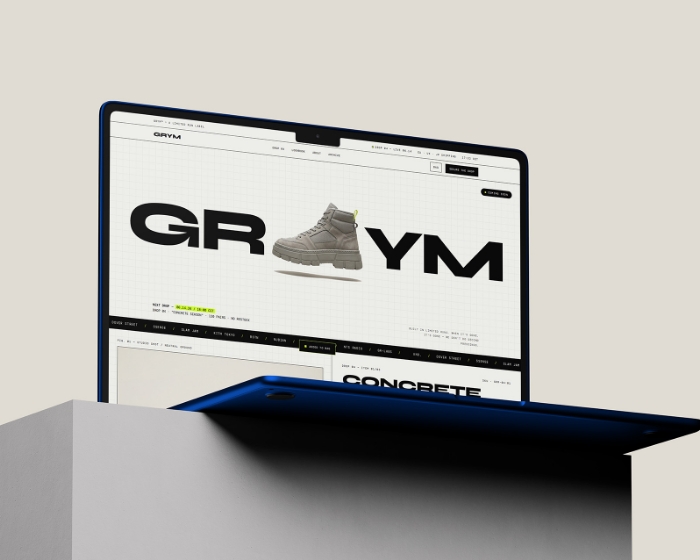
page storefront, brand to cart
Streetwear ecommerce website design, a concept
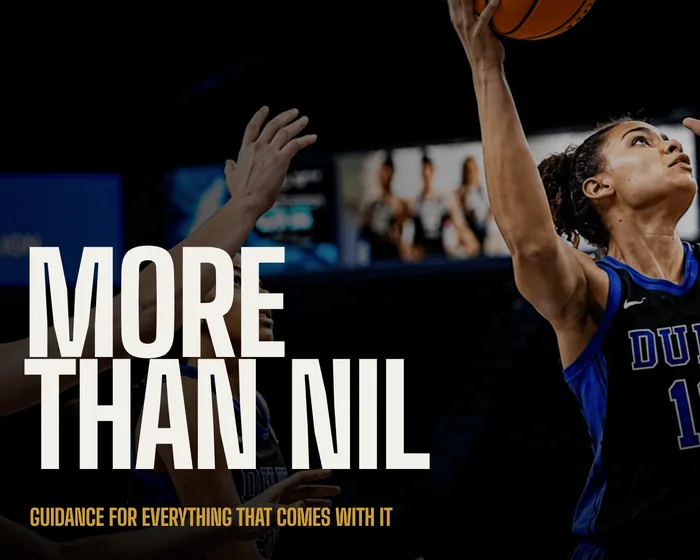
days ahead of a key player event
Launch Sports Management
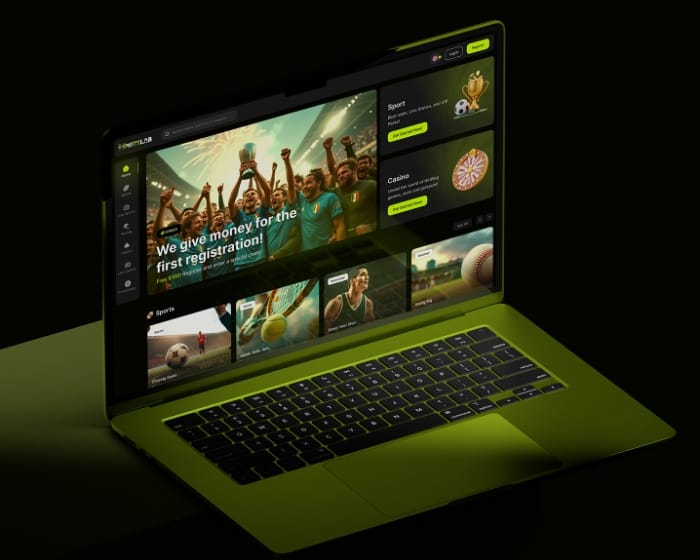
dev cost savings since 2023
Sportsbook UI design & dedicated dev team

faster development kickoff time after our XD hand-off
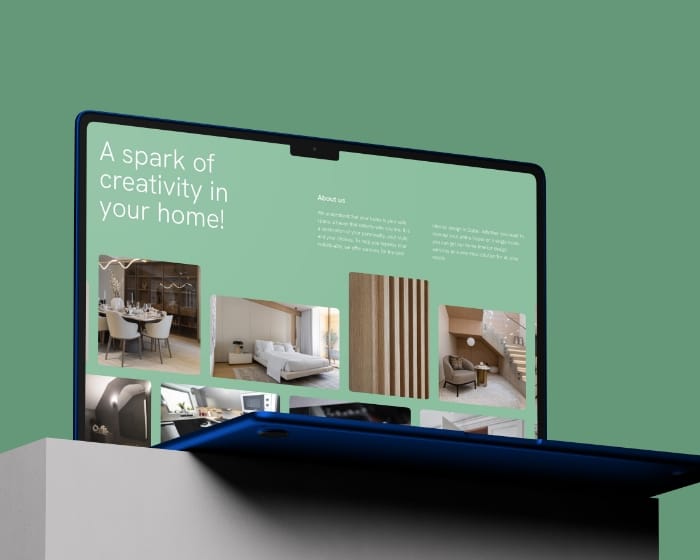
Dark-mode branding and website for a premium software agency
more configurator completions
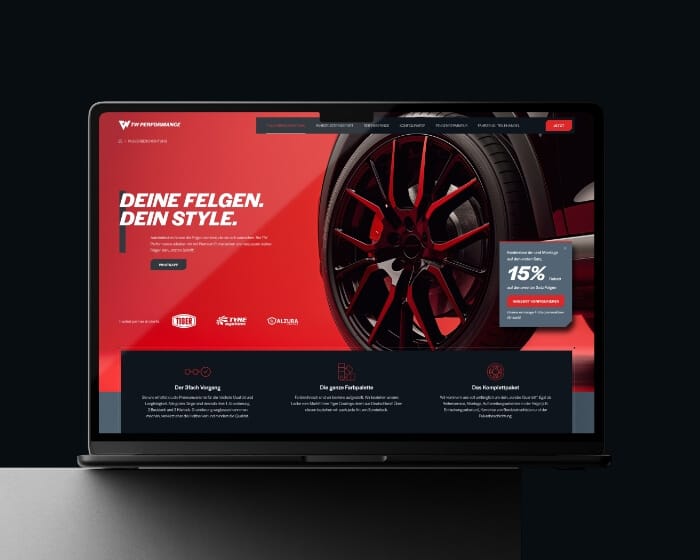
Performance-driven design for an automotive aftermarket brand
organic traffic grow in 3 months
Custom B2B WordPress website for Pine Tree Lane
A good website is built on strategy and measurable outcomes, not on picking a theme and hoping. The six steps below describe how we work:
01
We start with a deep dive: your business goals, target audience, technical requirements and success metrics. This shared brief becomes our north star for every design and development decision.
02
Through competitor audits, user surveys and content mapping, we build wireframes and user flows that validate early assumptions, ensuring a solid, user-centred foundation before any visuals begin.
03
Once wireframes are approved, we design high-fidelity layouts with brand-aligned style guides. Interactive prototypes (Figma or Sketch) let you click through the experience before development starts.
04
Our developers convert designs into clean, responsive code, integrating CMS, eCommerce or custom functionality. Regular check-ins keep you informed and us aligned on every feature and bug.
05
Before launch, we run speed audits, cross-browser testing, and security scans. Friction points get refined through A/B tests so the final product is fast and stable.
06
Your website goes live, DNS updates, performance monitoring and quick bug fixes follow. We provide ongoing analytics reviews, content updates and conversion-rate optimisation to keep the site thriving.
Studio Ubique designs websites for startups and mid-sized companies, from first-time builds to redesigns of sites that stopped pulling their weight. Since 2012, with clients across 15+ countries.
5.0


“Studio Ubique brought our vision to life with skill, passion, and precision, our website now truly reflects the soul of House of Books.”
5.0

“Project meets my expectations, good communication with the designer.”
5.0
“Studio Ubique continue to do really excellent work! They are great at taking direction, but also willing to advise when ideas clash with good design. A great team to work with.”
5.0
“Studio Ubique’s flexible, creative approach and seamless collaboration boost our site’s design and impact, truly a trusted digital partner.”
5.0

“Studio Ubique boosted our site’s speed, security, and UX. With timely delivery, proactive updates, and expert execution, they’ve become a trusted partner in our digital growth.”
5.0

“From rebranding to web design, Studio Ubique has been a key partner, proactive, efficient, and always exceeding expectations with clear, seamless communication.”
5.0
“We are very happy with our new homepage. It perfectly reflects the style we want to convey. The process was quick, and the design was created in no time. We are super happy! :)”
The questions that come up most often, answered here. Yours not among them? Just ask, there's a human on the other end.
A typical web design project covers the full path from strategy to launch: a discovery phase to define goals and audience, UX work (information architecture, user flows, wireframes), visual design (brand-aligned layouts, a style guide, interactive prototypes), front-end development that turns the design into working responsive code, CMS or e-commerce integration, testing across browsers and devices, and launch.
What sits outside a standard web design project and is scoped separately: ongoing content writing beyond the core pages, photography and video production, complex custom functionality (booking systems, calculators, member areas), and long-term marketing like SEO campaigns or paid ads. We list these as separate line items in proposals so you see exactly what the web design fee covers and what would be additional. The goal is no surprises at invoice time.
Hourly rate is €60-€65 across all roles. A focused marketing website (a defined set of pages, standard CMS, clear brand input) typically runs €8,000 to €20,000. A larger site with custom design work, more pages, multi-language, or specific functionality runs €20,000 to €50,000. Web apps, e-commerce platforms, and complex custom builds run higher and are scoped individually.
What moves the cost most: number of unique page templates (not total pages, ten blog posts on one template is cheap, ten unique layouts is not), how much custom functionality is involved, content readiness on your side, and how many rounds of revision the project expects. A site with clean brand guidelines and ready content costs less than one where those get figured out mid-project. See our pricing page for the broader framework, or book a discovery call to scope your specific project.
Most marketing websites run 8 to 14 weeks from kickoff to launch. The phases break down roughly as: discovery and strategy (1 to 2 weeks), UX and wireframing (2 to 3 weeks), visual design (2 to 4 weeks), development (3 to 4 weeks), and testing plus launch (1 to 2 weeks). Larger or more custom projects run longer, and the phases overlap rather than running strictly one after another.
What slows projects down most is rarely the design or development work itself. It is usually content (copy and images arriving late), feedback cycles (a review that takes two weeks instead of two days), and scope changes mid-project. We are honest about this in discovery: a project where your side has content ready and reviews promptly can run at the fast end of the range. One where those lag will run longer regardless of how fast we work.
WordPress is our most common choice for marketing and content-driven websites, built with Advanced Custom Fields rather than a page builder like Elementor or WPBakery. That gives you clean code, fast load times, and an editing experience where content updates do not require a developer or risk breaking the layout. We avoid bloated page-builder setups because they get slow and messy over time.
For other needs: WooCommerce or Shopify for e-commerce, Next.js or a headless setup for sites that need a fast custom front-end, and bespoke builds for web apps and custom functionality. We pick the platform based on what the project actually needs, not on what we feel like building. If you already have a platform preference or an existing site on a specific stack, we work with that. The platform decision happens in discovery, with the trade-offs explained in plain terms.
Yes, and it is often the better call. The first question is whether the existing site has good bones: a sound structure, working technical foundation, content worth keeping. If it does, a redesign that keeps the structure and rebuilds the visual and UX layer costs less and runs faster than a from-scratch build. If the foundation is broken (slow, badly structured, on an unmaintainable platform), starting over is the honest recommendation even though it costs more.
For redesigns of sites with existing search rankings, we plan URL structure and redirects carefully so the new site does not lose the SEO equity the old one built up. That means mapping old URLs to new ones, setting up 301 redirects, and keeping the content that ranks. A redesign that ignores this can tank organic traffic on launch day. We treat it as part of the project, not an afterthought.
A website is not finished at launch, it is just live. After launch you need security updates, plugin and platform updates, backups, performance monitoring, and the occasional fix when something breaks. For that we offer website support packages: Care (€240/month, 4 hours, 24-hour response), Growth (€480/month, 8 hours, 8-hour response), or Partnership (€960/month, 16 hours, 4-hour response). Three-month minimum, then monthly cancellable with one month notice.
Beyond maintenance, most sites benefit from ongoing improvement: conversion-rate optimisation based on real analytics, content updates, and iterating on what the data shows. Some clients handle this in-house and just want maintenance cover. Others want us involved in the ongoing optimisation. Both work. We will not push a support package you do not need, but we will be clear that a site with zero maintenance slowly degrades: updates pile up, security gaps open, and small issues become big ones.







Book a quick 30 min video call, we will show you exactly what to fix. We reply within 24 hours.