The backend is what your users never see and what your business can’t afford to break. We build the APIs, data models, integrations and architecture behind your product. Laravel, Node.js, Django, or serverless on AWS or GCP, picked based on what your product needs, not on what’s trendier this quarter.


Six areas where we focus when building backends. Each one affects whether the product handles real-world load, ships on time, and stays maintainable two years after launch.

Monolith or microservices, the right answer depends on team size, deployment maturity and how independently the different parts of your product evolve. We pick architecture for the load profile you actually expect, not for the millions-of-users slide. Most products are better served by a well-structured monolith than by a microservices setup nobody has time to operate.

REST when consumers need predictable resource endpoints. GraphQL when consumers need flexible queries across multiple resources. Webhooks for event-driven flows. The API spec is the contract that frontend, mobile and third-party consumers can build against in parallel.

Caching where it pays off (Redis for application state, CDN for static assets), query tuning where the database is the bottleneck, async processing for jobs that don’t need to block the user. Performance is a design decision in the architecture phase, not a panic fix two months after launch.

OWASP Top 10 awareness from the architecture phase, dependency scanning in CI, secrets management out of source control, encryption at rest and in transit. GDPR data handling enforced by code in the data model, not by reminders. Penetration tests scheduled with specialist labs at the cadence your audit team needs.

Relational (PostgreSQL, MySQL) when the data has consistent shape and benefits from joins, NoSQL (MongoDB, DynamoDB) when the data is document-shaped or write-heavy. Indexes designed for the queries the app actually runs, not for hypothetical future ones. Schema migrations as code, versioned alongside the rest of the codebase.

CI/CD pipelines, containerisation (Docker) where it pays off, infrastructure-as-code with Terraform or Pulumi for non-trivial setups. Deployments are repeatable and rollback-able, monitoring and alerting are configured from day one, not added after the first incident.


languages from day one
Webshop for custom printed socks, without a checkout

average session length, up 61%
Resay: custom web application for smarter workflows

longer sessions. 40K visits in week one
Web-based 3D roulette game design and development

increase in monthly website visits
Book subscription website design and custom development for House of Books
more user actions after redesign
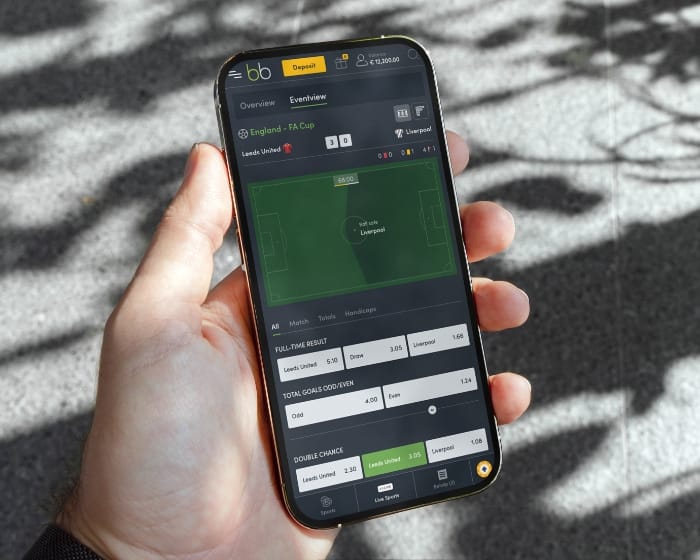
Custom sportsbook platform UX/UI design and development

new users in 2 months
Sports prediction platform UX/UI design for Bloggyfoot
Four stacks we recommend most often, each mapped to the use case it actually fits. The right choice depends on what your product needs to do, not on which framework is trending on tech Twitter.
Strong for content-heavy apps, admin tooling, and relational data


Strong for real-time features, WebSockets, and high-concurrency APIs

Strong for data-heavy apps, ML or analytics workloads, and Python ecosystem libraries

Strong for unpredictable traffic, event-driven workloads, and minimal ops overhead

At Studio Ubique, we follow a well-structured yet adaptable process to deliver user-focused, impactful solutions. Here’s how we approach each project:
01
We map the existing systems (what’s already in place, what needs to integrate), the volume profile (how many users, requests per second at peak, data growth rate), and the constraints (compliance, hosting region, latency budgets, budget). The output is a requirements document specific enough to make architecture decisions from.
02
Stack selection based on the requirements: Laravel when content and admin features dominate, Node.js when real-time or high-throughput matters, Django when data processing or Python ecosystem libraries are needed, serverless when traffic is unpredictable and you don’t want to manage servers. Data model design in parallel: which entities, which relationships, which fields, which indexes.
03
API contracts documented before code gets written. Which endpoints, which HTTP methods, which request and response shapes, which authentication flows, which rate limits. REST when consumers need predictable resource endpoints, GraphQL when consumers need flexible queries, webhooks for event-driven flows. The API spec becomes the contract that frontend, mobile and third-party consumers can build against in parallel with us.
04
Two-week sprints with automated tests running in CI. Unit tests on critical business logic, integration tests on the API endpoints, dependency scanning for known vulnerabilities. Manual review on the edge cases that automation misses. Security testing runs throughout, not as a last-week phase before launch.
05
Deployment via CI/CD pipelines with staging and production environments. Infrastructure-as-code where it pays off (Terraform, Pulumi, or platform-native equivalents). Monitoring and alerting configured from day one, not added after the first incident. After launch we offer support packages or dedicated developer capacity for ongoing work.
Studio Ubique works with startups, agencies, and mid-sized companies who want their product to work better than their competitors’ excuses. Since 2012, with clients across 15+ countries.
5.0


“Studio Ubique brought our vision to life with skill, passion, and precision, our website now truly reflects the soul of House of Books.”
5.0

“Project meets my expectations, good communication with the designer.”
5.0

“Studio Ubique revamped our brewery site with stunning UX/UI. Engagement, speed, and mobile retention soared, plus they nailed the brief on time, on budget, and with true creative flair.”
5.0
“Despite our delays and unclear vision, Studio Ubique delivered a flawless site with creativity, patience, and total professionalism.”
5.0
“Simply outstanding. I am blown away by the not only the design expertise, but also the site functionality. Worth every dollar, and I will be coming back for more business. Do not look further - you found your developer here.”
5.0

“Great ideas, smooth communication, and a pleasure to work with, Studio Ubique made building our new website a seamless, collaborative process.”
5.0
“Creative, skilled, and budget-conscious, Studio Ubique perfectly translated our vision with care, precision, and a truly personal touch. We used to post and pray. Their paid social and landing pages now bring real sales, not just likes. Clear plan, quick execution.”
5.0
“From rebranding to web design, Studio Ubique has been a key partner, proactive, efficient, and always exceeding expectations with clear, seamless communication.”
5.0
“Studio Ubique earned our trust with their expertise and results. What started as one project grew into a long-term collaboration thanks to their consistent delivery and professionalism.”
5.0
“Studio Ubique understood our vision, responded fast to feedback, and kept the AGN website redesign smooth and efficient. A seamless, goal-driven collaboration from start to finish.”
5.0
“Studio Ubique exceeds expectations every time, clear communication, creative solutions, and reliable delivery make them a trusted, long-term partner for web, design, and branding projects.”
5.0
“Studio Ubique crafted our brand, website, and booking system with standout design, smooth communication, and great value, helping UpNailz shine online and grow with confidence.”
The questions that come up most often, answered here. Yours not among them? Just ask, there's a human on the other end.
We work most often in four backend stacks: Laravel (PHP) for content-heavy apps and admin-driven products, Node.js with Express or NestJS for real-time features and high-concurrency APIs, Django (Python) for data-heavy apps and projects that need the Python ecosystem (ML, analytics), and serverless (AWS Lambda, Firebase, Cloudflare Workers) for unpredictable-traffic or event-driven workloads.
The right stack depends on the workload profile, your team’s existing expertise, and how much operational overhead you want to take on. Concrete examples from our case studies: Resay (custom web application), Bloggyfoot (sports prediction platform built in React with a custom CMS), House of Books (book subscription platform with custom backend and database), and the custom sportsbook platform. We don’t push a fixed stack because that often becomes the wrong answer two years later.
For most products under €100K and under a team of ten engineers, a well-structured monolith is the right answer. Microservices are an operational tax: you take on service discovery, distributed tracing, eventual consistency, deployment coordination, and a much larger surface area for things to fail. That tax is worth paying when different parts of your product genuinely need to evolve at different speeds, or when teams are large enough that coordinating on a single codebase becomes the bottleneck.
What we usually see in practice: products that started with microservices because the founders read a Netflix blog post end up rewriting the whole thing back to a monolith two years later because nobody had time to operate seven services. We design for the load profile and team size you actually have, not for the one you might have if everything goes right.
REST works when consumers need predictable, resource-based endpoints and the data shape they need is reasonably stable. Most public APIs default to REST for a reason. GraphQL works when consumers need flexible queries (different clients want different fields, or one screen needs data from five resources) and you can afford the extra complexity in caching and rate limiting. Webhooks work when the consumer wants to be notified of events rather than poll for changes.
Many real projects use a mix. A REST API for the primary application, a GraphQL endpoint for an internal admin dashboard that needs flexible queries, webhooks for sending events to integrated third parties. The decision isn’t “which one wins”; it’s “which one fits this specific consumer”.
Performance is a design decision in the architecture phase, not a panic fix. We profile the expected load (requests per second at peak, data growth rate, geographic distribution), pick a database and caching strategy that fits the read/write ratio, and structure the codebase so the hot paths are easy to optimise later. Common levers: Redis for application state and session caching, CDN for static assets and cacheable API responses, async job queues for work that doesn’t need to block the user, database indexes designed for the queries the app actually runs.
For genuine scaling problems (traffic that’s growing fast or already large), we add horizontal scaling, read replicas on the database, and queue-based architectures where they pay off. For products that haven’t hit those limits yet, we don’t over-engineer for a future that might not happen. The honest answer for most products is that the database is the bottleneck and the fix is a missing index, not a rewrite to a different language.
OWASP Top 10 awareness from the architecture phase: input validation, output encoding, parameterised queries, authentication and session management, access control, secrets management out of source control. Dependency scanning runs in CI on every build, flagging known vulnerabilities in packages we use. Encryption at rest (database-level) and in transit (TLS) is default, not optional. Logging is structured so security events are queryable.
For GDPR, we build retention rules and consent logging into the data model itself, so the right things get deleted on the right schedule without depending on someone remembering to run a cleanup script. For penetration testing, we work with specialist labs at the cadence your audit team needs, typically once or twice a year plus targeted tests on major releases. For audited industries (financial services, healthcare), we build with the specific compliance framework (PCI DSS, HIPAA, ISO 27001) in mind from the architecture phase, rather than bolting it on later.
Relational databases (PostgreSQL, MySQL) fit when your data has consistent shape, benefits from joins, and needs transactional integrity (a financial app, a booking system, an admin platform). NoSQL document stores (MongoDB, DynamoDB) fit when the data is document-shaped (user-generated content with variable fields), write-heavy with relaxed consistency requirements, or needs to scale horizontally beyond what a single relational instance can handle.
For most products we default to PostgreSQL. It’s mature, well-understood, supports JSON columns when you need document-style flexibility within a relational structure, and the operational tooling around it is excellent. We pick NoSQL when the workload genuinely needs it, not because it sounds more modern. Mixing both in one product is also fine: PostgreSQL for the structured business data, a key-value store like Redis for session state and caching, a search engine like Elasticsearch when full-text search becomes a real requirement.
Our hourly rate is €60-€65 across all roles (backend engineering, project management, QA, DevOps), with our team split between Zwolle and Chandigarh. Backend-only projects typically run €10,000 to €40,000 depending on scope. A focused API for an existing frontend sits at the lower end. A full custom platform with integrations, custom authentication, complex data model and DevOps setup sits at the higher end. Full-stack projects (backend plus frontend plus design) run higher, typically €15,000 to €75,000.
The biggest scope variables are integrations (clean modern third-party APIs are fast, older or custom internal systems take significantly longer), data model complexity, and whether you need multi-tenancy. Timelines run from 6 weeks for a focused API project to several months for a custom platform. We scope it properly in the discovery week so you get a defensible number rather than a placeholder. Schedule a discovery call to walk through your specific requirements.
After launch we offer ongoing support and maintenance through three packages: Care (4 hours per month, 24 working-hour response), Growth (8 hours per month, 8-hour response) and Partnership (16 hours per month, 4-hour response). Pricing starts at €240 per month, three-month minimum term, then monthly cancellable with one month notice.
Backends need more ongoing attention than frontends do because the failure modes are less visible. Dependency updates, security patches, framework version bumps, database performance tuning as data grows, integration updates when third-party APIs change their contracts. For teams shipping regularly, we run a dedicated-developer model where a fixed-capacity developer (40 to 160 hours per month) works as an extension of your team, treating the backend as a living product rather than a delivered artefact that gets touched once a year when something breaks.
Contact
Not everyone likes to write. Rather talk to someone first? Book a 30 to 45 minute intro call through Calendly. It's free, and by the end you'll know whether a proposal makes sense.
Book a call(opens in a new tab)Tell us what's stuck, what you want to build, or what needs fixing. We usually reply within 1-2 business days.