Too many plugins, too slow, too dependent on one developer. We build custom WordPress without page builders or the template compromises you’ll regret later.

What makes the difference isn’t WordPress itself, it’s how it’s built. Open source, no vendor lock-in, and when the code is clean: faster, easier to find and cheaper to maintain than most proprietary content management systems.
WordPress is open source. You can switch agencies tomorrow without losing your site. That keeps us sharp and keeps you free.

A well-built WordPress site loads in under 2.5 seconds on mobile. Not because WordPress does that by default, but because we strip out everything that doesn’t belong.

WordPress gives you the structure. We make sure that structure actually works: technical SEO, schema markup, load time. The basics that many agencies sell as an upsell are included in our build.

No plugin for every problem. We build what’s needed and leave out what isn’t. That means less maintenance, lower costs and fewer headaches when updates roll around.

You don’t need to call someone to change a paragraph. WordPress makes content management simple, when it’s set up properly. That last part is where most sites fall short.

WordPress is actively maintained by a large community. We make sure your site keeps up with updates without things breaking. That’s less obvious than it sounds.

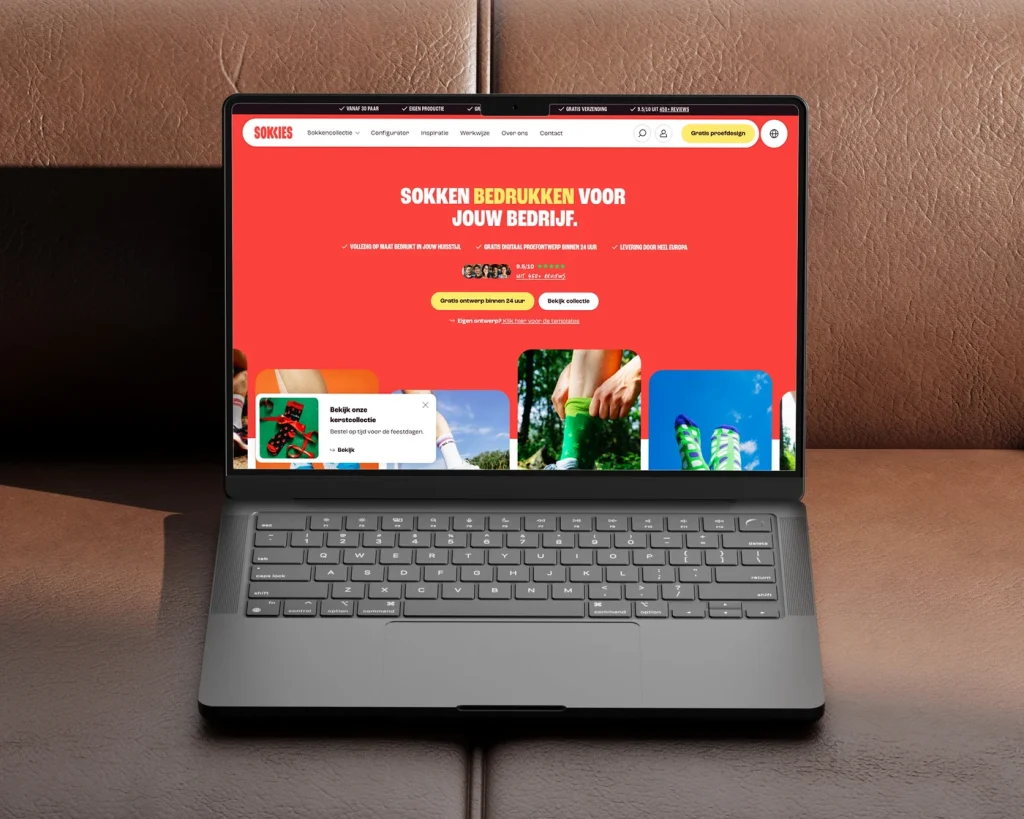
languages from day one
Webshop for custom printed socks, without a checkout
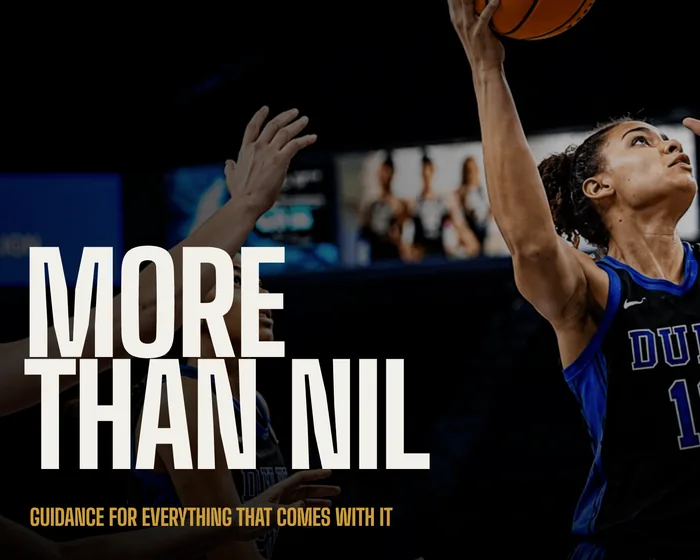
days ahead of a key player event
Athlete management agency website for women’s basketball
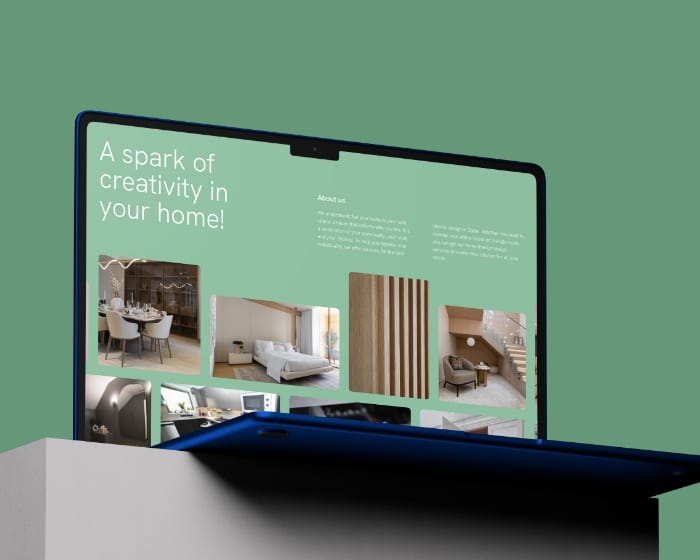
months from kickoff to launch
Custom B2B WordPress website for Pine Tree Lane
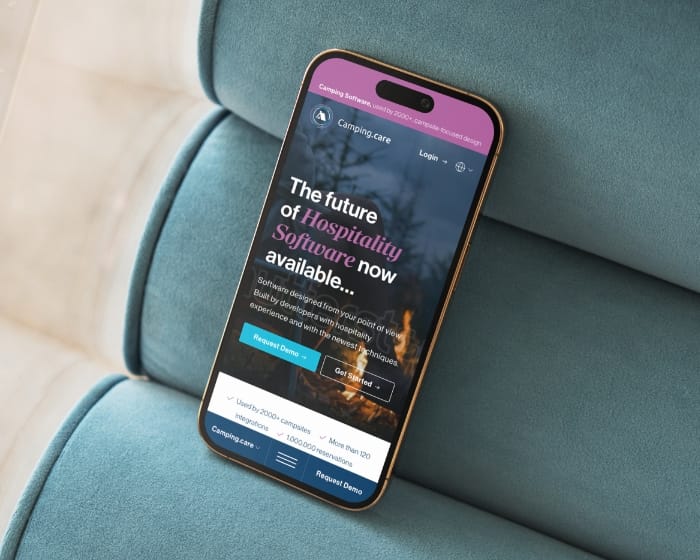
months from kickoff to launch
WordPress multisite for camping reservation software
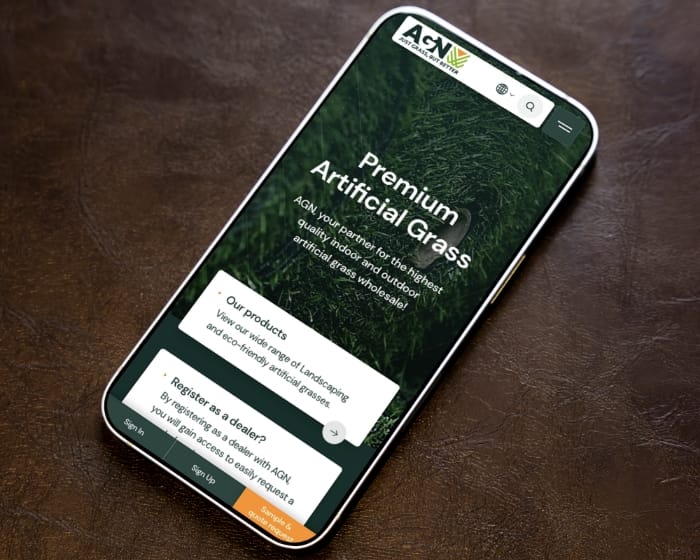
months from kickoff to launch
B2B artificial grass eCommerce WordPress UX design and development for AGN
Most complaints about WordPress aren’t about WordPress. They’re about how it was built. These are the six things we hear most from companies that come to us with an existing site.
Every agency has a process. The difference is where that process starts and what's not in it. Four steps, no surprises.
01
What does the site need to do? For whom? What’s not working now? Whether we build from scratch or work with existing designs, we start with what your business needs. Not with what we prefer to build.
02
We build with modern techniques, clean code and no page builders. That sounds like a detail, but it’s the difference between a site that lasts three years and one that starts creaking after six months.
03
Before go-live we test for speed, security, devices and browsers. Not as a formality but as a filter. If something’s off, it doesn’t go live.
04
A website isn’t a project with an end date. We offer ongoing maintenance, updates and support. You focus on your business. Studio Ubique keeps the tech running, even when you’re not looking at it.
From the University of Twente and Creditsafe to Sokkies, FlevoDirect and AGN, and through an agency KPN, Wortell and Ziggo as well. And a few hundred companies you’ve probably never heard of, but who got properly looked after all the same. That, on reflection, is the whole story.










Been at it long enough to know what breaks, what scales, and why “urgent” usually means someone started too late.
5.0

“Collaborating with Studio Ubique proved to be an outstanding experience. … The website they developed not only met but surpassed our expectations, seamlessly blending contemporary functionality with vintage allure.”
5.0

“Project compliant with my expectations, good communication with the designer.”
5.0

“The entire process was great.”
5.0

“As a company executive at Kimrad Transport, I collaborated with Studio Ubique to enhance the design and functionality of our internal tools and dashboards. … They heard us out and gave intelligent recommendations and provided us with a design that made our systems convenient and more pleasant to operate.”
The questions that come up most often, answered here. Yours not among them? Just ask, there's a human on the other end.
Cost depends on scope. A custom-designed WordPress brochure or marketing site with a clean ACF-based theme runs roughly €8,000 to €20,000. A larger site with custom functionality, multiple integrations, multilingual content, or a multisite setup runs €20,000 to €50,000. A WordPress build with significant custom development (complex WooCommerce, membership systems, custom plugins, heavy integration work) runs higher, scoped per project. These are ranges to set expectations, not quotes, the actual figure depends on design complexity, how many integrations are involved, and content volume.
Our hourly rate is €60 to €65 across roles. Most WordPress projects are scoped as a fixed-budget proposal once the discovery phase has defined the work. We don’t send a proposal before the budget range, the decision maker, and a scoping call are in place, quoting blind helps nobody. What’s worth knowing: a cheap WordPress site built on a bought theme and a stack of plugins often costs more over three years in maintenance, slow performance, and eventual rebuild than a custom build does upfront. Pricing and rates page covers the rate structure.
A custom-designed WordPress marketing site typically takes 6 to 10 weeks from kickoff to launch. A larger site with custom functionality, integrations, or multilingual content runs 3 to 5 months. A multisite setup or a build with significant custom development runs longer, scoped per project. The variation comes from design complexity, integration count, and how quickly content and feedback move on your side.
The honest timeline risk is rarely development speed, it’s decision latency and content delays. A project where feedback takes two weeks per round and content arrives late will run far longer than the same project with a responsive client and content ready before build starts. We set the timeline against an assumed pace of input from your side, and flag early if that pace slips rather than letting the deadline quietly move. How we work covers the collaboration model.
Both. WordPress-to-WordPress migrations (a redesign or rebuild that keeps your content) and platform migrations (moving to WordPress from Wix, Squarespace, a different CMS, or a legacy custom system) are common work. For an existing WordPress site, we usually start with an audit: theme and plugin health, code quality, performance, security, and how much of the existing build is worth keeping versus rebuilding clean.
The part that matters most in any migration is SEO preservation. Posts, pages, media, and users transfer, but the real care goes into 301 redirect mapping so that existing rankings and inbound links survive the move. A migration done without proper redirect mapping can lose years of accumulated SEO value overnight. We map redirects deliberately and verify them after launch, rather than treating it as a launch-day afterthought. Website migration covers the migration process in detail.
It’s the opposite of limiting, but the reasoning takes a moment. Page builders like Elementor, WPBakery, and Divi add significant page weight (slower load times, worse Core Web Vitals), produce cluttered markup that hurts SEO, and lock the site into the builder, migrating away later means rebuilding every page. They feel flexible because you can drag boxes around, but that flexibility comes at a real performance and longevity cost.
We build custom themes with Advanced Custom Fields, specifically ACF Flexible Content. This gives your team a clean editing experience with content blocks designed for your site, fast-loading pages, clean markup, and full control over the output. You still edit content freely without touching code, you just do it through an interface built for your site rather than a generic builder. For a site that needs to last and perform, custom ACF beats a page builder on every measure that matters after launch. CMS development covers the broader build approach.
That depends on what you want. Some clients keep hosting and maintenance in-house and only use us for the build. Others want us to manage the full lifecycle. For managed hosting, the setup runs on partner infrastructure (cPanel, LiteSpeed, Imunify360), with Studio Ubique handling the management layer: configuration, monitoring, updates, and support. We’re transparent that the underlying hosting is partner infrastructure rather than something we own outright.
WordPress maintenance after launch is not optional. Core, theme, and plugin updates need to happen regularly, outdated plugins are the most common way WordPress sites get compromised, alongside backups, security monitoring, and performance checks. This runs through three packages: Care, Growth, and Partnership, sized to how much ongoing work the site needs. Monthly-billed support runs with a one-month notice period, no long lock-in. Website support packages cover what each tier includes.
WordPress fits most business websites well: it’s open source (no vendor lock-in, no per-seat licensing), it has a mature ecosystem, the content management experience is familiar to most teams, and built properly it performs and ranks as well as anything. It’s a strong default for marketing sites, content-heavy sites, eCommerce through WooCommerce, and multisite setups across brands or regions.
Webflow can fit smaller marketing sites where the design team wants direct visual control and the functionality needs are light, though it has its own lock-in and scaling limits. A headless setup (WordPress or another CMS as the content backend, with a separate frontend framework) fits when you need a highly custom frontend, app-like interactivity, or the same content feeding multiple channels, it costs more and adds complexity, so it earns its place only when the project genuinely needs it. We’ll tell you honestly which fits your situation rather than defaulting to WordPress because it’s what we build most. CMS development covers the platform decision across options.
Once everything is paid, the code, the theme and the content we made for you are yours (terms, article 6). For parts that already existed, like WordPress itself, plugins and our own generic building blocks, you get a right of use. Where possible, we register the domain in your name. Hosting is a service: you take it from us or you put it somewhere else. WordPress is open source, so there’s no licence tying you down. We build custom themes on standard WordPress with ACF, without a system only we understand, so any good WordPress developer or agency can take the site over. That’s a deliberate choice.
If you move on, you take a clean WordPress install with you, without a tangle of plugins and without a page builder to work around. Which documentation and handover come with it, we agree upfront. We’d rather clients stay because the work is good, not because leaving hurts. More on how we work.
Contact
Not everyone likes to write. Rather talk to someone first? Book a 30 to 45 minute intro call through Calendly. It's free, and by the end you'll know whether a proposal makes sense.
Book a first call(opens in a new tab)Tell us what's stuck, what you want to build, or what needs fixing. You talk to someone from sales and someone technical, and we reply within one working day. First a conversation, then a plan, only then a price.