Websites and web apps built full-stack, from database to interface. Clean code on current frameworks, scoped for performance and SEO from the first commit.


Six areas where web development decisions made early save money later: architecture, performance, security, integrations, accessible interfaces, and the handoff between design and code.

Microservices, MVC frameworks, or headless CMS, chosen against your actual scale needs. Most projects don’t need microservices on day one, the architecture should match the traffic you have plus the traffic you can realistically forecast.

Slow pages lose visitors before the content loads. We target a Largest Contentful Paint under 2 seconds on mobile, measured on real devices, not a developer’s fast laptop on office wifi.

OWASP-guided coding, HTTPS by default, dependency vulnerability scans, and GDPR-ready data flows. Security is checked during development, not bolted on before launch when changes are expensive.

REST, GraphQL, or SOAP endpoints connecting CRMs, ERPs, and payment gateways. The hard part is rarely the happy path, it’s handling the API that goes down, rate-limits you, or changes its response format without warning.

HTML5, ARIA roles, and fluid CSS for interfaces that hold up across screen sizes and meet WCAG 2.2 AA. Accessibility widens your audience and keeps you clear of the accessibility lawsuits that have become common in the US.

Component libraries in Storybook, design tokens, and documentation that keep design and code in sync. When the handoff is clean, build time drops and the bug count from design mismatches drops with it.
languages from day one
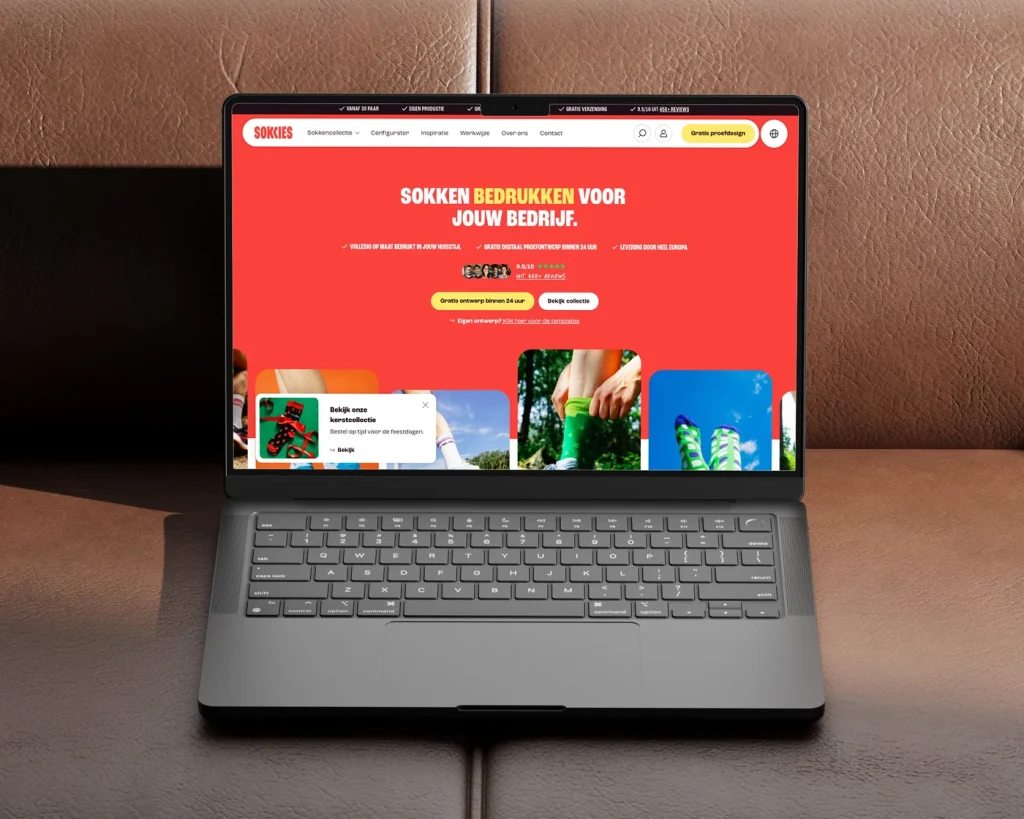
Webshop for custom printed socks, without a checkout
page storefront, brand to cart
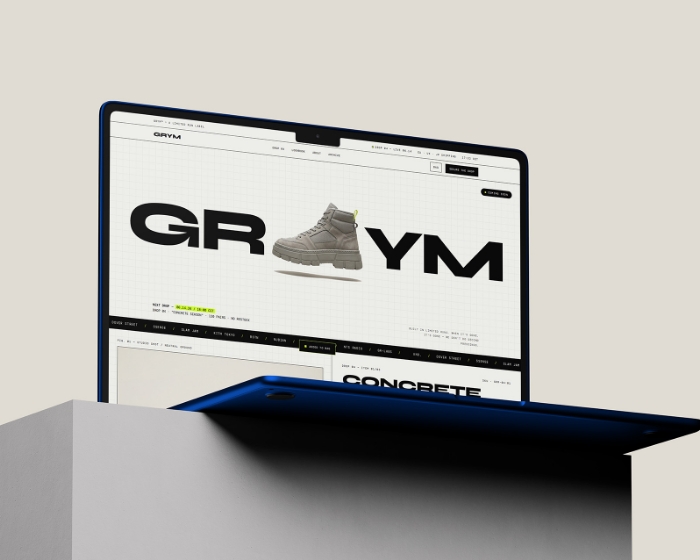
Streetwear ecommerce website design, a concept
less time spent on web updates each year
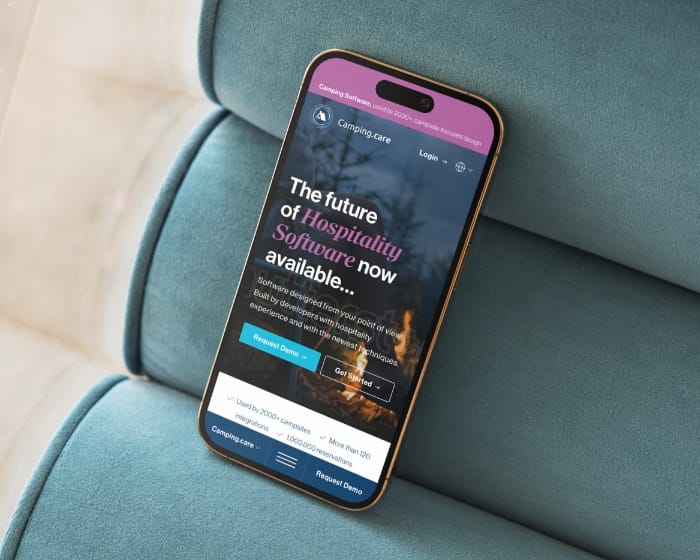
WordPress multisite for camping reservation software
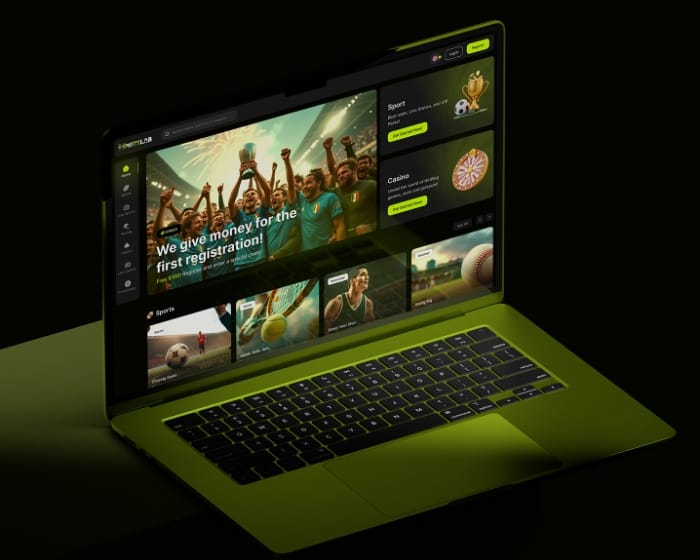
dev cost savings since 2023
Sportsbook UI design & dedicated dev team
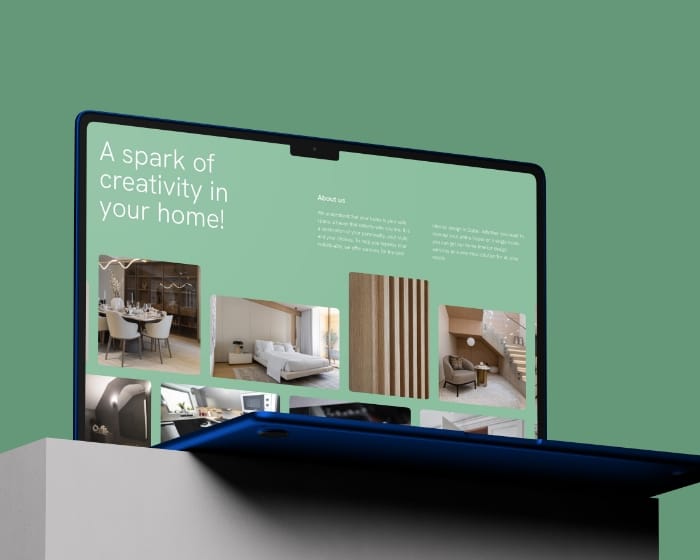
organic traffic grow in 3 months
Custom B2B WordPress website for Pine Tree Lane
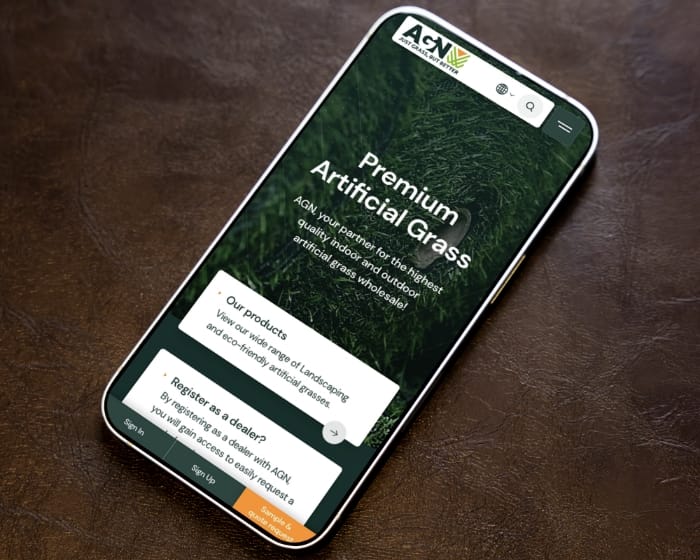
bounce rate & session duration x3 post-live.
B2B artificial grass eCommerce WordPress UX design and development for AGN
Web development covers more than brochure sites. Six common project types, from content portals to progressive web apps, each with its own technical considerations.
Manage blogs, resources, or microsites effortlessly


Add WooCommerce & Shopify headless integration

CRM, booking systems & analytics dashboards

Deliver app-like experiences in the browser

Lead-generation, CRM syncing, payment gateways

Reach global audiences through multi-language support

Six steps from first conversation to post-launch support, with the technical decisions made in the right order.
01
We start with stakeholder interviews, a technical audit of any existing site, and competitor analysis. That shapes the roadmap, stack choice, success metrics, and timeline before any code is written.
02
We plan the build: database schemas, API contracts, deployment pipeline, and CI/CD workflow. Decisions documented as architectural decision records so the reasoning survives past the project.
03
Wireframes, interactive prototypes, and UI mockups, validated with user testing before development starts. Catching a flawed flow in a prototype costs minutes, catching it after build costs a sprint.
04
Frontend and backend built in parallel: React, Vue.js, or standard HTML and CSS for interfaces, Laravel, Node.js, or Django for server logic. Integration work (CRMs, payment gateways, third-party APIs) runs alongside, not as a panicked afterthought.
05
Automated tests (unit, integration, end-to-end) and manual QA catch bugs before launch. Speed audits, security scans, and accessibility checks run as part of the pipeline, so regressions show up the day they happen
06
We handle DNS cut-over with overlap so there’s no downtime window, monitor performance from day one, and schedule maintenance through Care, Growth, or Partnership packages. Growth work instead of firefighting.
Studio Ubique works with startups, agencies, and mid-sized companies who want their product to work better than their competitors’ excuses. Since 2012, with clients across 15+ countries.
5.0


“Studio Ubique brought our vision to life with skill, passion, and precision, our website now truly reflects the soul of House of Books.”
5.0

“Project meets my expectations, good communication with the designer.”
5.0
“Despite our delays and unclear vision, Studio Ubique delivered a flawless site with creativity, patience, and total professionalism.”
5.0
“Studio Ubique continue to do really excellent work! They are great at taking direction, but also willing to advise when ideas clash with good design. A great team to work with.”
5.0
“Simply outstanding. I am blown away by the not only the design expertise, but also the site functionality. Worth every dollar, and I will be coming back for more business. Do not look further - you found your developer here.”
5.0
“Studio Ubique’s flexible, creative approach and seamless collaboration boost our site’s design and impact, truly a trusted digital partner.”
5.0

“From rebranding to web design, Studio Ubique has been a key partner, proactive, efficient, and always exceeding expectations with clear, seamless communication.”
5.0

“Studio Ubique exceeds expectations every time, clear communication, creative solutions, and reliable delivery make them a trusted, long-term partner for web, design, and branding projects.”
The questions that come up most often, answered here. Yours not among them? Just ask, there's a human on the other end.
The line is fuzzy and the labels overlap, but roughly: web development covers websites and web applications that run in a browser, marketing sites, content platforms, eCommerce, web apps, dashboards, progressive web apps. Software development covers custom software more broadly, including platforms, complex multi-tenant systems, software with significant business logic, and applications where the web interface is one part of a larger system.
In practice most projects sit somewhere on a spectrum. A marketing site is clearly web development. A custom sportsbook platform with a risk engine, real-time data processing, and a regulatory compliance layer is clearly software development even though it has a web interface. The reason the distinction matters is scoping and team composition: a content-heavy website needs strong frontend and CMS skills, a complex platform needs backend architecture and systems thinking. When you contact us, describe what you’re building and we’ll tell you honestly which it is and how we’d staff it. Custom software development covers the heavier end of that spectrum.
Cost depends on what’s being built. A marketing or brochure website with a CMS runs roughly €8,000 to €25,000. A content-heavy site with custom functionality, integrations, and multilingual support runs €25,000 to €60,000. A web application or complex platform (custom dashboards, user accounts, significant business logic, third-party integrations) runs €50,000 to €150,000 and up. These are ranges, not quotes, the actual figure depends on scope, integration count, design complexity, and content volume.
Our hourly rate is €60 to €65 across roles. Most website projects are scoped as a fixed-budget proposal once the discovery phase has defined the work. Larger applications often run as fixed-budget phases or time-and-materials sprints, because the scope genuinely evolves as real usage data comes in. We don’t send a proposal before the budget range, the decision maker, and a scoping call are all in place, quoting blind helps nobody. Pricing and rates page covers the rate structure.
For content-driven websites, WordPress with Advanced Custom Fields is the common choice: mature, well-understood, easy for a client team to manage, with a clean editing experience when built properly (custom blocks, not page-builder sprawl). For web applications, the backend is usually Laravel or Node.js, occasionally Django, with PostgreSQL or MySQL for data. Frontend is React or Vue.js for interactive applications, or server-rendered HTML and CSS where the interactivity is light and SEO matters most.
Stack choice depends on your situation, not our preference: what your team can maintain after handover, what your hiring market supports, what your existing systems are built on, and what the project actually needs. A small business content site and a multi-tenant SaaS application have completely different requirements. We choose the stack during discovery and explain the reasoning, so you understand the trade-offs rather than just receiving a decision. Frontend development and backend work both feed into that decision.
Both. New builds are simpler to scope, but a large share of web development work is improving, extending, or rescuing existing sites. Common existing-site engagements: performance rescue (a site that’s become slow), adding functionality to a working site, a redesign that keeps the existing CMS, a re-platform (moving from one CMS or framework to another), or taking over maintenance of a site another agency built.
For existing-site work, the first step is usually an audit: code quality, dependency health, security posture, performance, SEO, and how maintainable the codebase actually is. The audit produces an honest assessment, sometimes the answer is that the existing site is sound and just needs targeted fixes, sometimes it’s that a rebuild would cost less over two years than continuing to patch what’s there. We tell you which, with the reasoning, rather than defaulting to whichever generates more billable work. Website migration covers the re-platform case specifically.
A marketing or brochure website typically takes 6 to 12 weeks from kickoff to launch. A content-heavy site with custom functionality and integrations runs 3 to 5 months. A web application or complex platform runs 4 to 9 months, sometimes longer depending on scope. The variation comes from design complexity, how many integrations are involved, content readiness on your side, and how quickly feedback and approvals move.
The single biggest timeline risk is usually not development speed, it’s decision latency and content delays on the client side. A project where feedback takes two weeks per round and content arrives late will run far longer than the same project with a responsive client and content ready. We’re explicit about this at the start: the timeline assumes a certain pace of input from your side, and we flag early if that pace slips. How we work covers the collaboration model.
A website is not finished at launch, it’s just live. After launch it needs security updates (especially WordPress core, themes, and plugins), performance monitoring, dependency updates, backups, and occasional fixes. Studio Ubique offers ongoing website ondersteuning through three packages: Care, Growth, and Partnership, sized to how much ongoing work the site needs. A small brochure site needs light Care-level attention, a busy eCommerce site or web application needs the higher tiers.
You’re not locked into our maintenance. You own the code, the repository, the credentials, and the hosting from day one, so you can take maintenance in-house or to another provider. Most clients stay because it’s easier than rebuilding the context elsewhere, not because they’re contractually trapped. Monthly-billed support runs with a one-month notice period. Website support packages cover what each tier includes.
You do. You own the code, the repository, the documentation, the design files, the credentials, the hosting account, and the domain. IP transfers on payment as part of our standard terms. No proprietary CMS that only Studio Ubique can maintain, no page-builder lock-in, no hostage situation where leaving means rebuilding from nothing. The work is done on standard tools (WordPress, Laravel, Node.js, React, Vue.js, standard databases) so any competent developer or agency can take over.
Handover includes a README with local setup, architectural decision records for the non-obvious choices, documentation of custom functionality, a deployment runbook, and a knowledge-transfer session. For agencies who’ve had us build websites for their end clients under white-label arrangements, the handover is structured around that multi-party situation, with documentation written so the agency can support the client directly. White-label services cover that arrangement.
Contact
Not everyone likes to write. Rather talk to someone first? Book a 30 to 45 minute intro call through Calendly. It's free, and by the end you'll know whether a proposal makes sense.
Book a call(opens in a new tab)Tell us what's stuck, what you want to build, or what needs fixing. We usually reply within 1-2 business days.