eCommerce development for stores that need to actually convert. We build on WooCommerce, Shopify, custom stacks or headless setups, picked based on what your product range, traffic profile and team can realistically maintain. Less plugin chaos, fewer checkout drop-offs, more buyers completing their order.


Six areas where eCommerce development actually pays off. Each one affects whether your store handles peak traffic without falling over, whether checkouts complete cleanly across payment methods, and whether the platform stays maintainable when product ranges expand.

Product pages that answer the questions buyers actually have (sizing, shipping, returns) before they have to dig for them. Search and filters that work for the way your catalogue is structured. Checkout flows that don’t lose people between cart and payment. Where buyers fall off, the analytics show you, and we fix the specific step rather than redesigning everything.

Theme customisation, custom apps, headless setups with React or Next.js, plugin and app stack reviews to keep performance from quietly degrading. We work in WooCommerce when the store fits naturally inside WordPress and editor flexibility matters, and in Shopify when speed-to-launch, hosted infrastructure and payment compliance matter more than total control.

When WooCommerce and Shopify can’t cover what your business actually needs (multi-tenant marketplaces, unusual product configurators, B2B catalogues with role-based pricing, complex subscription logic), we build the platform around your requirements rather than fighting the platform’s defaults. Laravel, Node.js or headless on top of a commerce engine, depending on the workload.

Stripe, Mollie, Klarna, Adyen, iDeal, Bancontact, PayPal, Apple Pay, Google Pay, and the regional methods customers in France, Germany, the US and Switzerland expect to see. Shipping integrations with carriers like DHL, PostNL, FedEx, UPS, plus ShipStation or Sendcloud for orchestration. Tax and duties via Avalara or TaxJar where it makes sense. Each integration designed so it doesn’t silently break when the provider updates their API.

PCI-DSS compliance handled by your payment provider (Stripe, Mollie, Adyen all carry the certification, you inherit it through tokenisation rather than handling card data directly). CDN caching for static assets and cacheable pages, real-time monitoring for transaction failures and uptime issues, and dependency scanning for the plugin/app ecosystem that often becomes the weakest link.

Analytics that map to your actual business: cohort retention, repeat purchase rates, customer LTV, contribution margin per product. A/B testing infrastructure for checkout, product pages and pricing. The dashboards show what’s worth changing and what’s noise. We help interpret the data, not just collect it.
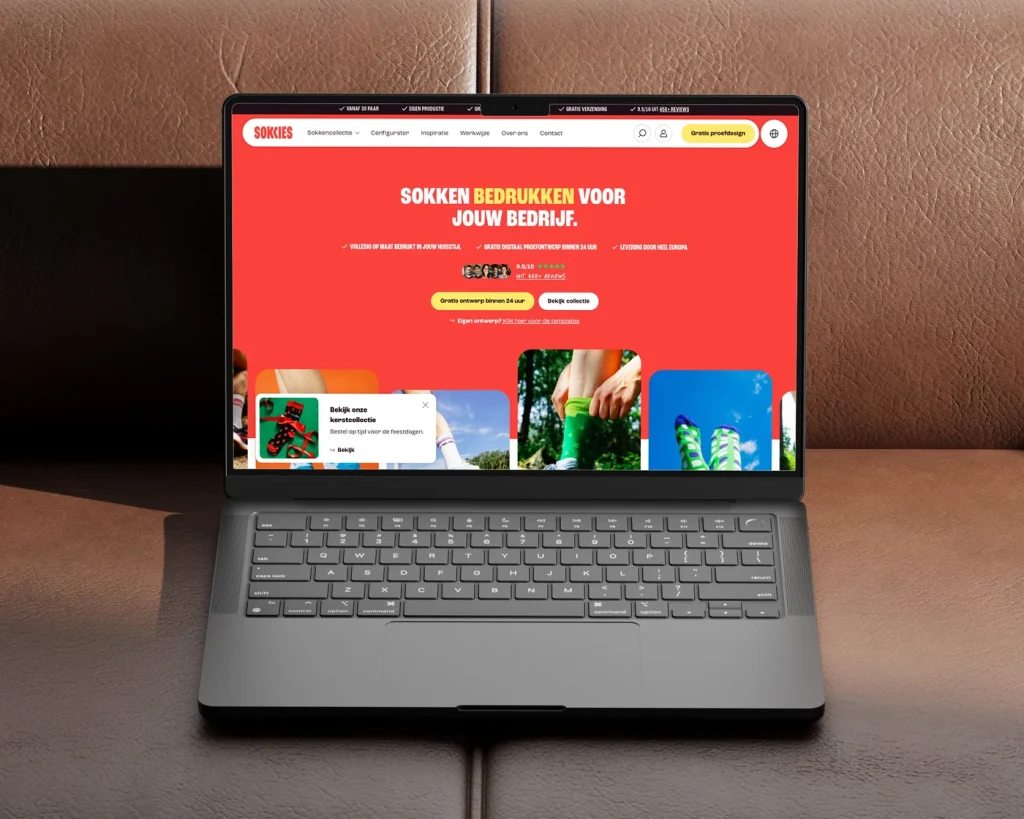
languages from day one
Webshop for custom printed socks, without a checkout
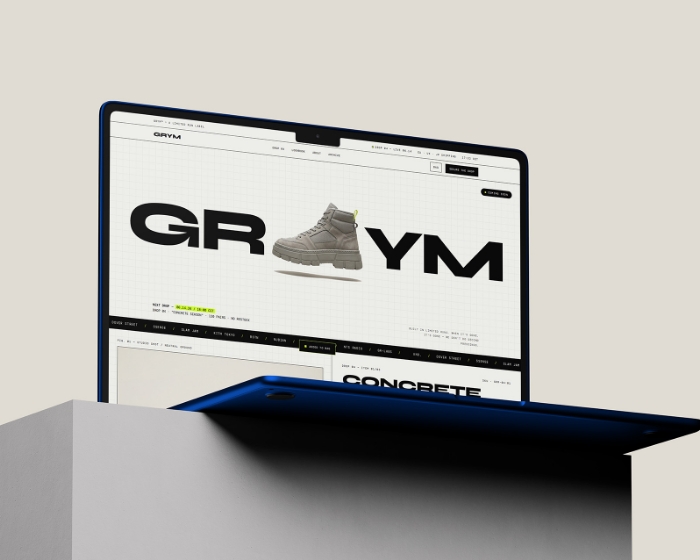
page storefront, brand to cart
Streetwear ecommerce website design, a concept

increase in monthly website visits
Book subscription website design and custom development for House of Books

bounce rate & session duration x3 post-live.
B2B artificial grass eCommerce WordPress UX design and development for AGN
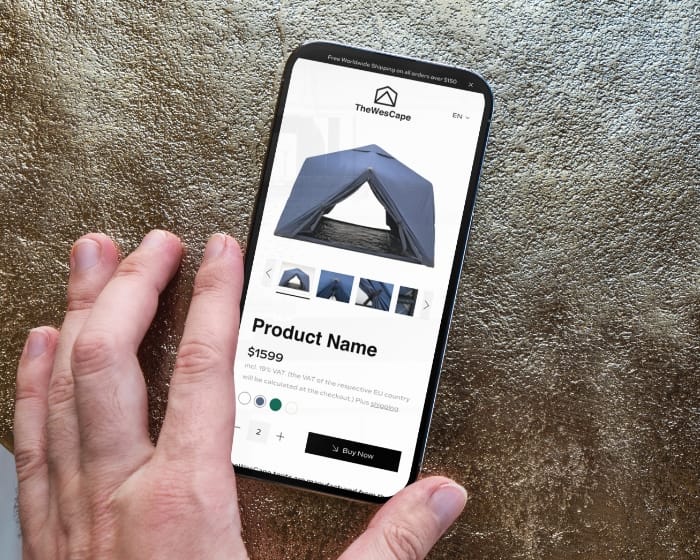
increase in online sales within the first quarter
TheWesCape: custom WooCommerce website for outdoor tent brand

organic growth in just 1 month
Tubble inflatable bathtub WooCommerce website design
uplift in average cart value
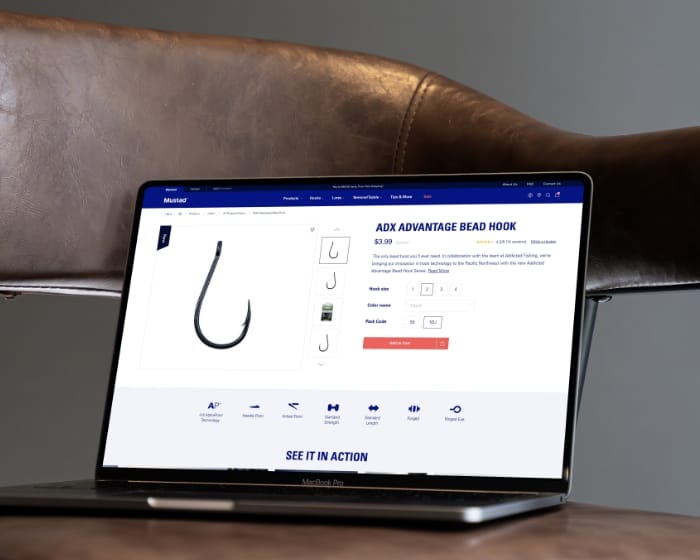
Mustad Fishing multibrand eCommerce website design
Five platforms we work in, each fits a different shape of store. The right choice depends on catalogue size, expected traffic, editorial workflow, and how much custom logic you need on top.
Best fit when WordPress flexibility matters and the team is already comfortable in it


Best fit when speed-to-launch and hosted infrastructure outweigh total control

Best fit when WooCommerce and Shopify can't cover your real business logic

Best fit when front-end performance and design flexibility are non-negotiable

Best fit when multiple sellers list under one storefront with their own dashboards

At Studio Ubique, we follow a well-structured yet adaptable process to deliver user-focused, impactful solutions. Here’s how we approach each project:
01
We map the catalogue (number of products, variants, complexity of attributes), the markets (which countries, which currencies, which languages, which tax regimes), the integrations (ERP, PIM, CRM, fulfilment, accounting), and the volume profile (traffic, peak periods, transaction rate). The output is enough to pick the right platform and to write a defensible scope.
02
Storefront UX designed around how buyers actually shop in your category. Product page templates that surface the information that drives purchase decisions for your specific products. Checkout flow optimised for completion rate, with the payment methods your buyers expect to see. Wireframes first, then high-fidelity mockups, then a clickable prototype of the cart-to-confirmation flow.
03
Theme or app development on Shopify, custom plugins on WooCommerce, or custom front-end and backend code on headless setups. Payment and shipping integrations built in parallel, with proper error handling and idempotency so duplicate charges and shipping label mistakes don’t happen on retry. ERP/PIM integration where the catalogue lives outside the store.
04
Automated tests on the critical paths (add to cart, apply discount, checkout, payment confirmation, order placement). Load testing under projected peak traffic. Content and product migration from the existing store, with tax rules, shipping rules and customer accounts carried over. Launch happens with a planned switchover, not a Friday afternoon deploy.
05
After launch we monitor transaction success rates, page performance, and the integration health that quietly degrades when a payment provider or shipping carrier updates their API. Most eCommerce clients move onto one of our support packages or a dedicated-developer retainer. New campaigns, seasonal updates, new product types and A/B test rollouts run as continuous work rather than separate projects.
Studio Ubique works with startups, agencies, and mid-sized companies who want their product to work better than their competitors’ excuses. Since 2012, with clients across 15+ countries.
5.0


“Studio Ubique brought our vision to life with skill, passion, and precision, our website now truly reflects the soul of House of Books.”
5.0

“Simply outstanding. I am blown away by the not only the design expertise, but also the site functionality. Worth every dollar, and I will be coming back for more business. Do not look further - you found your developer here.”
5.0

“Studio Ubique understood our vision, responded fast to feedback, and kept the AGN website redesign smooth and efficient. A seamless, goal-driven collaboration from start to finish.”
5.0
“Studio Ubique exceeds expectations every time, clear communication, creative solutions, and reliable delivery make them a trusted, long-term partner for web, design, and branding projects.”
The questions that come up most often, answered here. Yours not among them? Just ask, there's a human on the other end.
WooCommerce fits when content publishing sits alongside the store, when your team is already comfortable in WordPress, and when you want full control over the codebase and the data. Shopify fits when speed-to-launch, hosted infrastructure and payment compliance matter more than maximum control. Custom platforms (Laravel, Node.js, or headless on top of a commerce engine) make sense when WooCommerce and Shopify can’t cover your real business logic: multi-tenant marketplaces, unusual product configurators, B2B with role-based pricing, complex subscription mechanics.
Most clients land on WooCommerce or Shopify. From our case work: AGN (B2B artificial grass on WooCommerce), TheWesCape (outdoor tent brand on WooCommerce), Tubble (inflatable bathtubs on WooCommerce), and Mustad (multibrand fishing eCommerce). The choice isn’t ideological; it’s about what fits your catalogue, your team and your roadmap.
Yes. Headless commerce means decoupling the front-end (what shoppers see) from the commerce engine (what handles products, pricing, inventory, checkout). The front-end runs on a framework like Next.js, Nuxt or Remix, with Shopify Hydrogen, WooCommerce REST/Store API, or a custom backend as the data source. The benefit is front-end speed and design flexibility, plus the option to use the same commerce engine across multiple channels (web, mobile app, in-store kiosk).
The trade-off is added complexity. You’re now running and maintaining two systems instead of one, which means more moving parts to deploy, more places things can go wrong, and a higher upfront cost. Headless makes sense when front-end performance is genuinely a competitive issue, when design needs go beyond what themes allow, or when you publish to multiple channels. For most single-storefront stores, classic Shopify or WooCommerce is faster, cheaper, and easier to maintain.
For payments: Stripe, Mollie, Adyen, PayPal, Klarna, plus regional methods like iDeal (Netherlands), Bancontact (Belgium), SEPA Direct Debit, Apple Pay and Google Pay. For B2B stores, invoice-based payment terms via integrations with accounting systems. For shipping: direct carrier integrations with DHL, PostNL, FedEx, UPS, plus orchestration tools like ShipStation, Sendcloud and Shippo for multi-carrier setups. Tax and duties via Avalara, TaxJar or the platform’s native rules.
The integration design matters more than the list of supported providers. We build with idempotency in mind so retries don’t create duplicate charges or duplicate shipping labels. Webhooks for real-time event handling, with proper signature verification. Sandbox testing before going live. Each integration has its own quirks (sandbox versus production behaviour, rate limits, webhook delivery guarantees), and we map those into the platform rather than discovering them in production.
Migration runs as a separate work block, usually after the new platform is configured and tested. We export products, variants, categories, customers, order history, customer reviews and content from your existing store (Magento, BigCommerce, classic WooCommerce or Shopify versions, custom platforms), map the data to the new structure, and import via the target platform’s API or bulk import tools. URL redirects from old product and category URLs to new ones get mapped and tested before launch so SEO doesn’t take a hit.
The trickiest parts are usually the things that don’t migrate cleanly: discount code structures that work differently, customer account passwords (which can’t be migrated in plain text and require a password reset flow), historical orders linked to deleted products, and tax rules that vary by region. We surface those in discovery so the editorial decisions (what stays, what changes, what gets retired) happen before the migration script runs. More about our migration approach.
For B2B stores, the differences from B2C usually come down to role-based pricing (different prices per customer group), invoice-based payment with credit limits, custom product catalogues per account, and quote-to-order flows where buyers request a quote before completing purchase. We’ve built this on WooCommerce (with B2B-specific plugins) and on custom Laravel and Node.js platforms, depending on how complex the logic is. AGN’s B2B artificial grass store is one example from our case work.
For multi-vendor marketplaces (multiple sellers listing on one storefront with their own dashboards, commissions, and payouts), we typically use Dokan or WC Vendors on WooCommerce for smaller setups, or custom builds for larger or more specialised marketplaces. The complexity sits in vendor onboarding, payout calculation, dispute handling, and tax responsibility across jurisdictions, more than in the storefront itself. Marketplaces are platform-shaped projects, not website-shaped ones, and we scope them accordingly.
Performance: caching strategy designed during architecture (CDN for static assets and cacheable pages, application-level cache for product data, careful database indexing for catalogue queries). Image optimisation handled at the CDN layer with responsive variants. Third-party scripts (analytics, marketing tags) loaded deferred where possible. We profile under projected peak load before launch, not after the first Black Friday.
Security: dependency scanning in CI for the plugin and app ecosystem (often the weakest link in eCommerce sites), encryption at rest and in transit, and WAF rules at the CDN layer. For PCI compliance: we use tokenised payment flows through Stripe, Mollie or Adyen, which means card data never touches your server. You inherit the payment provider’s PCI certification through tokenisation, which is much simpler than handling card data directly. If you need direct card handling for niche business reasons, that’s a separate scoping conversation because the compliance overhead is significant.
Our hourly rate is €60-€65 across all roles (UX, frontend, backend, project management, QA), with our team split between Zwolle and Chandigarh. A focused WooCommerce store typically runs €8,000 to €15,000 for 150-170 hours of work. Shopify stores with theme customisation sit in a similar range. Custom or headless eCommerce platforms run €25,000 to €75,000 depending on integrations, multi-region complexity, and whether B2B logic or marketplace mechanics are involved.
Timelines run from 6 to 8 weeks for a focused Shopify or WooCommerce store, up to several months for custom platforms or marketplaces. The biggest scope variables are integrations (clean modern PSPs are fast, older internal ERPs take significantly longer), multi-region complexity, and how clean the product data is when migrating from an existing store. Schedule a discovery call to walk through what you actually need.
For stores that only need technical upkeep, we offer entry-level maintenance at €39 per month (monthly updates) or €59 per month (weekly updates) on WordPress/WooCommerce or Shopify. That covers core, theme and plugin or app updates, security checks, daily backups, staging environment for tested updates, plus WooCommerce-specific checks on payment modules, inventory and checkout.
For stores that need ongoing support hours alongside technical maintenance, our website support packages provide Care (4 hours per month, 24-hour response), Growth (8 hours per month, 8-hour response) or Partnership (16 hours per month, 4-hour response). Pricing starts at €240 per month, three-month minimum term, then monthly cancellable with one month notice. For stores shipping continuously (new campaigns, seasonal launches, A/B test rollouts), we run a dedicated-developer model with 40 to 160 hours per month.
Contact
Not everyone likes to write. Rather talk to someone first? Book a 30 to 45 minute intro call through Calendly. It's free, and by the end you'll know whether a proposal makes sense.
Book a call(opens in a new tab)Tell us what's stuck, what you want to build, or what needs fixing. We usually reply within 1-2 business days.