Many Shopify stores hover around “fine”, and “fine” doesn’t pay your ad bills. Top performers win on boring details done well, speed, UX, and checkout flow.


Shopify runs a big chunk of the eCommerce world for a reason. The scalable Shopify platform handles the unglamorous bits like PCI compliance, updates, and stability, so you can focus on products, content, and marketing that actually moves revenue.

Hosting and security are handled at platform level, which keeps Shopify development focused on storefront UX, not server babysitting.

Shopify’s CDN and modern delivery stack help pages load fast, and then Shopify speed optimisation takes it the rest of the way.

Shop Pay, one-page checkout, and native wallets make Shopify store optimisation easier, because the platform already wants checkout to work.

Subscriptions, loyalty, B2B logic, reviews, bundling, it’s all available through Shopify app integrations, as long as you don’t turn your store into a plugin zoo.

Hydrogen and Remix can bring React speed with Shopify commerce logic, when the project actually needs it.

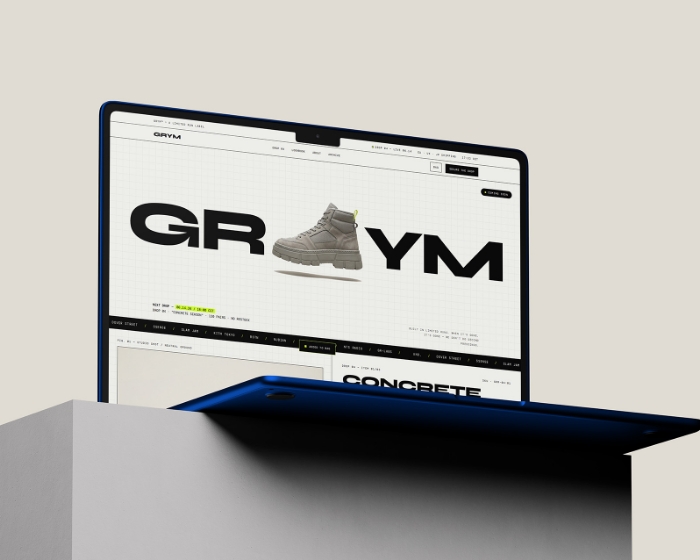
page storefront, brand to cart
Streetwear ecommerce website design, a concept
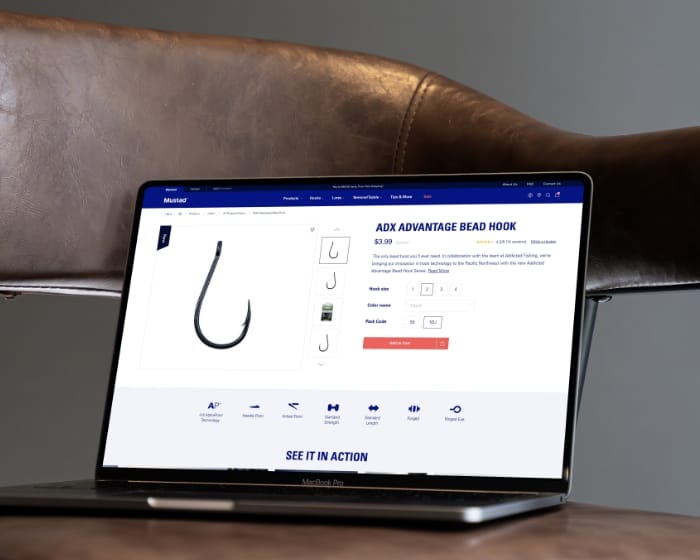
uplift in average cart value
Mustad Fishing multibrand eCommerce website design
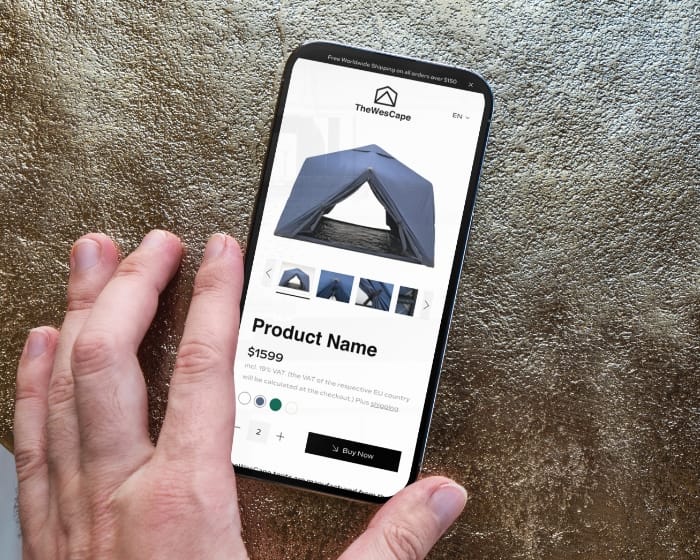
increase in online sales within the first quarter
TheWesCape: custom WooCommerce website for outdoor tent brand

bounce rate & session duration x3 post-live.
B2B artificial grass eCommerce WordPress UX design and development for AGN

organic growth in just 1 month
Tubble inflatable bathtub WooCommerce website design
Shopify development gives you a flexible toolkit for fast launches and global selling, without rebuilding your whole business every time you want a new feature. Most wins come from Shopify store optimisation, Shopify speed optimisation, and better flows, not “another redesign”.
A simple, repeatable process that keeps projects moving, and keeps stakeholders calm. We build with Shopify development best practices, then we apply Shopify store optimisation and Shopify speed optimisation so the store performs after it goes live, not just in screenshots.
01
We map products, audience, constraints, and targets, then define a Shopify roadmap that fits reality.
02
Wireframes and prototypes in Figma or XD, focused on navigation, product discovery, and checkout flow.
03
Online Store 2.0 builds in Liquid or Hydrogen, brand assets, metafields, and app integrations done cleanly.
04
Payments, shipping, subscriptions, B2B logic, then QA across devices, performance, security, and accessibility.
05
Zero-downtime launch, Core Web Vitals monitoring, A/B testing where it matters, continued Shopify store optimisation and Shopify speed optimisation as you scale.
FlevoDirect, University of Twente (UT), VIA Sports Experiences, Sokkies. And a few hundred other companies you might not know, but which have certainly been well served. That, on reflection, is the whole story.







We support startups, scale-ups, and established teams with Shopify builds focused on outcomes. As a Shopify development company, the work is usually new theme development, performance optimisation, and ongoing iteration on a platform that doesn’t fight you.
5.0


“Studio Ubique brought our vision to life with skill, passion, and precision, our website now truly reflects the soul of House of Books.”
5.0

“Studio Ubique continue to do really excellent work! They are great at taking direction, but also willing to advise when ideas clash with good design. A great team to work with.”
5.0

“Studio Ubique boosted our site’s speed, security, and UX. With timely delivery, proactive updates, and expert execution, they’ve become a trusted partner in our digital growth.”
5.0

“From rebranding to web design, Studio Ubique has been a key partner, proactive, efficient, and always exceeding expectations with clear, seamless communication.”
5.0
“Studio Ubique understood our vision, responded fast to feedback, and kept the AGN website redesign smooth and efficient. A seamless, goal-driven collaboration from start to finish.”
5.0
“Studio Ubique exceeds expectations every time, clear communication, creative solutions, and reliable delivery make them a trusted, long-term partner for web, design, and branding projects.”
The questions that come up most often, answered here. Yours not among them? Just ask, there's a human on the other end.
Depends on theme complexity, app integration count, and migration scope. Standard Shopify build with a custom Online Store 2.0 theme, 3 to 5 app integrations, single language, basic product catalogue (under 500 SKUs): €15.000 to €25.000. Larger build with custom theme on Shopify Plus, 5 to 10 integrations including subscriptions or B2B pricing, multilingual, complex collections: €25.000 to €45.000. Complex setups with Hydrogen or Remix headless storefronts, custom checkout extensions, multi-region pricing, ERP integrations, plus migration from another platform: €40.000 to €100.000+. Hourly rates run €60 to €65 across theme development, integration engineering, UX, and project management. Our pricing page covers the broader rate structure across all services.
Typical timelines. Standard Shopify build with custom theme and 3 to 5 integrations: 6 to 10 weeks from kickoff to live. Larger build with multilingual setup, subscriptions, or B2B pricing logic: 10 to 16 weeks. Complex setups with Hydrogen headless, custom checkout, ERP integrations, or platform migration: 14 to 24 weeks. The variable that surprises clients: product catalogue cleanup takes longer than expected. Migrating product data from Magento, WooCommerce, or BigCommerce into Shopify usually exposes inconsistent variant structures, missing metafield data, broken image references, and duplicate SKU schemes that all need decisions before import scripts run. Most projects spend 1 to 2 weeks on catalogue audit and mapping before any theme development starts. Our process page covers the project structure across services.
Depends on what your brand and business actually need. Free or paid Shopify themes (Dawn, Sense, Studio, Refresh, plus the paid theme store) work well when the brand is flexible enough to fit an existing template, the product catalogue uses standard variant patterns, the customer journey is predictable (browse, filter, view, add, checkout), and the launch budget is constrained. Most early-stage stores ship on Dawn or a paid theme, customised lightly, for under €5.000 in theme work. A custom Shopify theme makes sense when: the brand has visual identity that no template represents cleanly, product display needs unusual patterns (custom configurators, tiered pricing displays, complex bundle UI), checkout flow needs extensions beyond what apps provide, or the page count is large enough that template constraints become painful. Custom Shopify themes typically run €8.000 to €25.000 depending on design complexity, with Hydrogen headless adding €15.000 to €40.000 on top when React-level performance and frontend control matter.
Standard migration approach. First, platform audit: existing product catalogue, customer accounts, order history, custom URL structures, third-party integrations, payment gateway setup, and SEO ranking pages. Second, target Shopify setup: store configuration, payment gateway, shipping zones, tax setup, and theme structure decisions. Third, data migration: products and variants via CSV import or Matrixify, customers (passwords cannot transfer, requires re-onboarding flow), order history if needed for reporting, redirects from old URLs to new URLs. Fourth, integration replacement: payment gateways, shipping plugins, accounting tools, ERP connections, marketing platforms all need Shopify-compatible alternatives. Fifth, SEO preservation: 301 redirects on every URL that ranks, schema migration, sitemap submission. Sixth, parallel running period where staff verify data integrity. Seventh, cutover with DNS switch. Magento Open Source to Shopify migration: €15.000 to €40.000. Magento Commerce to Shopify Plus: €40.000 to €120.000. WooCommerce to Shopify is usually simpler: €10.000 to €25.000. BigCommerce to Shopify: €15.000 to €30.000. Our Magento to Shopify migration guide covers the technical detail.
Depends on the apps, not the count. Some Shopify apps inject heavy JavaScript on every page load (review widgets, popup builders, social proof tools, certain currency converters), and even 3 of those will tank Core Web Vitals. Other apps run entirely server-side or in admin only (shipping label printing, accounting sync, inventory management), and 20 of those will not affect page speed. Practical guidance. Audit each app for storefront performance impact before installing. Use Shopify’s built-in app performance reports. Replace generic apps with theme-level code where the same outcome is achievable (currency display, basic reviews, simple popups). Use app bundlers like Web Performance Score Booster or roll up multiple small functions into one app. Most well-optimised Shopify stores run 5 to 15 apps without performance issues. Stores running 25+ apps almost always have at least 3 that should not be storefront-facing. App-level cleanup is a common engagement type, typically €3.000 to €10.000 depending on the depth of replacement work needed.
Standard 30-day post-launch monitoring and bug fixes window after go-live. During this window: daily check of error logs and conversion metrics, weekly review of Core Web Vitals and any anomalies, immediate response to broken integrations during business hours. After 30 days, ongoing support moves into one of the Care, Growth, or Partnership packages. Shopify stores need active maintenance: Shopify ships theme API updates regularly that can break custom Liquid code, third-party apps update with breaking changes, payment provider integrations occasionally require re-authentication, and seasonal campaigns (Black Friday, Cyber Monday, holiday season) need performance and capacity preparation 4 to 6 weeks ahead. Most clients with active commerce operations pick Growth or Partnership packages for ongoing work, since storefront downtime directly affects revenue. New features (additional checkout extensions, new app integrations, seasonal campaign templates, multi-region launches) get scoped as separate sprints outside the support package. Automated monitoring runs 24/7, human response during business hours.
Contact
Not everyone likes to write. Rather talk to someone first? Book a 30 to 45 minute intro call through Calendly. It's free, and by the end you'll know whether a proposal makes sense.
Book a call(opens in a new tab)Tell us what's stuck, what you want to build, or what needs fixing. We usually reply within 1-2 business days.