Off-the-shelf tools only go so far. We design and build secure, API-first systems that cut manual work, keep data in sync, and give your team one place to actually run the business instead of patching spreadsheets and plugins.


Six areas where custom software earns its budget back. Most projects involve four or five of these. Here’s what each one actually delivers in practice, not in marketing language.

Architecture choices made for the traffic and complexity you actually expect, not for what a startup pitch deck claims. Monolithic, modular monolith, micro-services, or serverless, pick the right one for the project, not whatever architecture pattern is trending this quarter.

Modern software runs as much on integration logic as on UI. REST or GraphQL endpoints designed for the integrations you need (CRM, ERP, payment processors, third-party data sources, internal services), with proper error handling, retries, and audit logging built in from day one rather than added when things break.

OWASP guidelines applied to code, role-based access control, encrypted data at rest and in transit, and GDPR-compliant data flows. Not zero-risk, no software is, but the risks are known and managed instead of ignored until something gets exploited. Security testing happens before launch, not after the first incident.

Caching layers, async queues, database query optimisation, and cloud auto-scaling configured for the actual load patterns. Performance budgets get set at the start and tested against throughout development, so “it got slow over time” doesn’t become a six-month retrofit project later.

CI/CD pipelines, automated test coverage, and regular demos so you see real progress rather than status reports. Sprint cycles structured around your decision rhythm: weekly demos for fast-moving products, biweekly for stable scope, monthly for enterprise rollouts. Whatever fits your team’s ability to give feedback usefully.

Monitoring setup, alerting configuration, maintenance under a Care, Growth, or Partnership package, and roadmap support. Coverage runs during NL and India business hours combined, so alerts get triaged across roughly 16 hours per business day rather than instant 24/7 response. For systems that genuinely need 24/7 on-call cover, we set up a dedicated rotation with a surcharge, rather than implying round-the-clock cover as standard.

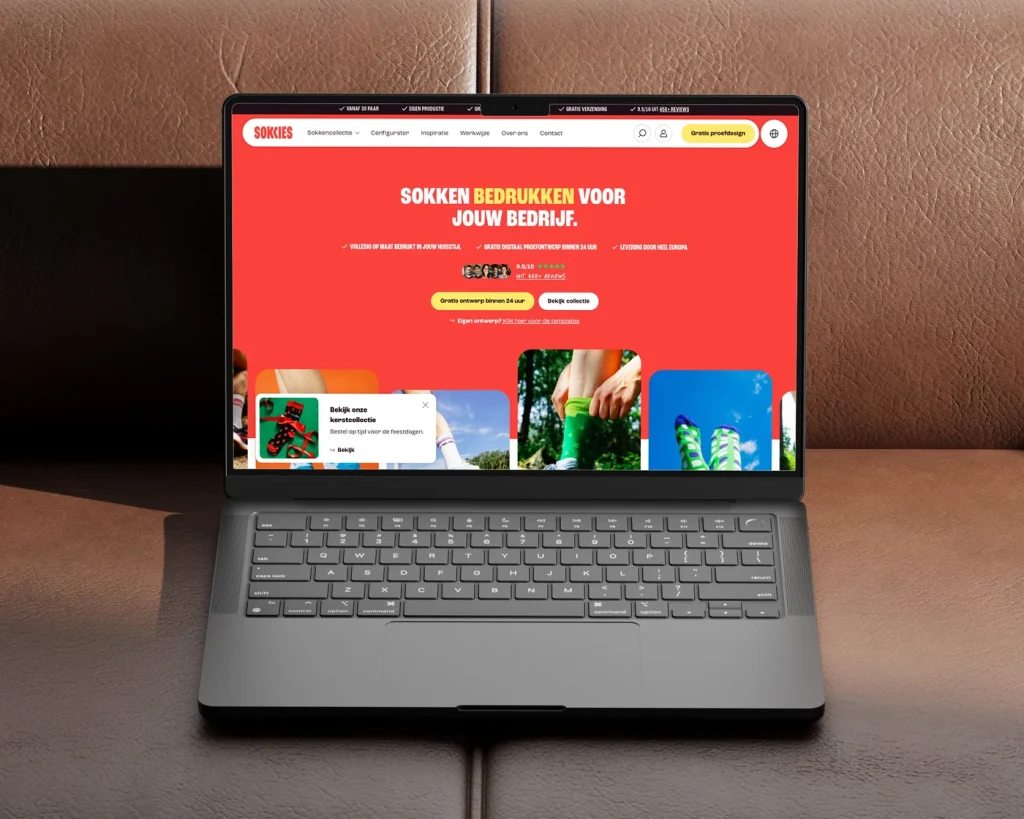
languages from day one
Webshop for custom printed socks, without a checkout

average session length, up 61%
Resay: custom web application for smarter workflows

longer sessions. 40K visits in week one
Web-based 3D roulette game design and development
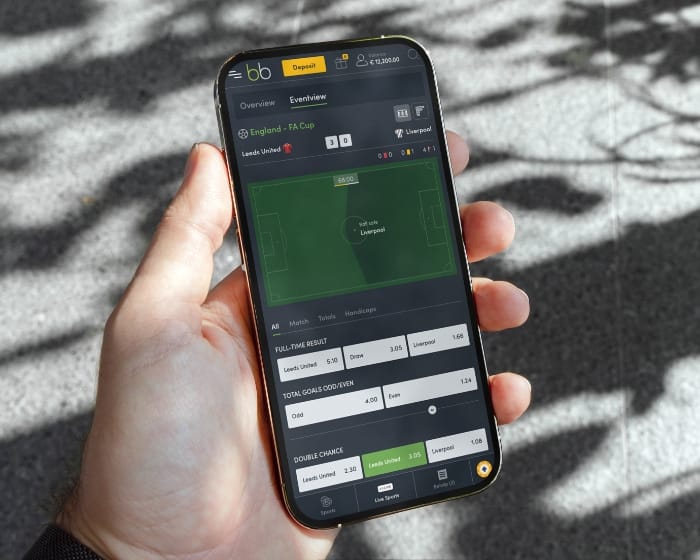
more user actions after redesign
Custom sportsbook platform UX/UI design and development

increase in monthly website visits
Book subscription website design and custom development for House of Books
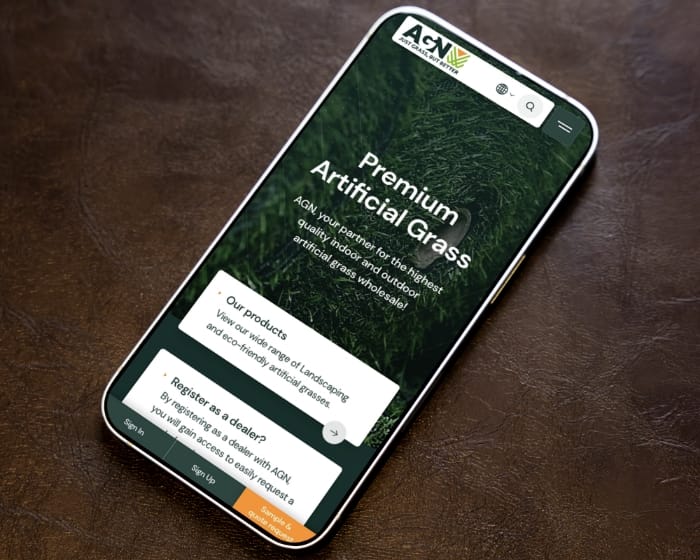
bounce rate & session duration x3 post-live.
B2B artificial grass eCommerce WordPress UX design and development for AGN
Stack choice is one of the few early decisions that’s expensive to reverse later. We pick based on what your project actually needs (performance profile, integration patterns, team familiarity, hiring market for ongoing maintenance), not based on what’s currently fashionable. Four common stack categories we work in, and where each one fits.
Secure, content-heavy MVPs

Real-time APIs, rapid JavaScript sprints


Data-driven, analytics-ready APIs

Flexible content, React/Vue front-ends

Five phases for custom software, scaled to project size. A €30.000 internal tool moves through this faster than a €150.000 platform, but both follow the same shape.
01
We start by mapping what the system needs to do, what it must integrate with, and what success looks like measurably. Architecture decisions (monolithic versus modular, sync versus async, hosted versus self-hosted) get made here based on actual constraints, not framework preference. Output: a clear technical scope document plus an architecture diagram you can review with your CTO or tech advisor.
02
Work breaks into one- or two-week sprints with defined deliverables per sprint. Code reviews happen as standard, not as a step that gets skipped under deadline pressure. You see working software at the end of each sprint demo, not slide decks describing progress. Adjustments to scope happen between sprints, not mid-sprint, which is the only way agile actually works in practice.
03
Each component gets tested in isolation, then integrated with the rest of the system, then tested in combination. Performance testing, security testing, and integration testing against your existing tools or APIs. The bugs you’d otherwise hit in production get caught here, which is the cheaper place to catch them by roughly an order of magnitude.
04
Deployment to staging first, then to production with proper rollback paths and monitoring in place from day one. CI/CD pipelines configured so future updates don’t require manual deployment chess. Documentation produced for both your team (how to operate it) and developers (how to extend it).
05
Monitoring and alerting active from launch. The first month after go-live almost always reveals what you didn’t anticipate — usage patterns differ from assumptions, edge cases appear, features you didn’t think you needed turn out to matter. Post-launch support handles these, plus the roadmap continues with new features and improvements as your business evolves.
Studio Ubique works with startups, agencies, and mid-sized companies who want their product to work better than their competitors’ excuses. Since 2012, with clients across 15+ countries.
5.0


“Studio Ubique brought our vision to life with skill, passion, and precision, our website now truly reflects the soul of House of Books.”
5.0

“Project meets my expectations, good communication with the designer.”
5.0

“Studio Ubique revamped our brewery site with stunning UX/UI. Engagement, speed, and mobile retention soared, plus they nailed the brief on time, on budget, and with true creative flair.”
5.0
“Despite our delays and unclear vision, Studio Ubique delivered a flawless site with creativity, patience, and total professionalism.”
5.0
“Simply outstanding. I am blown away by the not only the design expertise, but also the site functionality. Worth every dollar, and I will be coming back for more business. Do not look further - you found your developer here.”
5.0

“Fastest time ever for a premium website. Willing to make changes, always friendly and helpful - 100% recommend for start-ups and large businesses alike.”
5.0
“Great ideas, smooth communication, and a pleasure to work with, Studio Ubique made building our new website a seamless, collaborative process.”
5.0
“Creative, skilled, and budget-conscious, Studio Ubique perfectly translated our vision with care, precision, and a truly personal touch. We used to post and pray. Their paid social and landing pages now bring real sales, not just likes. Clear plan, quick execution.”
The questions that come up most often, answered here. Yours not among them? Just ask, there's a human on the other end.
Hourly rates run €60 to €65 across all engineering roles. Custom software project totals depend heavily on scope. A small internal tool (single team using it, limited integrations, basic CRUD plus reporting) sits between €15.000 and €40.000. A medium platform (multiple user roles, several integrations, custom workflows, moderate complexity) lands between €40.000 and €100.000. A large custom platform (multi-tenancy, complex business logic, multiple integrations, mobile + web access, real-time features) starts around €80.000 and goes to €250.000+ depending on scope. Most Studio Ubique custom software projects sit in the €30.000 to €100.000 range. For comparison: an equivalent project at a Western European agency typically runs 30 to 40 percent higher because of the hybrid NL + India team structure. Our pricing page covers the broader rate and retainer structure.
Honest answer: off-the-shelf SaaS wins more often than agencies will admit. The decision usually comes down to three questions. First, does an existing SaaS product actually fit your business process closely enough that adapting your process is cheaper than building? If yes, buy. Second, is the cost of multiple SaaS subscriptions plus integration glue plus ongoing license growth higher than the cost of building plus maintaining custom? Run the five-year math. Third, is there genuine competitive advantage in the software itself, not just operational efficiency? If your software is a product or a differentiator, custom may be justified. If it’s just internal operations, SaaS usually wins. Studio Ubique builds custom when the math actually supports it, and recommends SaaS plus light integration work when that’s the cheaper path. Our case studies show projects where custom was genuinely the right call.
You do. Custom software built by Studio Ubique is owned by the client, including all source code, design files, and associated intellectual property. The repository (typically GitHub, GitLab, or Bitbucket) is yours from day one — we work in your repo, not in a private studio repo that gets handed over at the end. This matters because it means you’re never locked into Studio Ubique as your only future development partner. If the working relationship ends, you walk away with everything: code, documentation, deployment access, infrastructure ownership. The contract structure makes this explicit. The only exception is libraries or components we build for reuse across multiple clients (rare, and clearly identified upfront), which we license to you rather than transfer. For everything project-specific, you own it.
Custom software almost never lives alone. Common integration patterns we build: REST or GraphQL APIs that connect to existing CRMs (Salesforce, HubSpot, Pipedrive), ERPs (NetSuite, SAP, custom legacy systems), accounting tools (Xero, QuickBooks, Exact), email services (SendGrid, Postmark, Mailgun), payment providers (Stripe, Mollie, Adyen), data warehouses (Snowflake, BigQuery, Redshift), and authentication providers (Auth0, Okta, Microsoft Entra). For older systems without modern APIs, we build adapters or middleware. The integration layer typically takes 20 to 40 percent of total project effort, which surprises clients who assume it’s smaller than the visible UI work. Worth scoping properly upfront. Our ATS integration page shows a concrete example of how complex integration work gets structured, applicable beyond just recruitment.
Depends on three things: what the software needs to do (real-time features, data-heavy analytics, content-heavy editorial, transactional commerce), what your team already knows (handing off to PHP developers requires Laravel, to Python developers requires Django, to JavaScript developers requires Node), and what the hiring market looks like for ongoing maintenance in your region. Common recommendations: Laravel + PHP for MVP and content-heavy work where the ecosystem is mature and developers are widely available. Node.js + NestJS for real-time features and JavaScript-aligned teams. Python (Django or FastAPI) for data-heavy, analytics, or ML-adjacent products. Headless CMS + React/Vue for content-rich applications with custom frontends. The stack discussion happens in the first scoping call, not in advance. Forcing a stack choice before understanding the project produces decisions that look fine on day one and expensive on year two.
Adapted agile, scaled to project size. Discovery and architecture phases use a more waterfall structure: we need to know what we’re building before we start building it, because architectural decisions are expensive to reverse later. Build phases use sprint-based iteration: one- or two-week sprints with defined deliverables, demos at the end of each, scope adjustments between sprints not mid-sprint. Bigger projects (€80.000+) have explicit milestones every four to six weeks where overall direction gets reviewed, not just sprint output. The honest version of agile: the methodology serves the project, not the other way around. Daily standups make sense for some teams and waste time for others. Burndown charts help some clients and confuse others. We adapt the ceremony to your team’s actual decision rhythm. Our process page covers the general approach.
Three common arrangements. First, light support retainer: bug fixes, dependency updates, occasional small improvements. Typically a few days per month, billed monthly. Suits projects where the software is stable and the team isn’t planning major new features. Second, ongoing development retainer: dedicated capacity from the Studio Ubique team for new features, improvements, and roadmap work. Typically four to ten days per month, structured as Partnership tier with a three-month minimum before standard one-month notice applies. Third, project-by-project: no retainer, work scoped and quoted individually as new needs come up. Suits clients who want flexibility and have their own in-house team for routine maintenance. The right model depends on how active the product is and whether your in-house team can handle routine updates. Our maintenance and support page covers the tier structure and pricing.
Contact
Not everyone likes to write. Rather talk to someone first? Book a 30 to 45 minute intro call through Calendly. It's free, and by the end you'll know whether a proposal makes sense.
Book a call(opens in a new tab)Tell us what's stuck, what you want to build, or what needs fixing. We usually reply within 1-2 business days.