Node.js gives non-blocking speed, NestJS adds opinionated structure. Together they let you build REST endpoints, GraphQL gateways, and message queues without the wild-west code that haunts naive Express projects, with TypeScript throughout, OpenAPI docs from day one, and JWT or session-based auth wired in before launch.
Whether the scope is one microservice talking to Stripe or a full platform integrating with HubSpot, Salesforce, and a legacy ERP, the work gets scoped in sprints, coded in clean NestJS modules, and handed over with test coverage that lets you actually sleep at night.


Ad hoc Express code becomes unmaintainable fast as teams grow and features pile up. NestJS modules, dependency injection, decorators, and OpenAPI generation give structure that survives the third hire and the second pivot.
Traffic spikes break naive setups when database connections, memory pressure, or rate-limiting hit limits. The fix: queue heavy work (BullMQ or RabbitMQ), cache reads (Redis), scale horizontally with stateless services, set rate limits on public endpoints.

Ten SaaS connectors, five data shapes, zero tests. Our fix: typed SDK layers per integration, mocked calls for testing, dedicated service classes per third-party so when one API changes, only one file needs touching.

organic traffic grow in 3 months
Custom B2B WordPress website for Pine Tree Lane

average session length, up 61%
Resay: custom web application for smarter workflows

more user engagement after redesign
Sports travel website design and WordPress development for Via Sports Experiences

increase in monthly website visits
Book subscription website design and custom development for House of Books
more user actions after redesign
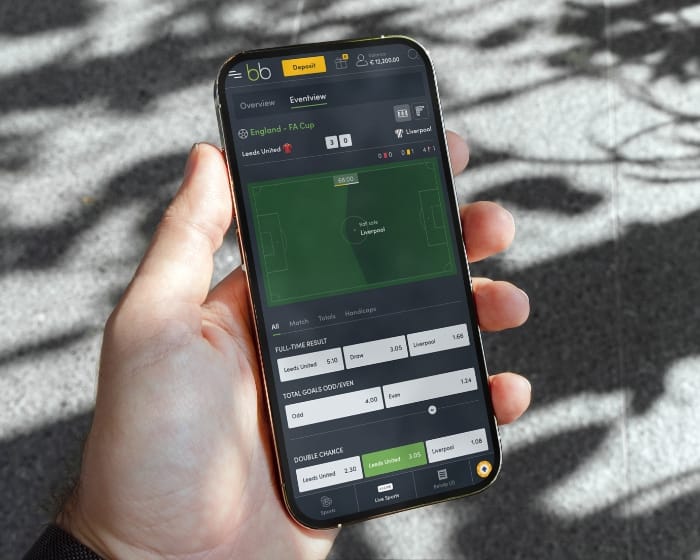
Custom sportsbook platform UX/UI design and development
Six steps for a Node.js plus NestJS project, scaled to project size. Same shape for a €25.000 service and a €80.000 platform.
01
Define goals, map data flows, set success metrics, decide REST versus GraphQL versus hybrid (REST for stable contracts, GraphQL for flexible client queries, hybrid when both apply). Output: scoping document with recommended architecture.
02
Map NestJS modules, entities, guards, interceptors, and pipes for the target deployment environment (containerised, serverless, or traditional VPS). Output: architecture document plus CI/CD pipeline plan for staging and production.
03
Typed controllers, services, and tests delivered weekly with PR review before merge, automated test runs on every push, and staging deploys on green builds. Production deployments scheduled with your team.
04
Connect Stripe, HubSpot, Salesforce, SendGrid, custom ERPs, or any third-party API with dedicated service classes and full mocking for testing. Integration code stays out of controllers and inside testable service modules.
05
Load test against realistic peak traffic patterns, run security scans (npm audit plus Snyk or similar), exercise fail-over and recovery procedures before launch. Production goes live with monitoring and alerts already configured.
06
Deliver OpenAPI documentation, CI/CD pipelines, monitoring dashboards (Datadog, Grafana, or similar), and runbook for incident response. Need extra capacity for peak sprints? Staff augmentation available via Studio Ubique developers.
FlevoDirect, University of Twente (UT), VIA Sports Experiences, Sokkies. And a few hundred other companies you might not know, but which have certainly been well served. That, on reflection, is the whole story.








Our proven Node.js + NestJS development expertise is backed by 100+ stable APIs, delivering seamless data to web apps, stores, and mobile clients with zero midnight rollbacks.
5.0


“Despite our delays and unclear vision, Studio Ubique delivered a flawless site with creativity, patience, and total professionalism.”
5.0

“Fastest time ever for a premium website. Willing to make changes, always friendly and helpful - 100% recommend for start-ups and large businesses alike.”
5.0
“Studio Ubique’s flexible, creative approach and seamless collaboration boost our site’s design and impact, truly a trusted digital partner.”
5.0
“Great ideas, smooth communication, and a pleasure to work with, Studio Ubique made building our new website a seamless, collaborative process.”
5.0
“From rebranding to web design, Studio Ubique has been a key partner, proactive, efficient, and always exceeding expectations with clear, seamless communication.”
The questions that come up most often, answered here. Yours not among them? Just ask, there's a human on the other end.
Hourly rates run €60 to €65 across all engineering roles. Project ranges depend on scope. Small Node.js services (single-purpose APIs, webhook handlers, internal microservices): €15.000 to €30.000. Standard NestJS applications (multi-resource APIs, authentication, integrations with three to five third parties): €30.000 to €60.000. Complex platforms (multi-tenant SaaS backends, real-time WebSocket APIs, event-driven microservice architectures): €60.000 to €150.000+. Staff augmentation rates run the same €60 to €65 per hour with monthly retainer arrangements available for sustained capacity. Our pricing page covers the broader rate structure.
Depends on scope. Small Node.js service (single-purpose API, webhook handler, internal tool): 3 to 6 weeks from kickoff to production. Standard NestJS application with multiple resources, authentication, and a few integrations: 8 to 16 weeks. Complex platform with real-time features, multi-tenancy, or extensive third-party integrations: 14 to 28 weeks. Discovery and architecture phase typically takes 1 to 3 weeks before coding begins. Production deployment plus a 2 to 4 week stabilisation window adds to the timeline. Our process page covers the project structure.
New projects: NestJS 10 (current stable release at time of writing) running on Node.js 20 LTS or 22 LTS. NestJS 11 expected in late 2026. Existing applications on older NestJS versions (7, 8, or 9) need upgrade planning. Standard upgrade path: minor version-by-version progression with regression test coverage at each step, dependency updates, and breaking-change adjustments. Typical NestJS 8 to 10 upgrade: 2 to 4 weeks for moderately complex applications, longer for applications with custom decorators, third-party packages no longer maintained, or significant changes to core decorators. Applications on NestJS 6 or earlier (end-of-life versions) need a more substantial review before deciding between upgrade and rewrite paths.
Depends on what you actually need. Project work fits when: the scope is well-defined, you want a fixed timeline and deliverable, you don’t want hiring overhead, the work has a clear end. Studio Ubique handles engineering plus project management. Staff augmentation fits when: you have an existing team that needs additional capacity, the work is ongoing rather than project-bound, you want developers integrated into your sprint cadence, or you need specific expertise (NestJS architects, GraphQL specialists, DevOps engineers) without permanent hiring. Studio Ubique developers work alongside your team, follow your sprint process, attend your standups. Hourly rates the same €60 to €65 across both models. For most one-off builds, project work is cleaner. For sustained product development, staff augmentation often makes more financial sense than permanent hiring, especially for non-EU teams who want EU-time-zone coverage.
Honest comparison. Node.js plus NestJS: strong choice for real-time applications (WebSockets, server-sent events), microservices, GraphQL APIs, and projects where frontend and backend can share TypeScript types. Higher operational complexity than monolithic frameworks. Laravel (PHP): better for traditional CRUD applications with admin panels and content management, comfortable for PHP-familiar teams, mature ecosystem. Django (Python): comparable to Laravel for traditional web apps, often chosen when Python expertise or machine learning integration matters. Go: best for high-performance microservices, infrastructure tools, and CPU-bound workloads, smaller ecosystem than Node.js. The framework choice matters less than the engineering quality. A well-built Node.js application outperforms a poorly-built Go application, and vice versa.
The question that gets debated more than it should. Start as a modular monolith for most projects. NestJS makes this easy with its module system that enforces boundaries within a single deployment. Move to microservices when there’s a concrete reason: independent scaling needs (one component handling 100x the traffic of others), team autonomy at scale (multiple teams blocked by deployment coordination), technology diversity needs (one component genuinely benefits from a different language or runtime), or compliance boundaries (one component handles regulated data that needs isolation). Premature microservices are the most common architectural mistake we see. Operational complexity increases significantly: service discovery, distributed tracing, transaction coordination, deployment orchestration, monitoring across services. For most startups and mid-market companies, a well-modularised NestJS monolith deployed to a container platform handles growth past 100.000 daily users before microservices become necessary.
Depends on application complexity. Simple Node.js services (single-purpose APIs, low traffic): managed serverless platforms like AWS Lambda, Vercel Functions, or Cloudflare Workers, often with free tiers for small applications. Standard Node.js applications: managed container platforms (Google Cloud Run, AWS Fargate, DigitalOcean App Platform, Fly.io) with managed databases (Aurora, Cloud SQL, Supabase, Neon). PM2 process management for traditional VPS deployments if cloud platforms aren’t a fit. Complex applications: full Kubernetes setups or AWS ECS with proper service mesh, observability stack (Datadog, New Relic, Grafana plus Prometheus), CI/CD pipelines with automated testing and deployment, separate environments per stage. Real-time applications with WebSockets need sticky sessions or session-replication setups that some serverless platforms don’t support well. Care, Growth, and Partnership packages cover ongoing maintenance and operations work after launch.
Contact
Not everyone likes to write. Rather talk to someone first? Book a 30 to 45 minute intro call through Calendly. It's free, and by the end you'll know whether a proposal makes sense.
Book a call(opens in a new tab)Tell us what's stuck, what you want to build, or what needs fixing. We usually reply within 1-2 business days.