Node.js with Express gives you raw JavaScript speed with a minimalist middleware engine that stays out of your way. You keep full control of routes, middleware and data flow, without the bloat of heavier frameworks. Studio Ubique adds TypeScript, Jest tests and Swagger docs to every build, so your stack is ready for traffic spikes, audits, and the features you haven’t scoped yet.
REST APIs for a SaaS backend, server-rendered web apps for marketing sites, or micro-services talking to Stripe and HubSpot: we scope in sprints, push clean commits daily, and leave you with code your own team can actually maintain.


Ad hoc route files breed hidden bugs and onboarding pain. Group routes by feature, introduce controller layers, use typed guards. Suddenly the codebase makes sense to someone who didn’t write it.
Nested callbacks stall features and slow new hires. Switch to async/await, lint promise chains, wrap errors once at the boundary.

Every new SaaS hook feels like playing copy-paste roulette. Create typed service wrappers, test every call, share a single SDK across repos so the third integration doesn’t restart the work.

organic traffic grow in 3 months
Custom B2B WordPress website for Pine Tree Lane

average session length, up 61%
Resay: custom web application for smarter workflows

more user engagement after redesign
Sports travel website design and WordPress development for Via Sports Experiences

increase in monthly website visits
Book subscription website design and custom development for House of Books
more user actions after redesign
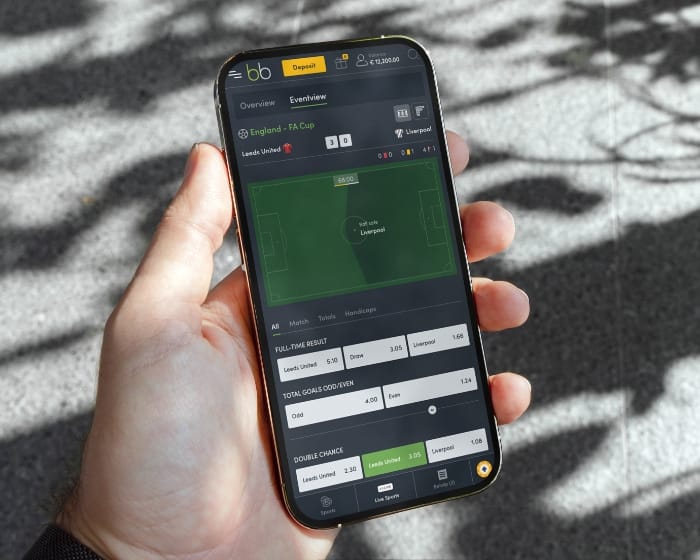
Custom sportsbook platform UX/UI design and development
We deliver efficient builds and stress-free launches in six streamlined steps, combining the precision of a Node.js and Express development company with the agility of rapid sprints.
01
Define goals, map data flows, set KPIs that distinguish REST API work from full web application scope. Output is a scoping document before any code starts, so the right architecture decisions happen before they get expensive.
02
Service map sketched, middleware chosen, deployment path planned for your cloud platform of choice (AWS, GCP, Azure, DigitalOcean, Hetzner). Foundation decisions get reviewed by the team before being locked in.
03
Controllers, models and tests built in weekly slices, each sprint delivering working endpoints rather than just commits. Weekly staging demos so you see actual progress, not screenshots of progress.
04
Stripe, HubSpot, Salesforce, custom XML and JSON feeds connected with typed wrappers, error handling at the boundary, and retry logic for transient failures. Integration failures get caught in staging, not in production at 3am
05
Load tests with realistic traffic profiles, query optimisation against actual database state, alerting on latency and error-rate thresholds, security scanning before launch. Failure modes documented so on-call knows what to expect first.
06
Swagger or OpenAPI docs for every endpoint, CI/CD pipelines configured for your hosting setup, knowledge-transfer sessions with your team. You own the code, the documentation, and the credentials. No handover negotiation needed.
FlevoDirect, University of Twente (UT), VIA Sports Experiences, Sokkies. And a few hundred other companies you might not know, but which have certainly been well served. That, on reflection, is the whole story.







Studio Ubique’s Node.js and Express work powers hundreds of APIs and web apps across the Netherlands, Germany, the US and other markets. Mid-sized startups, established SaaS platforms, agencies running white-label projects, and product teams hiring senior backend capacity.
5.0


“Despite our delays and unclear vision, Studio Ubique delivered a flawless site with creativity, patience, and total professionalism.”
5.0

“Fastest time ever for a premium website. Willing to make changes, always friendly and helpful - 100% recommend for start-ups and large businesses alike.”
5.0
“Studio Ubique’s flexible, creative approach and seamless collaboration boost our site’s design and impact, truly a trusted digital partner.”
5.0
“Great ideas, smooth communication, and a pleasure to work with, Studio Ubique made building our new website a seamless, collaborative process.”
5.0
“From rebranding to web design, Studio Ubique has been a key partner, proactive, efficient, and always exceeding expectations with clear, seamless communication.”
The questions that come up most often, answered here. Yours not among them? Just ask, there's a human on the other end.
Express is the default for most Node.js work because it’s minimal, well-documented, and the ecosystem of middleware and tooling is the largest in the Node world. Good fit for REST APIs, server-rendered web apps, and most micro-services where you want full control over the request lifecycle without framework opinions. Nest.js fits when the team wants structure imposed (decorators, modules, dependency injection) and the project is large enough to benefit from convention over flexibility, typically enterprise backend projects with multiple teams contributing.
Fastify fits when raw performance matters (typically 2-3x faster than Express in benchmarks), good for high-throughput APIs where every millisecond counts. Koa is from the Express creators, with cleaner async handling, but smaller ecosystem and slower adoption. Hono fits for edge runtimes (Cloudflare Workers, Deno Deploy, Bun) where Express isn’t an option. We pick the framework that matches the project’s actual constraints, not what’s trendiest. Our backend development service covers the broader stack discussion.
Four main drivers: scope (single REST API with 20 endpoints versus full SaaS backend with 100+ endpoints, authentication, multi-tenancy, background jobs), integration depth (no external systems versus Stripe plus HubSpot plus Salesforce plus three custom feeds with retry logic and reconciliation), data complexity (simple CRUD versus complex domain models with event sourcing, queues, or real-time updates), and infrastructure requirements (single deployment versus multi-region, multi-environment, auto-scaling on Kubernetes).
Typical project ranges: focused REST API or micro-service (10-30 endpoints, one or two integrations, single deployment target) runs €15,000 to €45,000. Full SaaS backend or marketplace platform (50+ endpoints, multiple integrations, multi-tenancy, background processing) runs €60,000 to €200,000. Our hourly rate is €60 to €65 across roles. Pricing and rates page covers the broader rate structure.
TypeScript by default on every new build. The reasons are pragmatic, not ideological: catches a category of bugs before runtime (typos, wrong argument types, missing properties), makes refactoring across a large codebase substantially safer, gives editors better autocomplete and inline documentation, and provides a self-documenting contract for APIs and integrations. The upfront cost (slightly slower writing speed, type definitions for libraries) pays back fast on projects beyond a few hundred lines.
Plain JavaScript still makes sense in two cases: very small scripts where TypeScript overhead exceeds the benefit, or teams that explicitly prefer JS for cultural reasons we don’t argue with. For maintenance work on existing JS codebases, we don’t force a migration unless the client asks for it. Migration from JS to TypeScript on existing projects is a separate scope worth discussing on its own. Custom software work covers the broader technology decision framework.
Jest is the default test runner, with Supertest for HTTP-level testing of Express routes. Test types and typical coverage on Studio Ubique projects: unit tests for business logic and utilities (80%+ coverage), integration tests for routes, middleware and database interactions (70%+ coverage), end-to-end tests for critical user flows (specific paths rather than blanket coverage). Total project coverage usually lands in the 70-85% range, which catches real bugs without spending more on test maintenance than on feature work.
What we don’t do: chase 100% coverage as a vanity metric, write tests after every implementation regardless of value, or skip testing on prototypes that are explicitly meant to be discarded. Test architecture decisions get documented during the discovery phase so the testing approach matches the project’s actual risk profile. Backend development work covers the broader engineering approach.
Every integration gets a typed wrapper layer between your application code and the third-party API. The wrapper handles authentication, request/response shape validation, error mapping (so a Stripe 402 doesn’t bubble up as a generic 500), retry logic for transient failures (network errors, rate limits, temporary outages), and logging at the boundary so debugging doesn’t require digging through the SDK internals.
Common integrations we’ve shipped: payments (Stripe, Mollie, Adyen, PayPal), CRM (HubSpot, Salesforce, Pipedrive, Zoho), marketing automation (Mailchimp, ActiveCampaign, Klaviyo), analytics (Segment, mParticle), customer support (Intercom, Zendesk), and various custom XML/JSON feeds for legacy enterprise systems. Less common integrations are usually doable if the third party exposes an API. Custom software work covers the broader integration approach.
Node.js and Express applications run on basically anything: AWS (EC2, ECS, Fargate, Lambda for smaller services), Google Cloud Platform (Compute Engine, Cloud Run, GKE), Azure (App Service, AKS), DigitalOcean (App Platform, Droplets, Kubernetes), Hetzner Cloud, Railway, Render, Fly.io, or your own infrastructure with Docker and a container orchestrator. The deployment choice depends on your team’s existing infrastructure, scaling needs, compliance requirements, and budget.
CI/CD pipelines get set up during the project: GitHub Actions, GitLab CI, CircleCI, or Bitbucket Pipelines depending on where the repo lives. Standard pipeline includes: automated tests on pull requests, staging deployment on merge to main branch, manual approval gate before production deployment, automated rollback if health checks fail post-deployment. Our managed VPS hosting covers the option of hosting with Studio Ubique when that’s the cleanest fit.
You own the code, the repository, the documentation, the credentials, and the deployed infrastructure from day one. IP transfers on payment as part of our standard terms. No proprietary frameworks that only Studio Ubique can maintain, no platform lock-in, no licence-based recurring fees. Documentation includes: OpenAPI or Swagger specs for every public endpoint, README with local development setup instructions, deployment runbook with environment variables and infrastructure dependencies, and architectural decision records (ADRs) for the non-obvious choices we made.
Handover at end of project includes a knowledge-transfer session with your team or the next agency, walkthroughs of the more complex parts of the codebase, and follow-up availability for a defined period after handover. For agencies who’ve built backend systems for their end clients with us under white-label arrangements, the handover is even more structured because we work with these scenarios regularly. Our white-label services cover the broader handover approach.
Contact
Not everyone likes to write. Rather talk to someone first? Book a 30 to 45 minute intro call through Calendly. It's free, and by the end you'll know whether a proposal makes sense.
Book a call(opens in a new tab)Tell us what's stuck, what you want to build, or what needs fixing. We usually reply within 1-2 business days.