Turn fleeting visits into steady revenue. As a UX design agency, we guide people from first glance to final click, removing the friction that loses sales.

Good UX turns browsers into buyers, cuts support tickets, and builds long-term loyalty. Studio Ubique combines research data, user empathy, and fast iteration to build journeys users trust from first tap to checkout.

We start with user interviews, analytics review, and heat maps to find what users actually need and where the funnel leaks money.

Conversion-focused design puts attention on clear calls to action, short forms, and microcopy that moves people toward a decision.

Reusable design patterns and component libraries help your team ship new features without redesigning the basics each time.

Reusable user experience design patterns and component libraries help your team launch new features without hesitation.

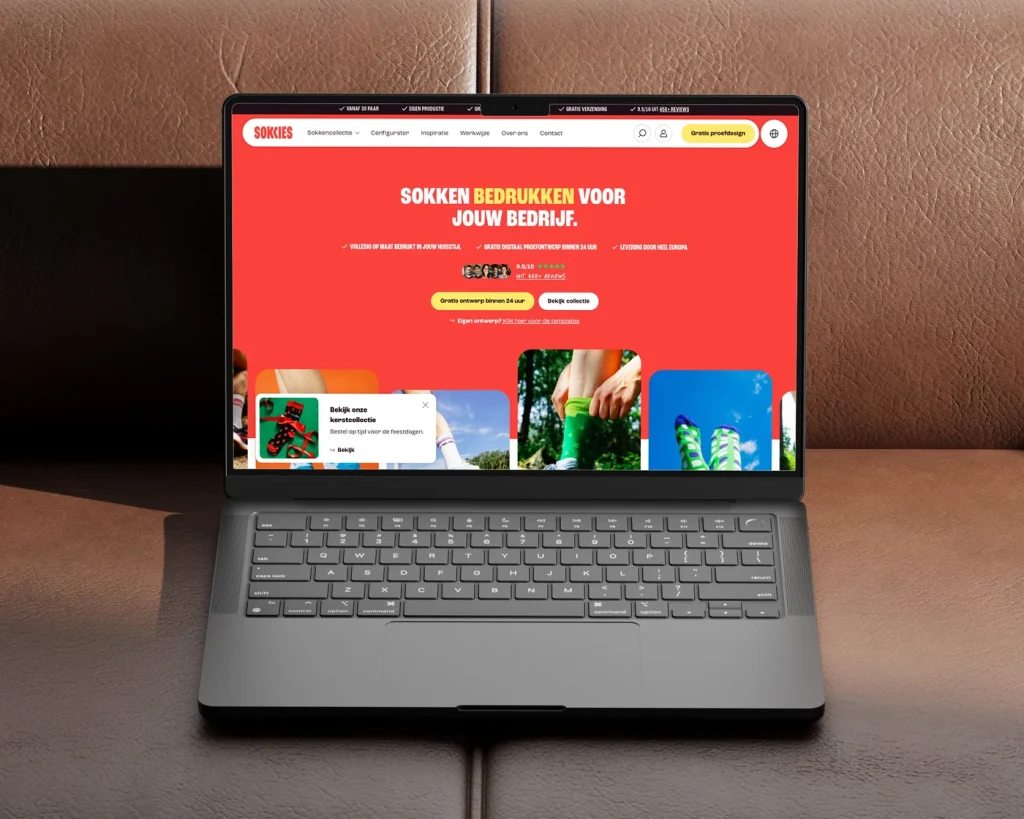
languages from day one
Webshop for custom printed socks, without a checkout
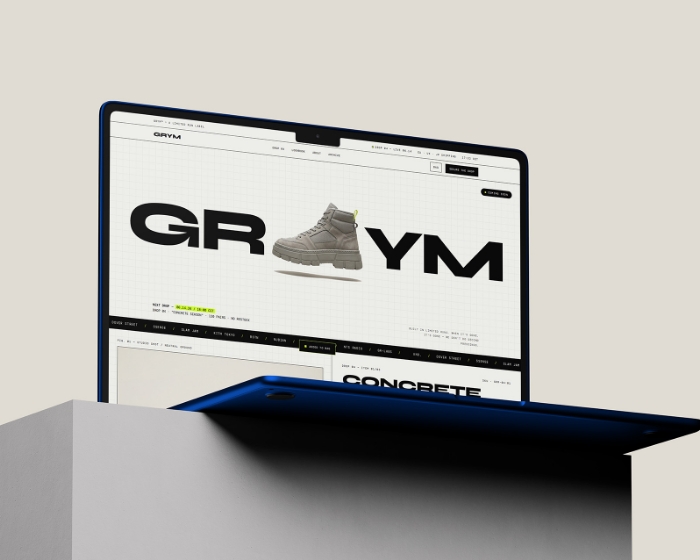
page storefront, brand to cart
Streetwear ecommerce website design, a concept
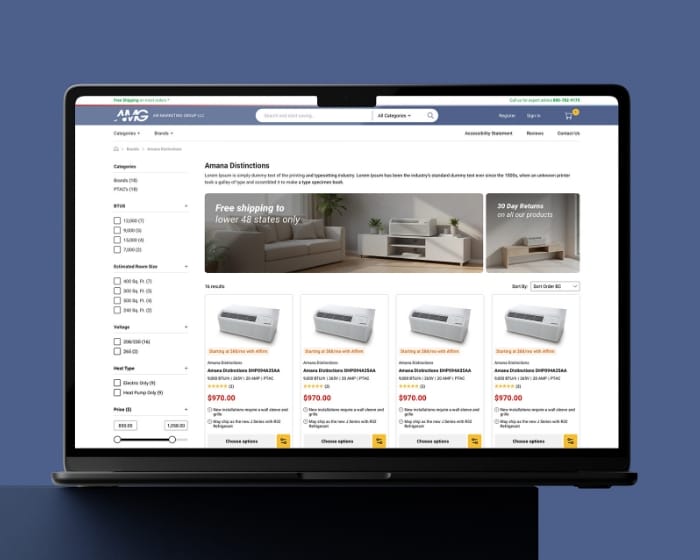
filter usage rate (usability test)
Ecommerce landing and category redesign: desktop case study

faster development kickoff time after our XD hand-off
Dark-mode branding and website for a premium software agency
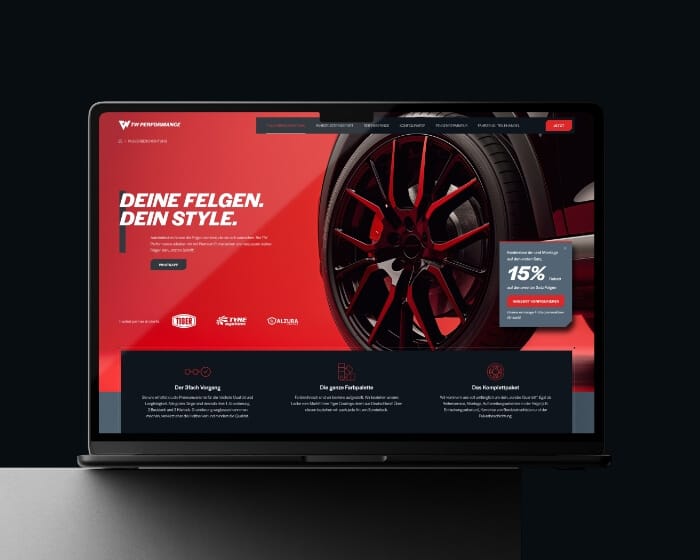
more configurator completions
Performance-driven design for an automotive aftermarket brand
organic traffic grow in 3 months
Custom B2B WordPress website for Pine Tree Lane
Good UX is not a coincidence, it is the result of a repeatable system. Here is how the work goes, from first research to developer hand-off.
01
Interviews, surveys, and a deep dive into KPIs uncover the gap between what users need and what you assume they want. That gap is usually where the conversion problem hides.
02
Personas, scenarios, and customer journey maps turn raw research into clear blueprints. These are working documents the whole team uses, not slides that get presented once and forgotten.
03
Low-fidelity wireframes outline screens, content hierarchy, and priorities, settling structure before anyone argues about colours. Getting the skeleton right early saves expensive rework later.
04
Clickable mockups add motion, feedback, and microcopy, close enough to the real thing for honest hallway testing. Teams refine concepts here, while changes still cost minutes instead of sprints.
05
Lab and remote sessions capture real behaviour, where users hesitate, misread, or give up. Watching five people struggle with the same screen settles design debates faster than any opinion in a meeting.
06
Data-driven tweaks settle the final flow, and developer hand-off packs include specs, assets, and component states. Hand-off is where many agencies get lazy, so this is the part <a href=”/website-support/”>ongoing support packages</a> keep tidy after launch.
Studio Ubique works with startups, scale-ups, and established mid-sized companies. The UX work usually starts with one question: where is this product losing people, and why?
5.0


“Studio Ubique brought our vision to life with skill, passion, and precision, our website now truly reflects the soul of House of Books.”
5.0

“Project meets my expectations, good communication with the designer.”
5.0

“Studio Ubique revamped our brewery site with stunning UX/UI. Engagement, speed, and mobile retention soared, plus they nailed the brief on time, on budget, and with true creative flair.”
5.0
“Studio Ubique continue to do really excellent work! They are great at taking direction, but also willing to advise when ideas clash with good design. A great team to work with.”
5.0
“Simply outstanding. I am blown away by the not only the design expertise, but also the site functionality. Worth every dollar, and I will be coming back for more business. Do not look further - you found your developer here.”
5.0

“Fastest time ever for a premium website. Willing to make changes, always friendly and helpful - 100% recommend for start-ups and large businesses alike.”
5.0
“Great ideas, smooth communication, and a pleasure to work with, Studio Ubique made building our new website a seamless, collaborative process.”
5.0
“Studio Ubique boosted our site’s speed, security, and UX. With timely delivery, proactive updates, and expert execution, they’ve become a trusted partner in our digital growth.”
5.0
“Creative, skilled, and budget-conscious, Studio Ubique perfectly translated our vision with care, precision, and a truly personal touch. We used to post and pray. Their paid social and landing pages now bring real sales, not just likes. Clear plan, quick execution.”
5.0
“Studio Ubique earned our trust with their expertise and results. What started as one project grew into a long-term collaboration thanks to their consistent delivery and professionalism.”
5.0
“Studio Ubique understood our vision, responded fast to feedback, and kept the AGN website redesign smooth and efficient. A seamless, goal-driven collaboration from start to finish.”
The questions that come up most often, answered here. Yours not among them? Just ask, there's a human on the other end.
Depends on scope. A focused UX audit of an existing product (heuristic review, analytics check, prioritised list of issues): €5.000 to €10.000. A research-led design project for a defined section (checkout flow, onboarding, key feature) including interviews, wireframes, prototype, and testing: €10.000 to €25.000. Full product UX, from research through design system and developer hand-off for a complete web app or eCommerce platform: €25.000 to €50.000+. Hourly rates run €60 to €65 across UX research, design, and project management. UX work pairs naturally with development, most clients run UX as the first phase of a larger build, then carry the same team into front-end development so the design intent survives implementation. <a href=”/pricing-and-rates/”>Our pricing page</a> covers the broader rate structure.
Typical timelines. UX audit of an existing product: 2 to 3 weeks. Research-led design for a defined section (checkout, onboarding, a key feature): 4 to 8 weeks. Full product UX from research through design system and hand-off: 8 to 16 weeks. The variable that surprises clients: recruiting real users for research and testing takes calendar time. Finding 5 to 8 people who match the actual target audience, scheduling them, and running sessions usually adds 1 to 2 weeks that cannot be compressed by working harder. We start recruitment early, in parallel with kickoff, so it does not block the rest of the project. Our process page covers project structure across services.
A UX audit diagnoses, a full UX project treats. A UX audit looks at an existing product and produces a prioritised list of what is hurting conversion or usability: heuristic review against established usability principles, analytics analysis to find where users drop, a heat map or session recording review, and sometimes a small round of usability testing. The deliverable is a ranked report, what to fix first, what can wait, and the likely impact of each fix. An audit suits teams who know something is wrong but cannot pinpoint it, or who need an objective second opinion before committing budget. A full UX project takes that diagnosis (or starts fresh with research) and redesigns: personas, journey maps, wireframes, prototypes, testing, and developer hand-off. Many clients start with an audit, use it to build the internal case for investment, then commission the full project. The audit cost often folds into the larger project if they continue within a reasonable window.
Both, and the research is the part that makes the design work. UX research at Studio Ubique covers user interviews (structured conversations with real or representative users), analytics review (what existing data already reveals about behaviour), heat maps and session recordings (where attention goes, where users get stuck), usability testing (watching people attempt real tasks), and competitive analysis. Research can run as a standalone engagement (useful when an in-house team will do the design but needs a solid evidence base) or as the first phase of a full design project. The honest position: design without research is decoration. Skipping research to save budget usually costs more later, in redesigns that chase the conversion problem the research would have found in week one. For small projects with tight budgets, even a lightweight research phase (a handful of interviews plus an analytics review) beats designing on assumptions.
Usually yes, and that is often the better path. Most existing products do not need a rebuild, they need targeted fixes to the screens and flows that lose people. The approach: a UX audit identifies the specific friction points, then design and development address them in priority order, shipping improvements incrementally rather than disappearing for six months to rebuild everything. Common high-impact fixes that do not require a rebuild: shortening or restructuring forms, clarifying calls to action, fixing confusing navigation, improving error handling and empty states, and tightening the checkout or signup flow. A rebuild only makes sense when the underlying structure genuinely blocks improvement, for example an information architecture so tangled that every fix creates two new problems, or a tech stack that cannot support the needed changes. Incremental UX improvement on an existing product typically runs €10.000 to €25.000 depending on how many flows need work, far less than a full rebuild, and the results show up faster.
Hand-off is where UX projects often quietly fail, so it gets real attention. A Studio Ubique developer hand-off pack includes: final designs with every state covered (default, hover, active, error, empty, loading), a component specification (spacing, typography, colours as design tokens), interaction and motion notes, responsive behaviour across breakpoints, and accessibility requirements (focus order, contrast, screen reader labels). When Studio Ubique also builds the product, hand-off is smooth because the design and development teams already worked together through the project. When an external or in-house team builds it, the hand-off pack plus a walkthrough session covers the gaps, and we stay available for the build team’s questions. The failure mode we design against: a beautiful prototype that developers interpret five different ways because the edge cases were never specified. Ongoing design support after launch runs through the Care, Growth, or Partnership packages.
Contact
Not everyone likes to write. Rather talk to someone first? Book a 30 to 45 minute intro call through Calendly. It's free, and by the end you'll know whether a proposal makes sense.
Book a call(opens in a new tab)Tell us what's stuck, what you want to build, or what needs fixing. We usually reply within 1-2 business days.