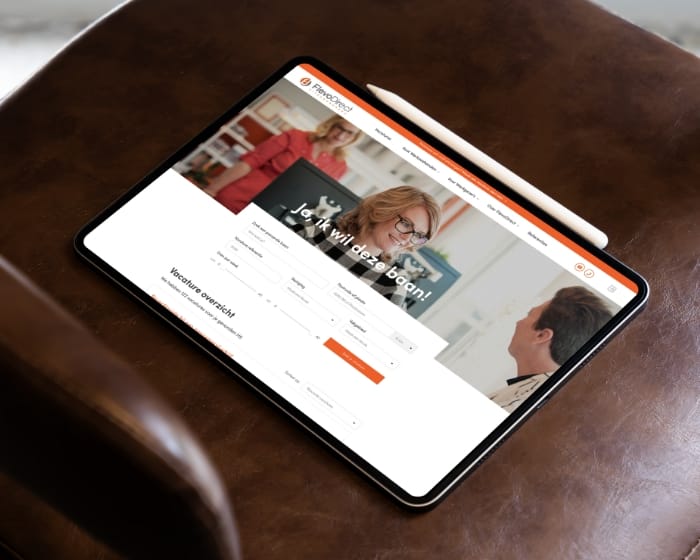
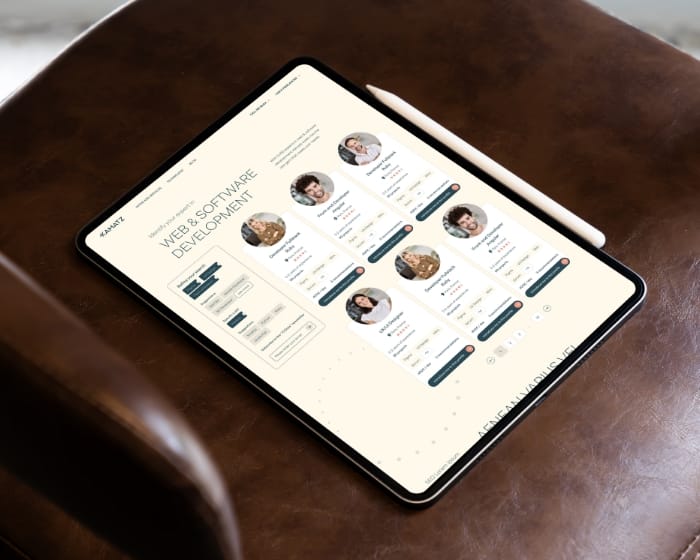
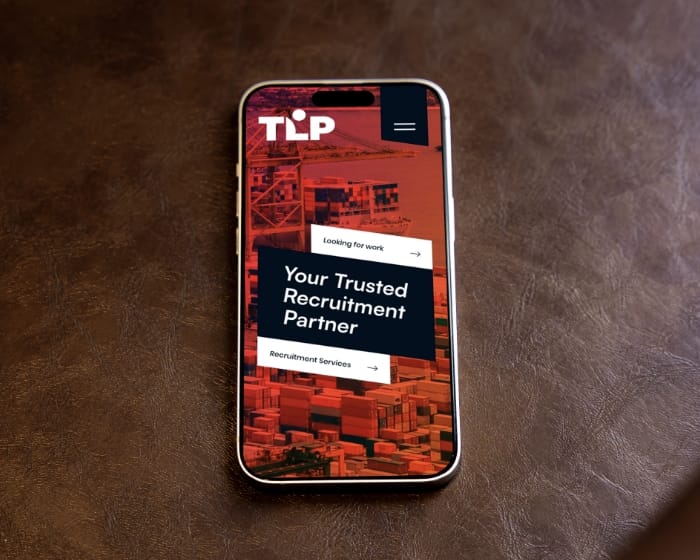
Job board platform development that doesn’t collapse under real usage. We build niche job boards and marketplaces where posting, search, matching, and moderation stay fast, with WordPress upfront and custom CMS behind.
5.0


“Collaborating with Studio Ubique proved to be an outstanding experience. Right from the start, they showcased a profound grasp of our vision for House of Books. Their dedication to excellence and innovation shone through every phase of the project. The website they developed not only met but surpassed our expectations, seamlessly blending contemporary functionality with vintage allure.”
5.0
“Project compliant with my expectations, good communication with the designer.”
5.0
“Studio Ubique did a truly outstanding job on our web design project. We had an example to point to for general look we wanted, but our product is fundamentally a lot different from the example website, a lot of differences were needed, and in many instances we really didn't have the vision of what specifically would work and needed to trust Studio Ubique to provide that vision.”
5.0
“Studio Ubique continue to do really excellent work! They are great at taking direction, but also willing to advise when ideas clash with good design. A great team to work with.”
Seen on top review platforms


A job board is a marketplace with manners, until spam shows up, search slows down, and employers post the same role five times. If you want repeat buyers and real applicants, the platform has to earn trust every day.


Some facts
sides to serve: employers and candidates, plus an admin layer that keeps things sane.
core objects drive everything: listings, profiles, and applications or lead handoffs.
growth killer shows up early: slow search and duplicate content that makes the board feel dead.
5.0
“They're a multifaceted team, which allows us to share requirements and work with them effectively.”
5.0
“I would highly recommend Studio Ubique for any business if it looks to move into a headless CMS environment. They prioritize user experience with teams who will manage the site long-term and understand the technical side.”
5.0

“Studio Ubique rebuilt our site with a headless CMS (WordPress + Next.js). The new setup offers easy content editing, custom blocks, and a simple publishing flow. Fast, flexible, and stable, it’s perfect for our growing company.”
5.0
“Simply outstanding. I am blown away by the not only the design expertise, but also the site functionality. Worth every dollar, and I will be coming back for more business. Do not look further - you found your developer here.”

Pricing, credits, featured listings, and role permissions that match how you actually sell.

Filters, relevance, and deduping so “find a job” doesn’t feel like archaeology.

Employer onboarding, job posting, and candidate apply flows that reduce drop-offs without tricks.

Flags, review queues, verification steps, and admin controls to keep scams out and quality in.
If your jobs need to sync to Greenhouse, Lever, Teamtailor, or Recruitee, we’ll bake that into the build instead of “phase two someday”. Drop your idea below, you’ll get a clear scope without a 40-page fairy tale.
We’ve been building and maintaining digital products long enough to know what breaks, what scales, and what “urgent” actually means.


Studio Ubique works with startups, agencies, and mid-sized companies who want their product to work better than their competitors’ excuses. Since 2012, with clients across 15+ countries.
5.0
“Studio Ubique brought our vision to life with skill, passion, and precision, our website now truly reflects the soul of House of Books.”
5.0
“Despite our delays and unclear vision, Studio Ubique delivered a flawless site with creativity, patience, and total professionalism.”
5.0
“Fastest time ever for a premium website. Willing to make changes, always friendly and helpful - 100% recommend for start-ups and large businesses alike.”
5.0
“Creative, skilled, and budget-conscious, Studio Ubique perfectly translated our vision with care, precision, and a truly personal touch. We used to post and pray. Their paid social and landing pages now bring real sales, not just likes. Clear plan, quick execution.”
5.0
“From rebranding to web design, Studio Ubique has been a key partner, proactive, efficient, and always exceeding expectations with clear, seamless communication.”
5.0
“Studio Ubique understood our vision, responded fast to feedback, and kept the AGN website redesign smooth and efficient. A seamless, goal-driven collaboration from start to finish.”
The questions that come up most often, answered here. Yours not among them? Just ask, there's a human on the other end.
SaaS job board platforms (JobBoard.io, Niceboard, SmartJobBoard, Workable’s job board features) work when your needs match what they offer: standard listing structure, common payment flows, generic search, and basic moderation. Monthly fees scale with listings or users, but you avoid build cost and time. Good fit for general job boards that don’t have unusual data models, custom workflow rules, or specific brand requirements.
Custom build makes sense when your niche has structural requirements SaaS can’t model cleanly: industry-specific listing fields, custom matching algorithms (skills-to-roles, location radius, certification matching), unusual pricing structures (per-job, per-credit, per-applicant, hybrid), deep ATS integrations that go beyond the SaaS’s connector library, multi-region or multi-language at the platform level rather than as bolted-on translation, or brand and UX requirements that hit the SaaS’s customisation ceiling. The cost is build investment up front, the payoff is owning the platform without monthly fees scaling with success. Custom software development work covers when build versus buy is the right call.
Five main drivers: scope of features (just job posting and search vs full marketplace with payments, credits, featured listings, multi-role permissions), depth of ATS integration (one ATS via straightforward API versus five ATSs with bidirectional sync and conflict resolution), moderation and trust tooling (basic flag-and-review versus active verification, identity checks, content moderation queues), multi-language and multi-region requirements (single-locale versus three or more regions with localised content, currency and legal compliance), and design ambition (template-based versus fully custom UX with motion and complex interaction patterns).
Typical project ranges: MVP job board with WordPress front end and custom CMS behind (single locale, basic payments, two ATS integrations) sits between €25,000 and €60,000. Fuller marketplace builds with custom matching algorithms, multi-region setup, and deep integrations reach €80,000 to €200,000. Our hourly rate is €60 to €65 across roles. Pricing and rates page covers the broader rate structure.
MVP timelines run 10 to 16 weeks for most job board platforms, depending on integration depth and the number of marketplace mechanics included in the first release. The MVP typically covers the core flows that produce revenue or core value: employer registration and job posting, candidate search and apply, basic moderation queue, payments (or credits) for the chosen monetisation model, and one ATS integration if the launch audience requires it.
Hardening phases run after MVP launch: additional ATS integrations, verification and trust tooling, performance optimisation for higher listing volume, analytics that reflect what you actually want to measure, and the features that surfaced during real-user testing rather than the ones that sounded important during scoping. Shipping in slices like this is deliberate: launches don’t haunt you later, and you start collecting real-user data faster. Recent project work includes recruitment and ATS-integrated platforms with launch timelines documented.
Most common integrations: Greenhouse, Lever, Teamtailor, Recruitee, Workable, JobAdder, BambooHR, Personio. Less common ATSs (industry-specific or legacy systems) are usually possible if they expose an API or accept webhook payloads, though they take longer to scope. The sync direction matters: job-out (your ATS publishes jobs to the board), candidate-in (applications flow from the board into the ATS), or bidirectional (status updates flow back).
Sync mechanism depends on the ATS: webhooks where the ATS supports them (Greenhouse, Lever, Teamtailor all do, with near-real-time updates), polling on a schedule where webhooks aren’t available, with monitoring and retry logic for failures. The “almost real-time” promise some integrations make is usually fine until it isn’t, which is why we build retry queues, alerting on sync failures, and a manual reconciliation path for when an ATS goes down or rate-limits hits. CMS development work covers the broader CMS-to-system integration pattern.
Standard built-ins on every build: rate limits on posting (per employer, per IP, per timeframe), captcha or invisible bot detection on signup and post forms, duplicate detection across listings (title, company, location and description similarity), flagged-content queue for human review, role-based admin tools to suspend accounts or remove listings, and audit trail logging so disputes have a paper trail.
Optional additions for higher-trust niches: identity verification for employers (manual review of business registration, EU VAT verification, domain-email verification rather than free-email signups), payment-required posting (paid listings deter low-effort spam better than free posting with moderation), AI-based content scoring for listing quality, and IP geolocation to block specific markets that historically attract scam attempts. Trust tooling decisions usually emerge from the audit during scoping, since each niche attracts different spam vectors. Security and speed optimisation work covers the broader site security layer beyond marketplace-specific moderation.
Yes, multi-language and multi-region are part of the data model from day one when scoped that way (it’s much harder to retrofit than to design in). Locales are stored as fields on the relevant objects (listings, profiles, content pages), URLs follow hreflang-friendly patterns (typically /en/, /de/, /fr/ subdirectories or country subdomains depending on SEO strategy), and the CMS structures translation workflows so editors aren’t doing each language manually for content that should sync.
Region-specific considerations beyond translation: local payment methods (iDEAL for the Netherlands, Bancontact for Belgium, SEPA across Europe, card payments globally), currency display and pricing, region-specific legal pages (privacy notices, employer terms, candidate terms vary by jurisdiction), local job-posting compliance (specific industries in specific countries have content requirements), and ATS regional preferences (some ATSs are NL-strong, others UK or DE-strong). CMS development covers the multi-language CMS structure in more depth.
You own the code, the database, the documentation, and the infrastructure setup. IP transfers on payment as part of our standard terms. The repository (typically GitHub, GitLab or Bitbucket) sits under your account, the production environment is yours, and the credentials (hosting, third-party API keys, payment processors) are documented and accessible to you from day one. No platform lock-in, no proprietary frameworks that only Studio Ubique can maintain.
If you ever move the platform to an internal team or another agency, we run a clean handover: transition calls with the receiving team, knowledge-transfer documentation specific to the implementation choices made, and follow-up availability for a defined period after handover for questions that come up during the new team’s onboarding. For agencies who’ve built platforms for end clients with us under white-label arrangements, the handover is even more structured because we work with these scenarios regularly. Our white-label services cover that handover structure.








Book a quick 30 min video call, we will show you exactly what to fix. We reply within 24 hours.