Vue.js gives you a framework that feels like plain HTML yet scales to enterprise dashboards. The core runtime weighs kilobytes, the reactivity system keeps data and DOM in lockstep, and the Composition API makes complex state readable. Nuxt adds file-based routing and server-side rendering in one sweep, which keeps crawlers happy and bundles smaller.
Studio Ubique adds TypeScript, ESLint, and Playwright to every repo, then wires CI to block regressions. Your marketers get crawlable markup, your developers keep single-file components, and your finance team sees leaner sprints because we reuse patterns instead of rewriting boilerplate.


Legacy bundles slow mobile performance. We split single-file components into smaller chunks with route-level code splitting, so the first paint lands while heavier code loads in the background, not before it.
Client-only Vue apps serve crawlers an empty div and a prayer. Nuxt server-side rendering streams real HTML instead, so crawlers index every product card and content block without executing JavaScript first.

Global mutable state breaks features in ways that are hard to trace. The Composition API with typed Pinia stores keeps data flows explicit, and Playwright tests catch regressions before they reach production.

dev cost savings since 2023
Sportsbook UI design & dedicated dev team
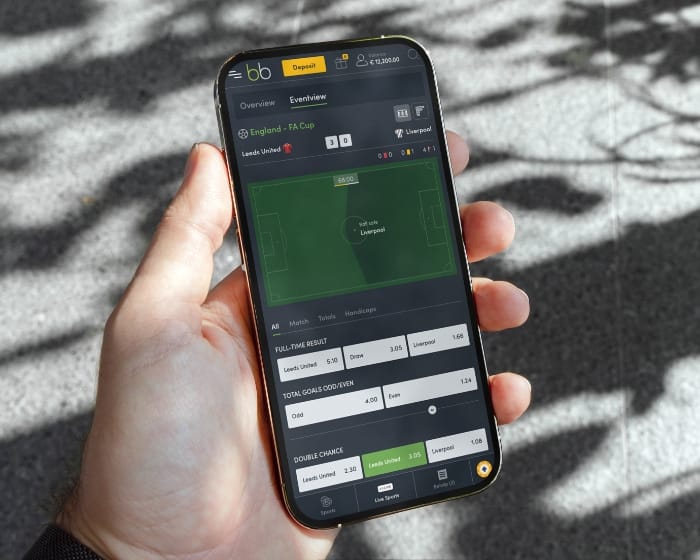
more user actions after redesign
Custom sportsbook platform UX/UI design and development

organic traffic grow in 3 months
Custom B2B WordPress website for Pine Tree Lane

average session length, up 61%
Resay: custom web application for smarter workflows

more user engagement after redesign
Sports travel website design and WordPress development for Via Sports Experiences

increase in monthly website visits
Book subscription website design and custom development for House of Books
Six steps from concept to dependable release, with the checks that keep a Vue.js build from drifting over time.
01
We map your goals against rendering strategy: single-page app, server-side rendered, static-generated, or hybrid per route. The choice depends on SEO needs, content update frequency, and how dynamic each section actually is.
02
Component hierarchy, routing structure, and API contracts get planned before the first prop renders. Budget and timeline are set against that plan, so scope changes are visible decisions rather than silent overruns.
03
Features built in weekly slices with component tests and Storybook stories alongside the code. Naming conventions and accessibility standards (WCAG 2.2 AA as default) are checked in review, not bolted on at the end.
04
Automated checks run Lighthouse, Axe accessibility audits, and dependency risk scans on every pull request. Human reviewers check bundle budgets and design fidelity, the parts automation can flag but not judge.
05
Preview branches deploy to edge nodes for review, blue-green deploys keep production stable during release, and monitoring validates Core Web Vitals from the first day of live traffic, not weeks later.
06
Monthly reviews track Core Web Vitals, bundle drift, and dependency security advisories. Updates ship before problems compound, available through Care, Growth, or Partnership packages sized to your actual maintenance needs.
FlevoDirect, University of Twente (UT), VIA Sports Experiences, Sokkies. And a few hundred other companies you might not know, but which have certainly been well served. That, on reflection, is the whole story.







Studio Ubique builds Vue.js and Nuxt frontends for SaaS products, dashboards, and content-heavy sites across the Netherlands, Germany, and beyond. Code samples and references are available on request, usually the same business day.
The questions that come up most often, answered here. Yours not among them? Just ask, there's a human on the other end.
Vue.js fits well when you want a gentle learning curve for the team (the template syntax reads close to plain HTML), a framework with batteries included (official routing, state management with Pinia, and SSR through Nuxt all maintained by the core team rather than assembled from third parties), and a balance between structure and flexibility. It’s a strong choice for dashboards, content-heavy sites, internal tools, and SaaS frontends where developer velocity matters.
React fits better when the team is already React-experienced, when you need the largest possible hiring pool, or when the project depends on a React-specific library ecosystem (React Native for mobile, specific enterprise component libraries). Svelte fits when bundle size is the dominant concern and the project is small to mid-sized, though its ecosystem is smaller. We don’t push Vue.js on every project, the right framework depends on your team, your existing code, and your hiring market. Frontend development covers the broader framework decision.
Plain Vue.js (a single-page application) is enough when SEO doesn’t matter for the app (internal dashboards, authenticated tools, admin panels behind a login), when the app is purely interactive rather than content-driven, and when you control the hosting environment fully. SPAs are simpler to build and deploy, with no server runtime to maintain.
Nuxt earns its place when SEO matters (marketing sites, eCommerce, content platforms, anything that needs to rank), when first-load performance on slow devices is important (server-rendered HTML paints faster than waiting for JavaScript to execute), or when you want file-based routing and other conventions that reduce boilerplate. Nuxt supports several rendering modes per route: server-side rendering, static generation, client-only, and hybrid, so a single Nuxt app can render the marketing pages statically and the dashboard client-side. We decide rendering strategy per route during the discovery phase. Frontend development work covers the rendering strategy decision in more depth.
Cost drivers: scope (a focused dashboard with 10 to 20 views versus a full SaaS frontend with 60+ views, complex state, real-time features), rendering complexity (simple SPA versus Nuxt with multiple rendering modes per route), integration depth (how many APIs, how much custom data transformation), design starting point (existing design system versus design from scratch), and test coverage requirements. A focused Vue.js frontend project typically runs €15,000 to €45,000 over 6 to 12 weeks. A full SaaS frontend or complex dashboard runs €50,000 to €150,000 over 3 to 7 months.
Our hourly rate is €60 to €65 across roles. Frontend-only projects (where you have a backend team and need the Vue.js layer built) and full-stack projects (where we build backend and frontend together) are scoped differently, the frontend-only engagement needs clear API contracts from your side before sprint work starts. Pricing and rates page covers the broader rate structure.
Both. For existing Vue.js codebases, the work usually starts with an audit: dependency health (how outdated, how much security risk), Vue version (Vue 2 codebases need a migration conversation since Vue 2 reached end-of-life in December 2023), architecture quality (is state management coherent, are components reasonably structured), test coverage, and bundle health. The audit produces a prioritised list of what to fix, what to leave, and what to rebuild.
Common existing-codebase engagements: Vue 2 to Vue 3 migration (substantial work, the Composition API and breaking changes mean it’s rarely trivial), performance rescue (a working app that’s become slow), adding SSR to an existing SPA (often means a Nuxt migration), or adding capacity to an existing team. Greenfield projects are simpler to scope but existing-codebase work is common and we don’t avoid it. Frontend development covers the audit and migration approach.
Vue 2 reached official end-of-life on 31 December 2023. No more updates, no security patches from the core team. If you’re on Vue 2, you don’t have to migrate immediately, but the risk grows over time: security vulnerabilities in Vue 2 or its dependencies won’t be patched, the ecosystem of libraries is steadily dropping Vue 2 support, and hiring developers willing to work on Vue 2 gets harder each year.
Migration paths: the official Vue 2 to Vue 3 migration build allows incremental migration (run Vue 2 and Vue 3 compatible code side by side during the transition), which de-risks large codebases. For smaller apps, a direct rewrite to Vue 3 is sometimes cleaner than incremental migration. The realistic timeline for a mid-sized app is 4 to 12 weeks depending on how many Vue 2-specific patterns and dependencies are in play. We scope migrations honestly, including telling you if staying on Vue 2 for another year is the reasonable call for your situation. Frontend development covers migration scoping.
The core requirement is server-side rendering or static generation for anything that needs to rank, so search engines receive real HTML instead of an empty container waiting for JavaScript. Nuxt handles this: marketing pages and content can be statically generated or server-rendered, while the interactive parts stay client-side. Beyond rendering, Vue.js SEO needs the same fundamentals as any site: proper meta tags per route (Nuxt’s useHead or useSeoMeta), structured data where relevant, correct canonical URLs, clean semantic HTML, and fast Core Web Vitals.
Common Vue.js SEO mistakes we fix: client-only rendering on content that needs to rank (the most frequent issue), missing or duplicate meta tags across routes, slow hydration hurting interaction metrics, and parameter-based routes creating crawl bloat. We measure with Lighthouse and Search Console, not assumptions. SEO services covers the broader SEO infrastructure for Vue.js and other frameworks.
You own the code, the repository, the documentation, the credentials, and the deployed infrastructure from day one. IP transfers on payment as part of our standard terms. No proprietary frameworks that only Studio Ubique can maintain, no platform lock-in. Vue.js, Nuxt, TypeScript, and Pinia are all standard, widely-used open-source tools, so any competent Vue.js developer can pick up the codebase.
Handover materials: README with local development setup, architectural decision records for the non-obvious choices (rendering strategy per route, state management structure, why specific dependencies were chosen), component documentation through Storybook, deployment runbook, and a knowledge-transfer session with your team or the next agency. For agency clients who’ve had us build Vue.js frontends for their end clients under white-label arrangements, the handover is structured around the multi-stakeholder situation. White-label services cover that handover structure.
Contact
Not everyone likes to write. Rather talk to someone first? Book a 30 to 45 minute intro call through Calendly. It's free, and by the end you'll know whether a proposal makes sense.
Book a call(opens in a new tab)Tell us what's stuck, what you want to build, or what needs fixing. We usually reply within 1-2 business days.