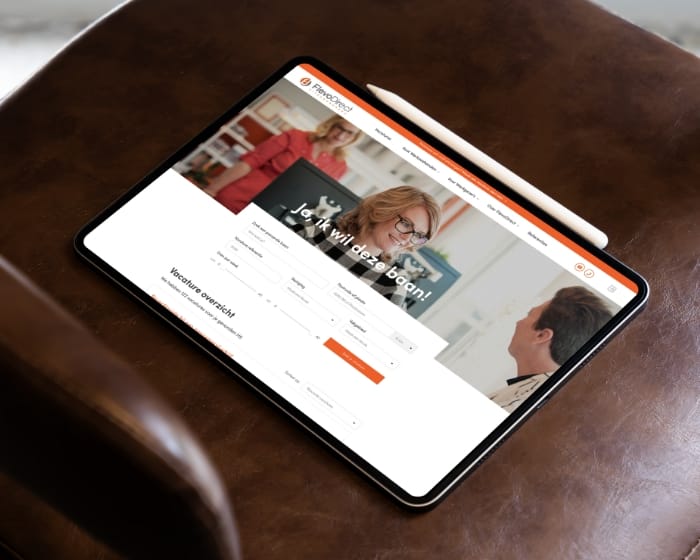
Recruitee API integration between your ATS and your careers site, with strict field mapping, retries, audit logs. Works on WordPress and custom CMS.
5.0


“Collaborating with Studio Ubique proved to be an outstanding experience. Right from the start, they showcased a profound grasp of our vision for House of Books. Their dedication to excellence and innovation shone through every phase of the project. The website they developed not only met but surpassed our expectations, seamlessly blending contemporary functionality with vintage allure.”
5.0
“Project compliant with my expectations, good communication with the designer.”
5.0
“Studio Ubique did a truly outstanding job on our web design project. We had an example to point to for general look we wanted, but our product is fundamentally a lot different from the example website, a lot of differences were needed, and in many instances we really didn't have the vision of what specifically would work and needed to trust Studio Ubique to provide that vision.”
5.0
“Studio Ubique continue to do really excellent work! They are great at taking direction, but also willing to advise when ideas clash with good design. A great team to work with.”
Recruitee is your ATS (applicant tracking system), software that holds jobs, candidates, and stages. If your website runs on a different truth, you publish the wrong vacancies and lose applicants in the apply flow. Quietly, repeatedly.



Some facts
events define the lifecycle, publish, edit, pause, close, apply, hire.
fields drift first, status, location, team, language, remote, salary, tags, deadline.
missing alert turns a tiny sync issue into a weekly cleanup meeting.
5.0
“They're a multifaceted team, which allows us to share requirements and work with them effectively.”
5.0

“I would highly recommend Studio Ubique for any business if it looks to move into a headless CMS environment. They prioritize user experience with teams who will manage the site long-term and understand the technical side.”
5.0

“Studio Ubique rebuilt our site with a headless CMS (WordPress + Next.js). The new setup offers easy content editing, custom blocks, and a simple publishing flow. Fast, flexible, and stable, it’s perfect for our growing company.”
5.0

“Simply outstanding. I am blown away by the not only the design expertise, but also the site functionality. Worth every dollar, and I will be coming back for more business. Do not look further - you found your developer here.”

We sync Recruitee jobs into a fast listing, with filters that match your teams, locations, and labels, not a plugin’s guesswork.

We send applications into Recruitee with attachments, consent flags, and dedupe rules, so candidates do not vanish into form limbo.

We keep your WordPress front-end clean, while Recruitee stays the system of record, no iframe vibe, no mystery redirects.

We ship monitoring and a runbook your team can follow, including what to do when tokens expire, mappings change, or the ATS slows down.
Tell us what’s broken, what you need live, and which ATS you’re on, Bullhorn, Recruitee, OTYS, Cockpit, Teamtailor. If you share one vacancy URL, Studio Ubique can point out the biggest leaks before anyone starts rebuilding for sport.
We’ve been building and maintaining digital products long enough to know what breaks, what scales, and what “urgent” actually means.



Studio Ubique works with startups, agencies, and mid-sized companies who want their product to work better than their competitors’ excuses. Since 2012, with clients across 15+ countries.
5.0

“Studio Ubique brought our vision to life with skill, passion, and precision, our website now truly reflects the soul of House of Books.”
5.0
“Despite our delays and unclear vision, Studio Ubique delivered a flawless site with creativity, patience, and total professionalism.”
5.0
“Fastest time ever for a premium website. Willing to make changes, always friendly and helpful - 100% recommend for start-ups and large businesses alike.”
5.0
“Creative, skilled, and budget-conscious, Studio Ubique perfectly translated our vision with care, precision, and a truly personal touch. We used to post and pray. Their paid social and landing pages now bring real sales, not just likes. Clear plan, quick execution.”
5.0
“From rebranding to web design, Studio Ubique has been a key partner, proactive, efficient, and always exceeding expectations with clear, seamless communication.”
5.0
“Studio Ubique understood our vision, responded fast to feedback, and kept the AGN website redesign smooth and efficient. A seamless, goal-driven collaboration from start to finish.”
The questions that come up most often, answered here. Yours not among them? Just ask, there's a human on the other end.
Two flows usually: vacancy sync from Recruitee to your website (Recruitee is the source of truth, your site reflects what’s published), and apply writeback from your website to Recruitee (candidates fill out the form on your site, application lands in Recruitee with attachments, consent flags, and dedupe checks). Both flows need field mapping (Recruitee vacancy fields to your site’s display logic), validation rules, and error handling so a recruiter typo doesn’t break the careers page.
Optional extensions: bidirectional sync (candidate status updates flow back from Recruitee to your site for logged-in candidates), multi-language vacancy support, role-based access on the admin side, and stats dashboards that pull from Recruitee for board reporting. Job board platform development covers the broader recruitment platform work when the project goes beyond pure integration.
Webhooks where Recruitee supports them, polling where it doesn’t, never both at once for the same data. Webhooks push events to your endpoint when something changes in Recruitee (vacancy published, vacancy paused, vacancy closed, candidate applied, candidate moved to new stage). Near-real-time sync, low load, low cost, but requires your endpoint to be reachable and to handle failures gracefully. Polling means your site asks Recruitee for changes on a schedule (every 15 minutes, every hour, depending on freshness needs). Higher load and slight lag, but simpler and works when webhooks aren’t available or reliable.
Our default: webhooks for the events Recruitee exposes them on, polling fallback for everything else, idempotency keys on both so duplicate events don’t create duplicate records. Cache layer on the read path so the careers page stays fast even when Recruitee is slow. Custom platform work covers the deeper architecture decisions.
Four-layer resilience: retry with exponential backoff for transient failures (network timeouts, 502s, brief outages), queue with persistence for failed events that need to be replayed when service returns, circuit breaker that stops hammering Recruitee when error rates spike to give the API time to recover, and alerts to your team when error rates exceed thresholds you set. For the careers page itself, the cached vacancy list keeps serving while sync recovers in the background, so visitors don’t see an error page.
Rate limits: we respect Recruitee’s published rate limits with token bucket logic, prioritise critical events (new applications) over background sync work, and back off gracefully when we hit the ceiling. Apply submissions get queued and retried with the candidate notified that their application is being processed rather than failing visibly. Backend development work covers the resilience patterns in more depth.
GDPR is part of the integration design, not an afterthought. Candidates see a clear consent statement before submitting (what data goes where, retention period, withdrawal process), with explicit consent flags stored both on your side and passed through to Recruitee. Recruitee itself is GDPR-compliant as an ATS, so the heavy lifting on data controller obligations is shared rather than duplicated. Data minimisation: only fields that actually serve the recruitment process get collected, not “let’s grab everything because we can”.
Retention: Recruitee’s retention policies (typically configurable per company) drive what gets kept and what gets purged. The integration respects those policies rather than creating shadow data on your site that outlives the ATS record. Right-to-be-forgotten requests get handled through Recruitee’s tooling, with the integration automatically reflecting the removal on the careers page. More on how we work covers the broader data handling approach.
Recruitee supports multi-language vacancies natively: each vacancy can have translated versions stored as language variants. The integration reads the correct language version based on your site’s current locale, falls back to the default language when a translation is missing (with a visible note rather than mixed-language content), and routes apply submissions back to the same vacancy regardless of which language the candidate applied in.
Beyond translation: region-specific content (legal text, employer terms, application-flow steps that differ between jurisdictions), language-specific job categorisation, and hreflang implementation for SEO so each language version is properly discoverable. For organisations recruiting across multiple European countries, the integration handles the localisation layer while Recruitee handles the candidate pipeline. CMS development work covers the multi-language structure in more depth.
The integration is built behind a clean abstraction layer, so the ATS-specific logic (Recruitee endpoints, response shapes, authentication) is isolated from your careers page logic (display rules, apply forms, candidate flow). Switching ATS means rewriting the integration layer, not rebuilding your careers page or your visible application experience. Typical timeline for an ATS switch (Recruitee to Bullhorn, Teamtailor, OTYS, Workable, etc.) is two to four weeks for the technical work, plus your team’s data migration timeline on the ATS side.
What complicates ATS switches: differences in how each ATS models vacancies (some have richer stage workflows, some have different candidate profile structures), different webhook reliability and API maturity, and any custom fields you’ve built into Recruitee that need mapping equivalents on the new ATS. We’ve handled migrations across most common ATSs (Recruitee, Bullhorn, Teamtailor, OTYS, Cockpit, Workable, Personio). Discovery call covers your specific situation.
Cost drivers: scope of integration (vacancy sync only versus vacancy sync plus apply writeback plus status updates), starting state (clean WordPress site versus existing site with legacy custom code that needs untangling), volume of custom fields and mapping complexity, multi-language and multi-region requirements, and how much resilience tooling is needed (basic retries versus full queue with circuit breaker plus monitoring dashboard plus alerts).
Typical project ranges: focused vacancy sync with apply writeback on an existing well-built WordPress site runs €6,000 to €15,000. Fuller integration with custom field mapping, multi-language support, monitoring tooling, and runbook documentation runs €15,000 to €35,000. Custom integration work on custom-built sites (not WordPress) varies more depending on what we’re integrating into. Our hourly rate is €60 to €65 across roles. Typical timeline: 3 to 6 weeks for focused builds, 6 to 12 weeks for fuller integrations. Pricing and rates page covers the broader rate structure.








Book a quick 30 min video call, we will show you exactly what to fix. We reply within 24 hours.