Hiring an eCommerce development agency in the Netherlands isn’t about picking a prettier theme, it’s about owning the engine room. Templates hit their limits fast, hidden plugins slow every click, security patches pile up unread. Studio Ubique builds from the brief up. We start with market goals, map user journeys, and pick the stack the project actually needs: Shopify Plus for speed to market, WooCommerce for content-heavy stores, or a full headless build for operations that need to control everything.
Every line of code stays lean, every integration is API-first, every checkout is tuned for local tax, payment and logistics rules. That’s why brands in Amsterdam, Berlin and Los Angeles call us when growth demands more than another plugin.


Heavy themes, unused apps and 4MB hero videos sink First Contentful Paint to four seconds. We audit every asset, swap libraries for native code, and stream images at the right resolution, so mobile shoppers see product shots before rivals are still showing a loading spinner.
Extra steps and surprise costs drive cart abandonment to 70% (Baymard Institute). We trim form fields to what’s actually needed, surface shipping costs before the final step, and auto-apply local payment options based on visitor location. A recent project for a luxury chocolate retailer saw cart completion lift by double digits within six weeks of relaunch.

Peak season, a TikTok viral post, or cross-border expansion Fries shared hosting. Engineers deploy on autoscaling clouds, add edge CDN, and split front and back end, so traffic spikes feel like normal Tuesday volume.
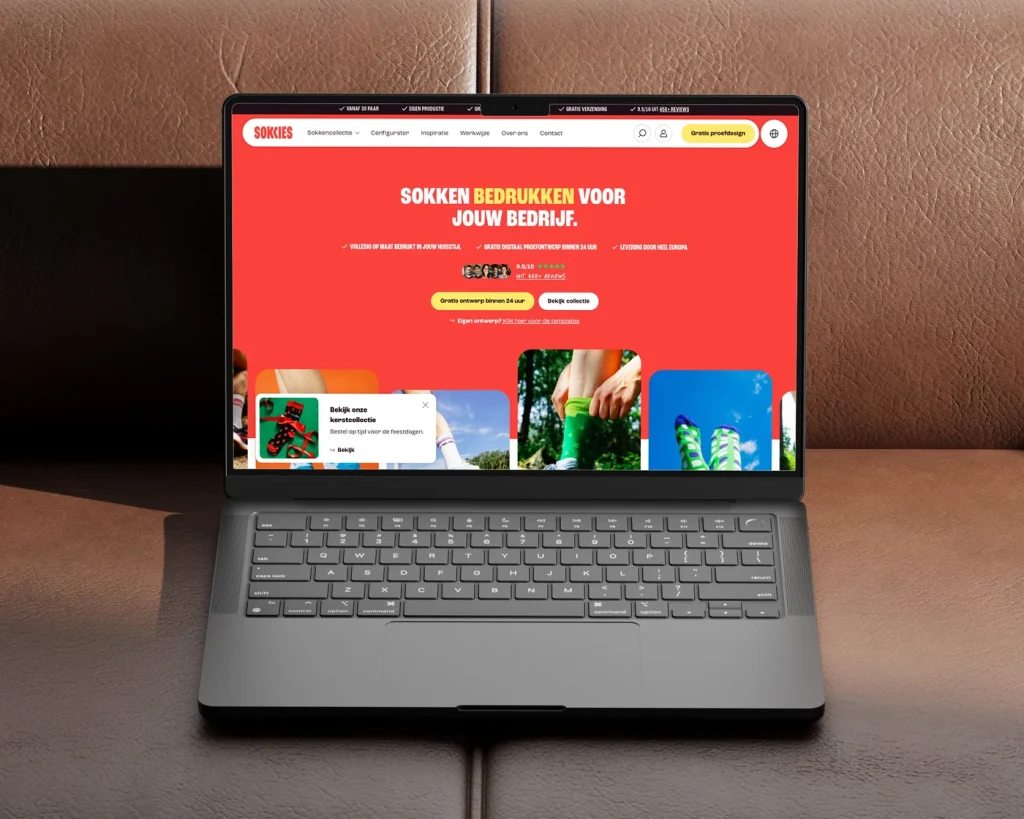
languages from day one
Webshop for custom printed socks, without a checkout
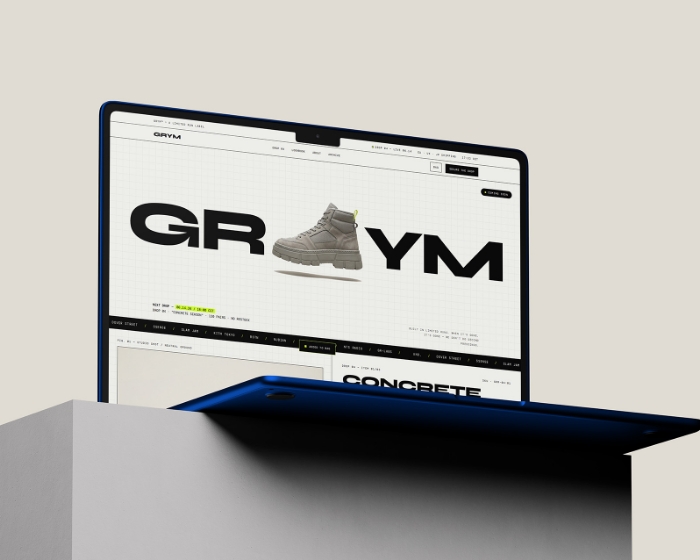
page storefront, brand to cart
Streetwear ecommerce website design, a concept
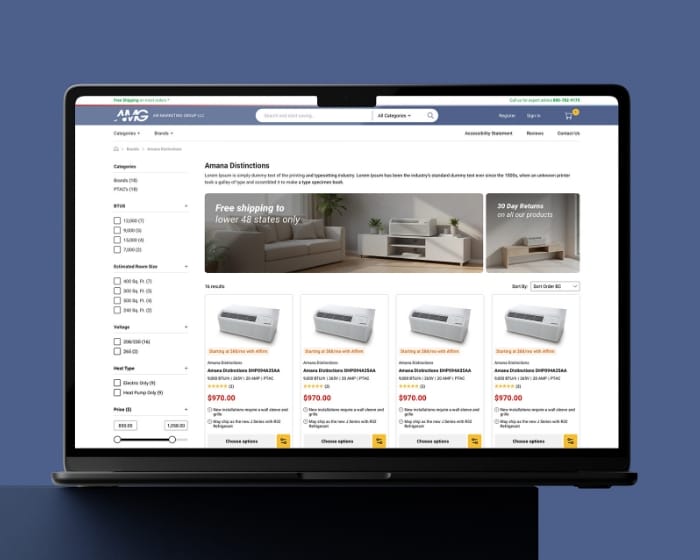
filter usage rate (usability test)
Ecommerce landing and category redesign: desktop case study
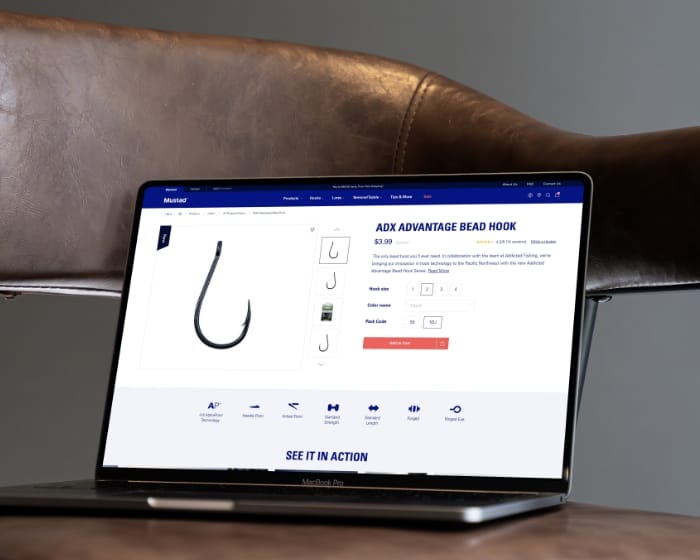
uplift in average cart value
Mustad Fishing multibrand eCommerce website design
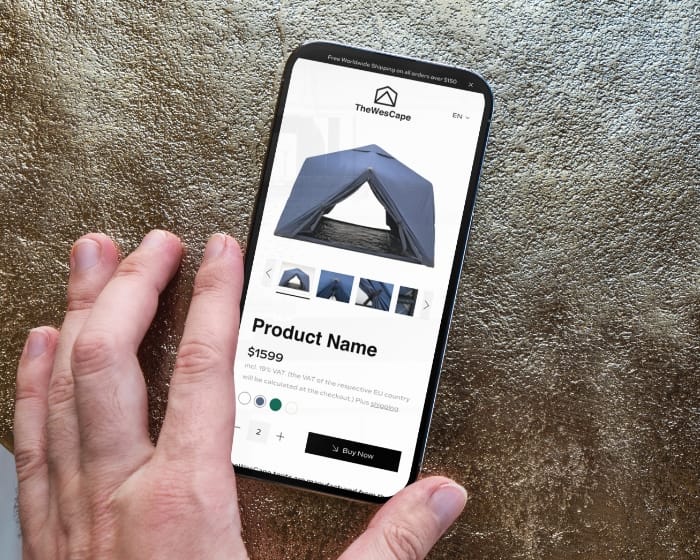
increase in online sales within the first quarter
TheWesCape: custom WooCommerce website for outdoor tent brand
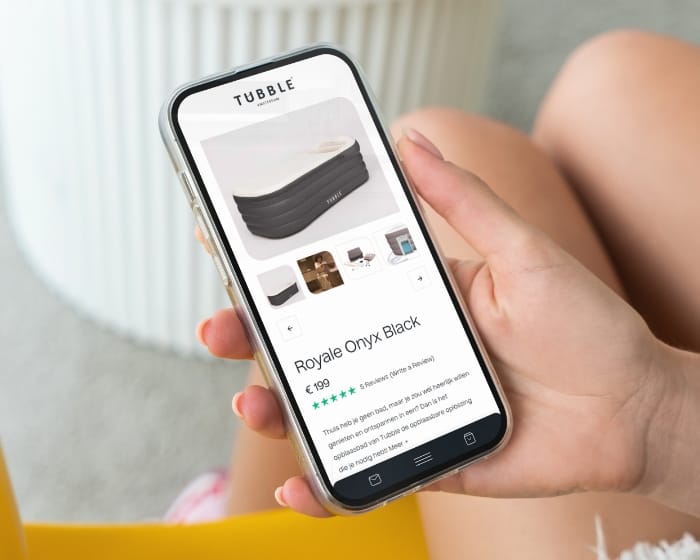
organic growth in just 1 month
Tubble inflatable bathtub WooCommerce website design
Launching with an eCommerce development agency Netherlands should feel organised, not chaotic. Here is how we keep it precise.
01
One workshop covers KPIs, user personas, current-state pain points and technical constraints (existing PIM, ERP, third party tooling). Tech stack decision waits until we’ve answered those questions, not before. You leave the session with a one-page summary, not a Gantt chart
02
UX maps, data models, integration specs and a written scope. Budget locked, sprint plan agreed. Whatever surprises happen during build, they don’t happen in this phase, because the work here is figuring out what you’re actually building before anyone writes code.
03
Brand-led UI in Figma, mobile-first by default, with micro-interaction prototypes for the moments that matter (add-to-cart, filter changes, checkout transitions). Sign-off happens on clickable prototypes, not on static screens. Catches workflow issues now, when they’re cheap to fix.
04
Build phase. Shopify themes, WooCommerce blocks, headless React or Next.js front ends, depending on the stack choice from Step 1. Git workflow with code review, automated tests on key flows (checkout, payment, account creation), and weekly demo builds on a staging environment you can poke at.
05
Performance budgets enforced (LCP under 2.5 seconds on mobile), accessibility audited against WCAG 2.2 AA, security scanned for OWASP Top 10 issues. Payment integrations tested end-to-end: iDEAL, Klarna, Bancontact, SEPA, plus card processing through Mollie, Stripe or Adyen. Local tax rules verified per market.
06
Blue-green deployment so launch day doesn’t include downtime. Post-launch we track Core Web Vitals, run CRO tests on the highest-traffic conversion paths, and start work on phase two features in two-week sprints. The store keeps evolving instead of stagnating after launch, which is what kills most eCommerce projects in year two.
FlevoDirect, University of Twente (UT), VIA Sports Experiences, Sokkies. And a few hundred other companies you might not know, but which have certainly been well served. That, on reflection, is the whole story.









Brands choose Studio Ubique because timelines stay met, code stays lean, and conversions rise. Want store URLs and revenue numbers from past projects? Ask and we share them tomorrow. Most of our eCommerce clients are based in the Netherlands, with growing pipelines from Germany, the UK, the US and across Western Europe.
5.0


“Fastest time ever for a premium website. Willing to make changes, always friendly and helpful - 100% recommend for start-ups and large businesses alike.”
5.0
“From rebranding to web design, Studio Ubique has been a key partner, proactive, efficient, and always exceeding expectations with clear, seamless communication.”
5.0

“Studio Ubique earned our trust with their expertise and results. What started as one project grew into a long-term collaboration thanks to their consistent delivery and professionalism.”
5.0
“Studio Ubique understood our vision, responded fast to feedback, and kept the AGN website redesign smooth and efficient. A seamless, goal-driven collaboration from start to finish.”
The questions that come up most often, answered here. Yours not among them? Just ask, there's a human on the other end.
Three rough rules. Shopify (or Shopify Plus) for stores that prioritise speed to market and want minimal operations burden, especially smaller catalogues and DTC brands. WooCommerce for content-heavy stores where the store sits inside a broader WordPress site, or where you want full control without paying per-transaction fees. Headless when you need to publish products across multiple channels (web, app, marketplace), when SEO performance matters intensely on dynamic pages, or when your front end has unusual interaction patterns.
About 60% of our eCommerce work runs on Shopify or Shopify Plus, 30% on WooCommerce, and 10% on headless setups (Next.js front end with Shopify or BigCommerce as the backend, typically). The right answer depends on your team, catalogue size, growth plans and operational appetite. Our eCommerce development service covers the deeper technical detail per platform.
Four to eight weeks for a Shopify build with a custom theme, basic integrations and standard payment methods. Eight to sixteen weeks for a WooCommerce build with multilingual support, multiple payment providers, custom shipping logic and integrations with ERP, PIM or fulfilment systems. Three to six months for headless setups or large catalogue migrations from Magento or other legacy platforms.
The big variable is how decided you are when we start. Brand direction agreed, product data clean, integration list finalised: shortest end of those ranges. Product data still being normalised, integration list growing, design under review: longest. Recent eCommerce project work shows realistic timelines across multibrand stores, luxury DTC and seasonal product launches.
Pricing is scope-based, not menu-based. Standard Shopify builds with a custom theme and core integrations sit between €5,000 and €25,000. Mid-complexity WooCommerce or Shopify Plus builds with multilingual support, multiple payment providers and complex shipping logic run €25,000 to €60,000. Headless setups, large catalogue migrations or stores with custom backend integrations reach €60,000 to €150,000 and beyond. Our hourly rate is €60 to €65 across roles, NL and India team combined.
Cost drivers, in order: number of unique product templates, payment provider count, shipping rule complexity, ERP or PIM integration depth, and how much content needs migrating from the old platform. A short discovery call gives you a scoped range within a few days, with what’s included and what’s specifically excluded.
Yes. iDEAL is standard on every Dutch project (about 60% of NL ecommerce payments still run through iDEAL). Klarna for pay-later and instalment options across the Netherlands, Germany, Austria, the Nordics and the UK. Bancontact for Belgian customers. SEPA Direct Debit for B2B and subscription billing. Card processing through Mollie, Stripe or Adyen depending on volume, currency mix and fee structure preference.
We also handle the less visible work: 3D Secure flows, recurring payment setup for subscriptions, refund automation and reconciliation back to your accounting system. Shopify implementations have iDEAL and Klarna available via official Mollie or Adyen integrations; WooCommerce setups use the WooCommerce Payments equivalent or direct Mollie plugins.
Yes, and that’s most of the migration work, actually. Product data and customer data move with structured mappings, every changed URL gets a 301 redirect, structured data is rebuilt for the new platform, hreflang tags maintained for multilingual stores, sitemap regenerated, and internal linking re-pointed. We work from a pre-migration Ahrefs crawl, then validate against it post-launch to catch what slipped through.
Most migrations we run are from Magento (which is increasingly expensive and complex to maintain) and from earlier WooCommerce or Shopify setups that outgrew their original brief. Our website migration service covers the full process, including staying live on the old store until launch day on the new one.
For Shopify, we use Shopify Markets for multi-currency and a translation app (Weglot, Translate & Adapt, or manual translation per market) for languages. For WooCommerce, WPML or Polylang for languages plus WooCommerce Multilingual or a multi-currency plugin like CURCY for pricing. For headless builds, languages and currencies are part of the data model from day one, which is simpler architecturally but more setup work upfront.
Localisation is more than translation: it includes local payment methods per market (iDEAL in NL, Sofort in DE, Cartes Bancaires in FR), local shipping providers and rules, region-specific product availability, tax rules (VAT handling, distance selling thresholds), and content tone that matches each market. Frontend development work covers the technical implementation of localised stores.
Two weeks of close monitoring with hotfix capacity, then ongoing work on a monthly retainer or hours-based. CRO testing on the highest-traffic conversion paths, A/B tests on checkout copy and form structure, performance tuning as your catalogue grows, security patches, plugin reviews, and new features in two-week sprints. Most eCommerce clients move to a retainer because the work clusters into regular batches rather than emergencies.
Our website support packages (Care, Growth and Partnership) cover the support and uptime side, with feature development billed on top when scope requires it. Maintenance and ongoing support work covers what’s included in each tier, plus how we handle peak-season readiness and Black Friday traffic planning.
Contact
Not everyone likes to write. Rather talk to someone first? Book a 30 to 45 minute intro call through Calendly. It's free, and by the end you'll know whether a proposal makes sense.
Book a call(opens in a new tab)Tell us what's stuck, what you want to build, or what needs fixing. We usually reply within 1-2 business days.