ATS integrations for recruitment sites that keep vacancy data stable, filters fast, and applications measurable. If your site and ATS disagree, candidates notice on mobile first. Studio Ubique makes them behave.
5.0


“Collaborating with Studio Ubique proved to be an outstanding experience. Right from the start, they showcased a profound grasp of our vision for House of Books. Their dedication to excellence and innovation shone through every phase of the project. The website they developed not only met but surpassed our expectations, seamlessly blending contemporary functionality with vintage allure.”
5.0
“Project compliant with my expectations, good communication with the designer.”
5.0
“Studio Ubique did a truly outstanding job on our web design project. We had an example to point to for general look we wanted, but our product is fundamentally a lot different from the example website, a lot of differences were needed, and in many instances we really didn't have the vision of what specifically would work and needed to trust Studio Ubique to provide that vision.”
5.0
“Studio Ubique continue to do really excellent work! They are great at taking direction, but also willing to advise when ideas clash with good design. A great team to work with.”
Seen on top review platforms


Your ATS (applicant tracking system), software that stores jobs and candidates, is the source of truth. Your website is the stage, and right now the actors are improvising.
We build recruitment website ATS integration setups that keep vacancy data fresh, URLs stable, and tracking believable.



Some facts
of IT leaders say integrating data across systems is a struggle
of applications are typically connected inside organizations
of companies blame stale data for bad decisions and lost revenue
5.0
“They're a multifaceted team, which allows us to share requirements and work with them effectively.”
5.0
“I would highly recommend Studio Ubique for any business if it looks to move into a headless CMS environment. They prioritize user experience with teams who will manage the site long-term and understand the technical side.”
5.0

“Studio Ubique rebuilt our site with a headless CMS (WordPress + Next.js). The new setup offers easy content editing, custom blocks, and a simple publishing flow. Fast, flexible, and stable, it’s perfect for our growing company.”
5.0
“Simply outstanding. I am blown away by the not only the design expertise, but also the site functionality. Worth every dollar, and I will be coming back for more business. Do not look further - you found your developer here.”

We map ATS fields to your site taxonomy, filters, and templates, so labels and logic stay consistent.

We build ATS API integration with webhooks where possible, polling where needed, plus rate-limit friendly syncing.

We add caching, stable vacancy URLs, and predictable filtering so the site stays fast without hammering the ATS.

We ship sync logs, alerts, and an optional SLA, so you see issues before candidates do.
Send your ATS name and one example vacancy URL, Bullhorn, Recruitee, OTYS, Teamtailor. If you have docs, share them too, Studio Ubique will tell you what’s realistic before anyone starts rebuilding for sport.
We’ve been building and maintaining digital products long enough to know what breaks, what scales, and what “urgent” actually means.


Studio Ubique works with startups, agencies, and mid-sized companies who want their product to work better than their competitors’ excuses. Since 2012, with clients across 15+ countries.
5.0
“Studio Ubique brought our vision to life with skill, passion, and precision, our website now truly reflects the soul of House of Books.”
5.0
“Despite our delays and unclear vision, Studio Ubique delivered a flawless site with creativity, patience, and total professionalism.”
5.0
“Fastest time ever for a premium website. Willing to make changes, always friendly and helpful - 100% recommend for start-ups and large businesses alike.”
5.0
“Creative, skilled, and budget-conscious, Studio Ubique perfectly translated our vision with care, precision, and a truly personal touch. We used to post and pray. Their paid social and landing pages now bring real sales, not just likes. Clear plan, quick execution.”
5.0
“From rebranding to web design, Studio Ubique has been a key partner, proactive, efficient, and always exceeding expectations with clear, seamless communication.”
5.0
“Studio Ubique understood our vision, responded fast to feedback, and kept the AGN website redesign smooth and efficient. A seamless, goal-driven collaboration from start to finish.”
The questions that come up most often, answered here. Yours not among them? Just ask, there's a human on the other end.
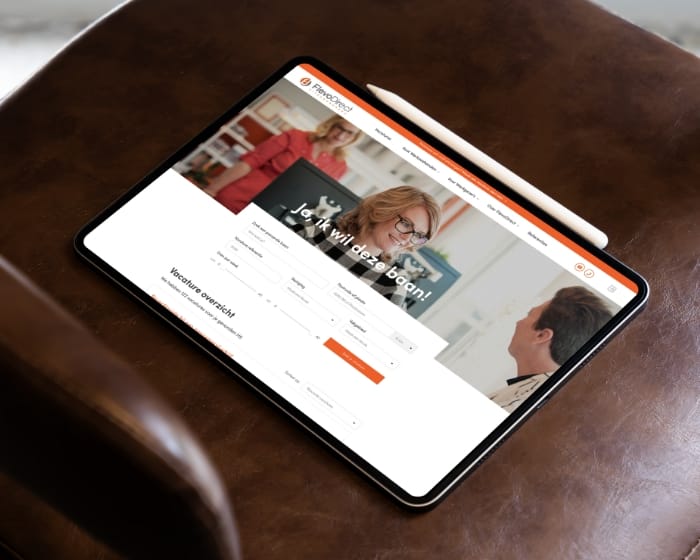
Most modern ATS platforms with public APIs work: Bullhorn, Recruitee, OTYS, Teamtailor, Greenhouse, Lever, Workable, Personio, BambooHR, JobAdder, Manatal, SmartRecruiters and similar. For legacy systems without an API, we use XML or RSS feeds where available, scheduled scraping with vendor permission, or middleware connectors that translate older protocols into modern formats. None of those are as elegant as a real API integration, but all of them work when the alternative is “your jobs never make it to the site”. For niche regional or industry-specific ATS systems we haven’t worked with yet, the first scoping call usually includes a quick technical investigation to confirm what’s possible. Our recruitment case studies show some of the ATS-site integrations we’ve built, including FlevoDirect’s WordPress-to-ATS setup.
Standalone ATS integration on an existing recruitment site typically starts in the low five-figure range. A read-only feed (jobs pulled from your ATS, displayed on the site, no candidate data going back) sits at the lower end. Bidirectional sync with custom field mapping, multilingual support, filtering taxonomies, and confirmed-application tracking lives at €15.000 to €25.000+ depending on complexity. When the integration is built into a new website project, it’s priced as a subset of the broader scope, not as a separate line item. Hourly rates are €60 to €65 across all roles. A first call with your ATS name and one example vacancy URL is usually enough to give a realistic range within a week.
A simple read-only feed from one ATS to a recruitment site usually takes two to three weeks from kickoff to live. A standard integration with field mapping, filtering, caching and basic conversion tracking runs four to eight weeks. Complex multi-ATS setups, multi-brand routing, multilingual taxonomies, or integrations with non-standard ATS systems can take two to four months. The biggest variable is rarely our side. ATS vendors take days or weeks to provide API credentials, sandbox access, and clear documentation. The faster your team can get those, the faster everything else moves. Studio Ubique runs integration projects in two-week sprints with sync logs visible from week one, so progress is verifiable, not promised.
Both work. Studio Ubique integrates with most existing recruitment sites as long as the platform can be modified: WordPress, custom builds, headless setups, most CMS-based sites. Stable existing site plus integration usually costs less than a full rebuild. A new build makes more sense when the current site has accumulated technical debt (slow loading, outdated stack, broken mobile experience, no clean way to inject job templates), or when stakeholders also want a redesign anyway. The honest answer often only emerges after a short site audit. Custom recruitment websites remain the larger service we offer, with ATS integration as one component. For agencies and in-house teams who only need integration on a current site that’s basically fine, that’s a smaller scoped engagement.
Most recruitment sites track “apply button click” as a conversion. That’s wrong. A click is not an application. The candidate could bail before submitting, get rejected by validation, or hit a server error. Real attribution fires on confirmed application submission from the ATS, not on the click that started the journey. Studio Ubique sets up GA4 events, server-side tracking where possible, and ATS-confirmed conversion events. The result: paid recruitment campaigns get attributed to actual applications, not to clicks that went nowhere. For larger setups with significant ad spend, we add server-side tagging with conversion APIs (Meta CAPI, Google Conversion API) so data flows reliably even when browser-side tracking gets blocked by ad blockers or cookie consent flows. Our digital marketing services cover the wider attribution and campaign setup.
Recruitment data is sensitive: names, contact details, CVs, sometimes salary expectations and references. Studio Ubique builds ATS integrations with GDPR compliance built in, not bolted on. That means: the ATS remains the single source of truth for candidate data, the website holds data only temporarily during the application flow, all transmission uses HTTPS with proper authentication, consent flows are clear and traceable, and data retention policies live in the ATS so they don’t drift out of sync with separate site-level rules. For EU and Dutch clients this aligns with the GDPR and the Dutch AVG. For US, UK, and Canadian clients, similar frameworks apply (CCPA, UK GDPR, PIPEDA). The integration is built so privacy controls don’t have to be remembered, they just are. Studio Ubique’s own privacy policy covers how we handle data internally during integration projects.








Book a quick 30 min video call, we will show you exactly what to fix. We reply within 24 hours.