Studio Ubique is a software development company that builds web platforms, custom software, eCommerce, mobile apps, and the integrations between them. The work is built to keep working after the launch party, when scope changes and traffic spikes are the actual test.

Seen on top review platforms


WordPress, Shopify, custom builds, headless setups, mobile apps. The work spans formats but the concerns repeat. Six of the most common ones we plan development around.

Code and infrastructure designed for the traffic patterns you actually expect, with headroom for spikes. Caching, CDN setup, database tuning, and load testing where the project warrants it. No premature optimisation, no naive bottlenecks.

Off-the-shelf platforms cover roughly 80% of cases at a fraction of custom cost. The other 20% need custom: when your business logic, integrations, or UX requirements don’t fit a CMS or SaaS template. We build custom where it pays back, and recommend the cheaper path when it does.

Authentication done properly, encryption where data needs protecting, dependencies kept current, and security testing before launch. Not zero-risk, no platform is, but the risks are known and managed rather than ignored until something gets exploited.

Most modern web platforms run as much on integration logic as on UI: payment providers, CRM sync, ATS connectors, analytics pipelines, AI services. We build integration layers with retry handling, error monitoring, and audit logs, not just happy-path code that breaks the first time a provider rate-limits us.

Other people will eventually maintain this code, including your future self. We write with that in mind: clear structure, sensible naming, version control hygiene, and documentation that explains why something exists, not just what it does.

Strategy, UX, and project communication from the Netherlands. Engineering from our long-term team in Chandigarh. The combination typically lands 30 to 40 percent below comparable Western agency rates, with senior engineers and a stable team rather than juniors learning on your project.

Six development disciplines, covered by the same team. Most projects use two or three of them. Pick the one closest to what you’re scoping and dig deeper.
01


02

03

04

05

06


Four steps for development work, scaled up or down based on project size. A €10.000 WordPress site moves through these faster than a €100.000 custom platform, but both follow the same shape.
01
We start with project goals, target users, technical requirements, and constraints (budget, deadline, integrations, team). Whether we’re building from scratch or implementing your design files, we end this step with a scope you can act on, not a “we’ll figure it out” document.
02
We build with the appropriate tech stack for the project, not whatever’s fashionable this quarter. Short cycles with regular demos so you see real progress, not status reports. Code reviews happen as standard, not as a step that gets skipped under deadline pressure.
03
Before launch we run testing for speed, browser and device compatibility, security, and the functional edge cases that always exist but rarely get tested in demo. Performance budgets get checked. Accessibility basics get checked. The “oops” moments get caught before they become support tickets.
04
Deployment, monitoring setup, and handover documentation. If you’ve contracted ongoing support, we stay on for updates, performance work, and the new features that always come up after launch. If you haven’t, you get clean documentation so your team or another vendor can take it forward without reverse-engineering everything.
We’ve been building and maintaining digital products long enough to know what breaks, what scales, and what “urgent” actually means.


Studio Ubique works on development projects for startups, scale-ups, agencies needing extra engineering capacity, and mid-market companies. Web platforms, mobile apps, custom software, integrations. Most clients come back, which in agency life is the metric that actually matters.
5.0

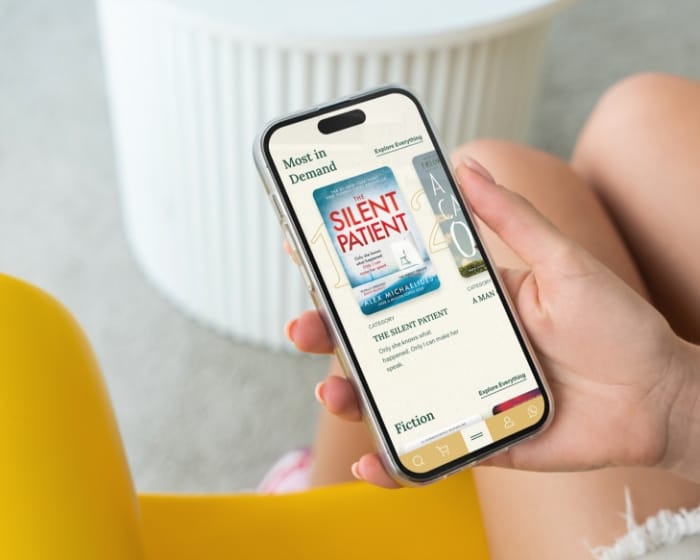
“Studio Ubique brought our vision to life with skill, passion, and precision, our website now truly reflects the soul of House of Books.”
5.0
“Project meets my expectations, good communication with the designer.”
5.0
“Studio Ubique revamped our brewery site with stunning UX/UI. Engagement, speed, and mobile retention soared, plus they nailed the brief on time, on budget, and with true creative flair.”
5.0
“Studio Ubique continue to do really excellent work! They are great at taking direction, but also willing to advise when ideas clash with good design. A great team to work with.”
5.0
“Simply outstanding. I am blown away by the not only the design expertise, but also the site functionality. Worth every dollar, and I will be coming back for more business. Do not look further - you found your developer here.”
5.0
“Fastest time ever for a premium website. Willing to make changes, always friendly and helpful - 100% recommend for start-ups and large businesses alike.”
5.0
“Great ideas, smooth communication, and a pleasure to work with, Studio Ubique made building our new website a seamless, collaborative process.”
5.0
“Creative, skilled, and budget-conscious, Studio Ubique perfectly translated our vision with care, precision, and a truly personal touch. We used to post and pray. Their paid social and landing pages now bring real sales, not just likes. Clear plan, quick execution.”
5.0
“From rebranding to web design, Studio Ubique has been a key partner, proactive, efficient, and always exceeding expectations with clear, seamless communication.”
5.0
“Studio Ubique earned our trust with their expertise and results. What started as one project grew into a long-term collaboration thanks to their consistent delivery and professionalism.”
5.0
“Studio Ubique understood our vision, responded fast to feedback, and kept the AGN website redesign smooth and efficient. A seamless, goal-driven collaboration from start to finish.”
5.0
“Studio Ubique exceeds expectations every time, clear communication, creative solutions, and reliable delivery make them a trusted, long-term partner for web, design, and branding projects.”
5.0
“Studio Ubique built custom software that boosted our project tracking, saved time, and improved team collaboration, delivered on time, with solid communication and real technical skill. Demo requests went up 32% quarter over quarter. The dashboards show what to scale and what to pause, no guessing.”
The questions that come up most often, answered here. Yours not among them? Just ask, there's a human on the other end.
Hourly rates run €60 to €65 across all engineering and design roles. Total project costs depend heavily on what you’re building. A standard WordPress site sits between €5.000 and €15.000. Custom WordPress with WooCommerce or specific integrations runs €10.000 to €30.000. Shopify projects (Liquid plus custom development) land between €8.000 and €25.000. Headless setups (WordPress or Strapi plus Next.js, Vue, or React) typically run €20.000 to €60.000. Custom web applications start around €30.000 and go to €150.000+ depending on scope. Mobile apps run €25.000 to €100.000+ depending on platform coverage and feature complexity. Most Studio Ubique projects sit between €5.000 and €30.000, with larger custom builds going higher. Our pricing page covers the broader rate structure including monthly retainer options.
WordPress fits content-heavy sites where editorial flexibility matters: marketing sites, careers sites, blogs with regular publishing, multi-language content. Shopify is the default for eCommerce where merchandising and checkout matter more than backend customisation. A custom CMS makes sense when WordPress and Shopify both feel forced for your content model, think unusual taxonomies, complex relationships between content types, or very high editorial volume with workflow needs. Headless splits the two: a CMS like WordPress or Strapi serves the content, and a Next.js, Vue, or React frontend renders it, which pays off when frontend performance and control matter most. Our CMS development page covers the WordPress and headless paths in more detail.
Frontend development covers the visible layer: HTML, CSS, JavaScript, the framework code that makes UIs work. Backend development covers the server-side logic, databases, APIs, integrations, and infrastructure that nobody sees but everything depends on. Full-stack means one engineer or team handles both, which works well for smaller projects and gets harder to maintain quality on larger ones. Mobile app development is its own discipline because mobile platforms (iOS, Android, cross-platform like React Native or Flutter) have different patterns, performance constraints, and deployment processes than web. Most marketing websites are frontend-heavy with light backend. Most product platforms are roughly even. Most data-heavy custom software is backend-heavy. The first scoping call usually resolves which mix you actually need. Our frontend development page and backend development page cover the disciplines separately.
Strategy, UX research, project management, and client communication run out of the Netherlands office in Zwolle. Engineering, QA, and infrastructure work run out of the India office in Chandigarh, which has been Studio Ubique’s long-term development team since 2015 (not a freelancer pool, not project-by-project recruitment). The savings come from lower engineering costs in India compared to Western Europe or North America, while the strategy and PM work happens in the same time zone and language as you. Typical total project cost lands 30 to 40 percent below comparable Western agencies for the same scope. What you don’t get with this model: real-time engineering conversations with NL working hours throughout the day (the India team works 09:30 to 18:30 IST, which overlaps Dutch mornings until early afternoon). What you do get: senior engineers who’ve been on the team for years, code quality that holds up to review, and a project rhythm built around the time-zone reality instead of pretending it doesn’t exist.
Frontend: HTML5, CSS3, JavaScript, TypeScript, React, Vue.js, Next.js, Nuxt.js, Angular, plus Tailwind, Bootstrap, and SASS for styling. Backend: PHP (WordPress, WooCommerce, custom Laravel apps), Node.js, Python (where machine learning or data work fits), plus standard relational databases (MySQL, PostgreSQL) and NoSQL (MongoDB, Redis for caching). CMS: WordPress, WooCommerce, Shopify (Liquid plus custom), Strapi, Sanity for headless setups. Mobile: React Native and Flutter for cross-platform, native Swift and Kotlin where the project warrants it. Infrastructure: AWS, DigitalOcean, Cloudways, Vercel, plus standard CI/CD setups. We don’t chase every framework launched last month. The stack is chosen for the project, not the other way around.
Yes, this is a common arrangement. Three models. First, capacity-fill: your in-house team owns the architecture and Studio Ubique’s engineers join as additional hands during sprints or for specialised work (frontend specialist for a redesign, mobile developer for an app, integration work for a third-party platform). Second, white-label or staff augmentation: your team operates the project, our engineers work as part of your team in your tools (Slack, Jira, GitHub) under your project lead. Third, mixed teams where Studio Ubique handles specific components (frontend, integrations, infrastructure) and your team handles the rest. The model that fits depends on your team’s strengths, the gap you’re filling, and how integrated you want the working relationship to be. Our white-label and staff augmentation page covers the contractual and operational side.
Three tiers, scaled to your situation. Care covers security updates, plugin and dependency updates, backups, and uptime monitoring, the baseline that keeps the site from breaking. Growth adds monthly improvement work: performance optimisation, small feature additions, content updates, SEO maintenance. Partnership covers more substantial ongoing work where Studio Ubique is effectively your development team for several days per month, handling roadmap items, new pages, integrations, and strategic improvements. Pricing scales with the tier and the platform complexity (a marketing site is cheaper to maintain than a transactional eCommerce platform). All three run on a monthly basis with a three-month minimum term, then a one-month notice period. Our website support page covers the tier details.








Book a quick 30 min video call, we will show you exactly what to fix. We reply within 24 hours.