
Industry:
Custom printed socks for business
Timeline:
May to September 2026
Impact:
4 languages from day one
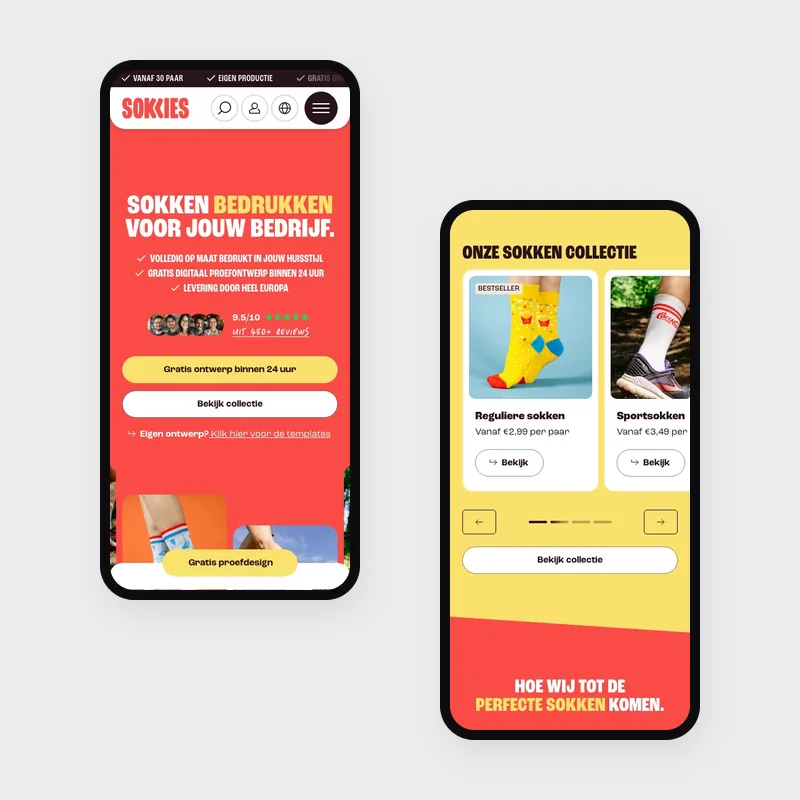

Sokkies prints socks for companies, sports clubs and events, and wanted a webshop for custom printed socks where you can order but don’t check out.
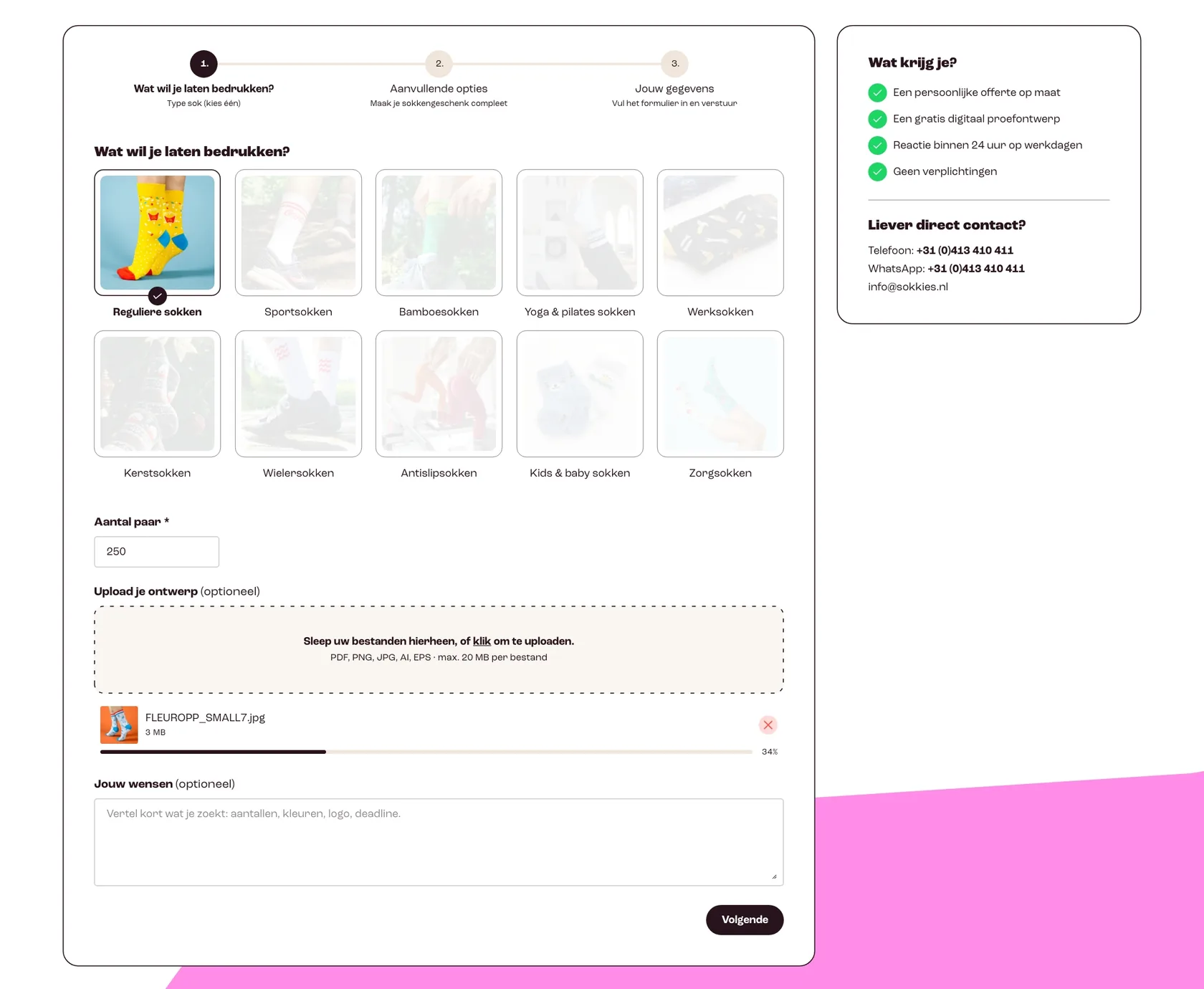
That sounds like a contradiction until you look at how Sokkies sells. You pick a sock type, a quantity and a few extras, upload your logo, and your request lands with their team as an order. Nothing gets paid on the site, because every order starts with a free proof design that has to be approved first. A checkout would mostly be an expensive button nobody is supposed to press yet.
We redesigned and rebuilt the site in WordPress, in four languages, with the forms wired into the Pipedrive setup Sokkies already relied on. The 3D configurator is prepared and switches on once it’s ready.
Selling something that needs approval before anyone pays? Tell us how your orders run.
The old site brought in enquiries every week. That made the job harder. You don’t tear down a page that quietly does its commercial work just because it could look better.
The sharpest problem sat in the translations. Sokkies ran its languages through Clonable, a proxy that translates the site on a separate shadow domain. Links from Google Ads and newsletters kept dropping visitors on nl.sokkies.com instead of the page they’d clicked, and Dutch visitors were sometimes shown the English form. Fixing that on the old site would have cost hours on a site with weeks left to live, so we advised against it and put those hours into the new one.
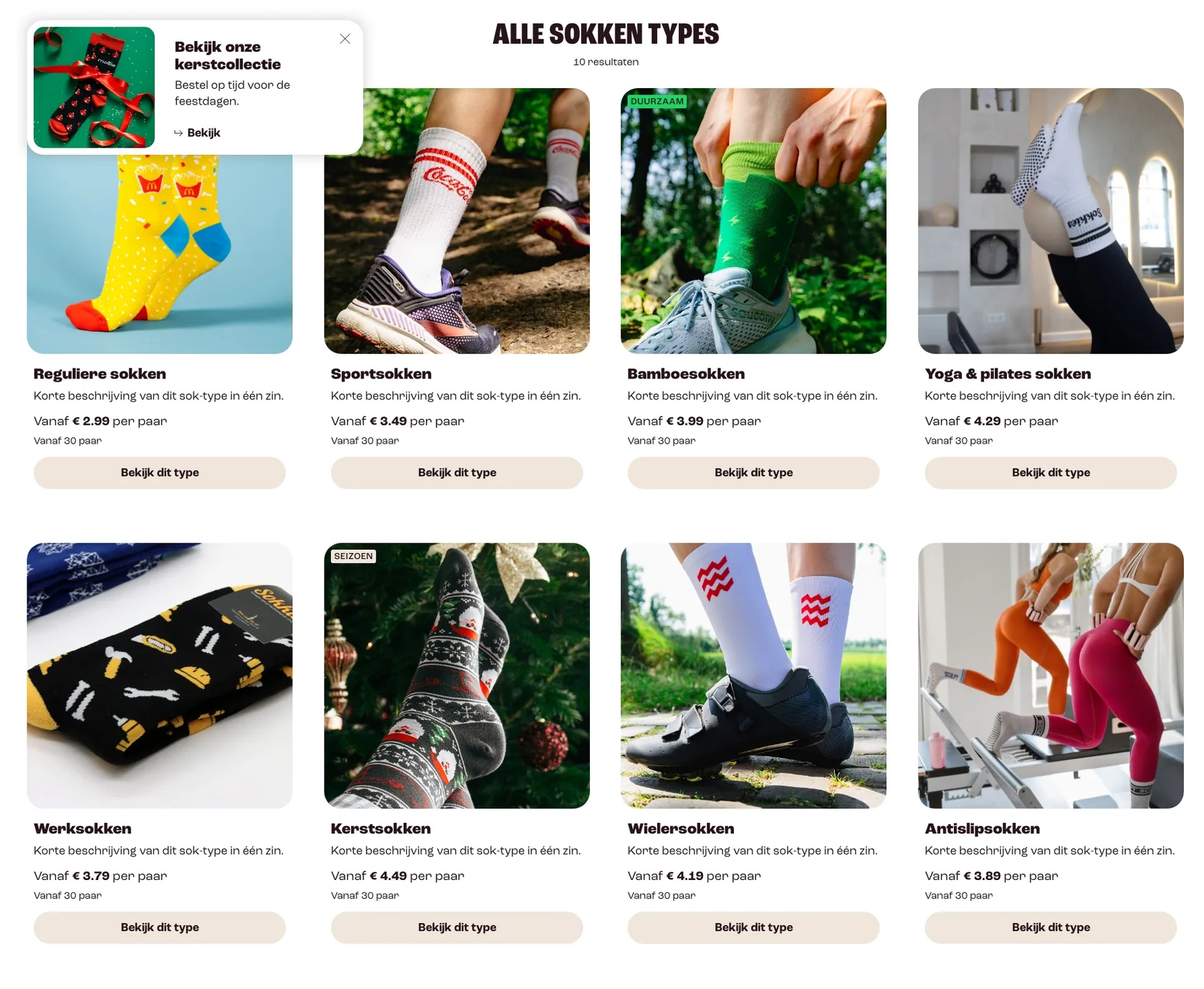
Then the homepage. Ten product tiles, while four of them do the selling. A USP bar repeating what the hero had just said. And a traffic split that looks wrong until you think about it: most visitors arrive on mobile, most requests are sent from desktop. Anyone asking for a proof design has to upload a company logo, and that logo lives on a laptop.
One constraint was fixed from day one. Every request flows from the website into Pipedrive, where Sokkies runs its sales. That chain is managed by their own automation partner, and it couldn’t break, not even for a day.
We built the wireframes in Figma so the client could comment on them directly then designed desktop and mobile in Adobe XD. Three feedback rounds, and every round sent something of ours back.
The first was the hero. We had put in one large, calm image. Sokkies wanted the grid of socks back, because the imagery does the persuading: one buyer wants a loud pattern, the next wants a logo on plain cotton, and a single photo only speaks to one of them. They were right, so the grid came back.
The second went the other way. Sokkies wanted the discount percentages out of the price calculator, since a column of percentages next to the price tiers mostly confuses people. We thought that threw away the upsell. The compromise is one nudge that moves with the slider and tells you what the next tier would save you per pair, at the moment you’re deciding.
Plenty of smaller calls followed. The pricing page left the menu, because every product page already shows its prices. The call, WhatsApp and email buttons sit below the quote form instead of pinned to the screen, a deliberate trade between being findable and being a distraction. Collection tiles show a second photo on hover. The partner page shows fewer logos on mobile. And the homepage H1 is only “Sokken bedrukken”, because that’s the phrase Sokkies wants to rank for.
Some things stayed out on purpose. Juniper Bay, the handwritten face from the brand guidelines, hurt readability in almost every spot we tried, so it’s now a small accent and little more. The identity itself is by raaqt, we translated it to screen. Login and chat stay hidden until the customer portal exists, because a login button that leads nowhere is worse than none.
Once the designs went to the developers, later changes went straight into the HTML and CSS instead of back into XD first. Two sources of truth is how a button ends up in two shades of yellow.
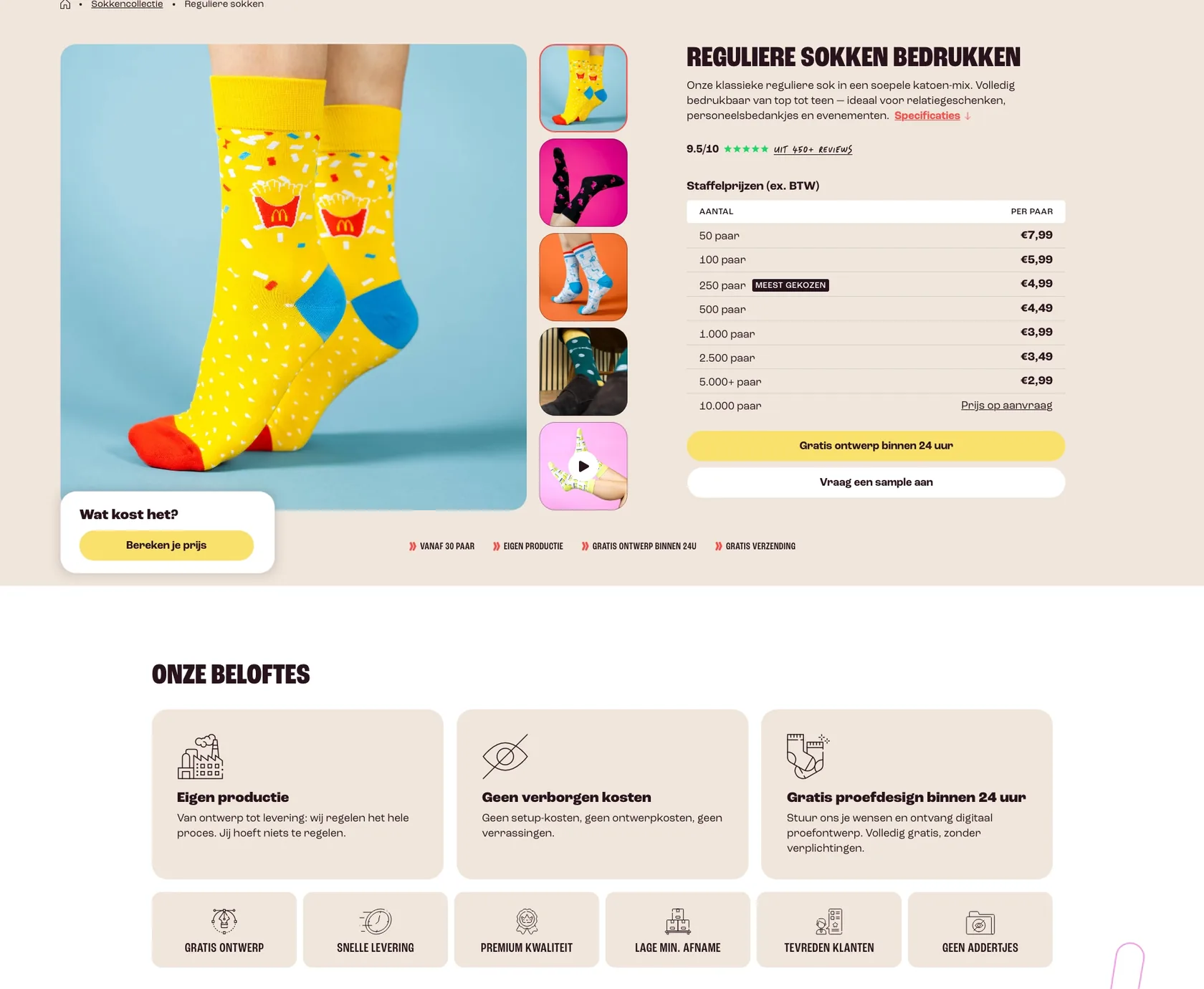
The site runs on WordPress with a custom theme and no page builder. Pages are built from one shared set of sections, so Sokkies can put together a campaign page by picking sections and filling them in, without calling a developer.
The shop part needs a clear explanation, because it’s the bit people misread. There’s no cart and no payment step. Visitors order through a quote form or a sample request: sock type, quantity, extras, logo upload, delivery address. The form lands in Pipedrive as a request, and the Sokkies team takes it from there with a proof design. It behaves like a webshop right up to the moment you’d normally reach for your card.
The stack:
The forms were the careful part. Pipedrive is managed by Sokkies’ automation partner, so we built the forms to match their setup, and adjusted them when the new quote form turned out to ask for more than the old one, such as extra product options and a country field. Each submission also goes into the dataLayer with the form and page it came from, so Rick can pass it on to Klaviyo or Google Ads from Tag Manager. That only fires after consent.
For the languages we swapped the proxy for TranslatePress, with Dutch as the source and English, German and French translated automatically. Everything stays inside WordPress, slugs and metadata included, and client logos can be set per language, so a German visitor sees German clients. The fonts load from Sokkies’ own Adobe account and only in the weights the design uses, which keeps the pages lighter and means Sokkies doesn’t depend on our account.
We handled the technical SEO migration and the redirects from the old URLs. The 3D configurator, which Expivi is building, is prepared as a JavaScript integration inside the site rather than an iframe, and goes live as soon as it’s finished.
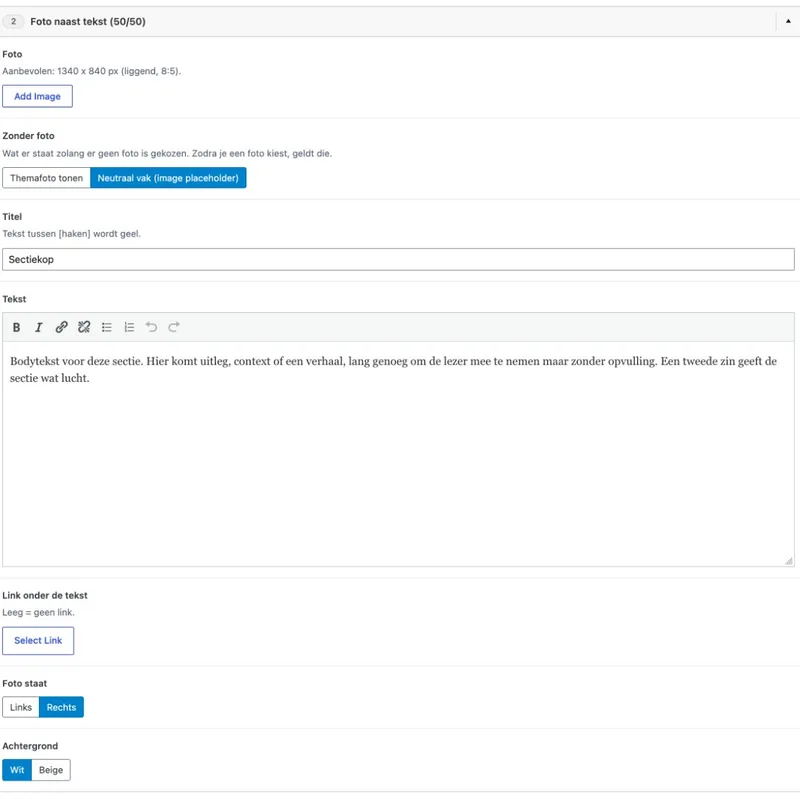
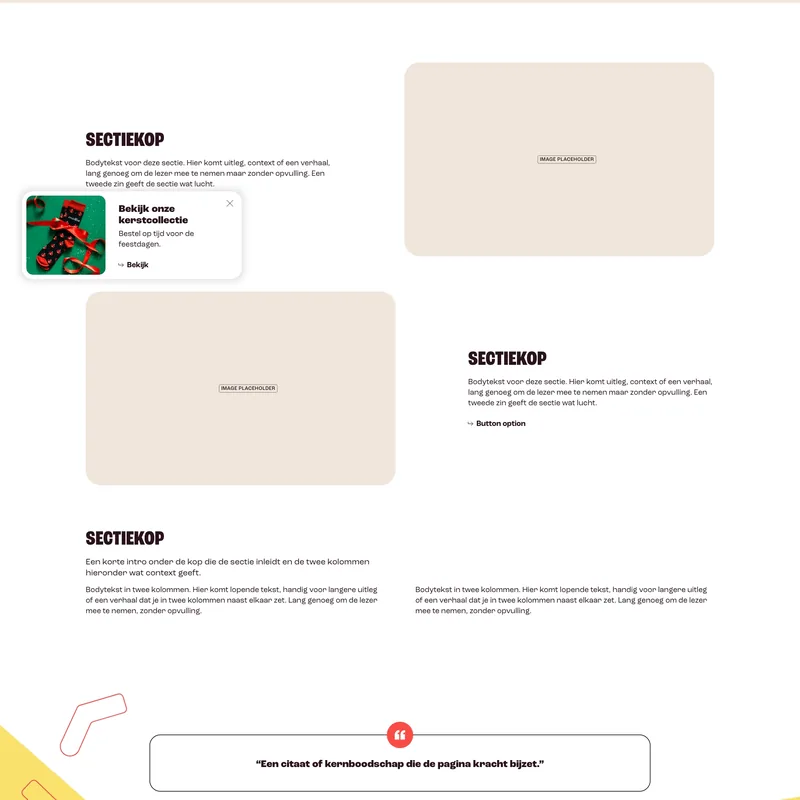
The wireframes were approved on 11 June. The desktop designs followed on 26 June and mobile on 3 July, with the final versions settled by mid July. After that came the HTML and CSS, and in August the build in WordPress.
On 4 September Sokkies got access to the CMS, with written documentation, and on 8 September we walked Rick and Mike through it on a call. The translations went up on 16 September. Launch moved by a few days, because the new forms asked for changes further down the chain into Pipedrive, and those deserved proper testing before the old site went dark.
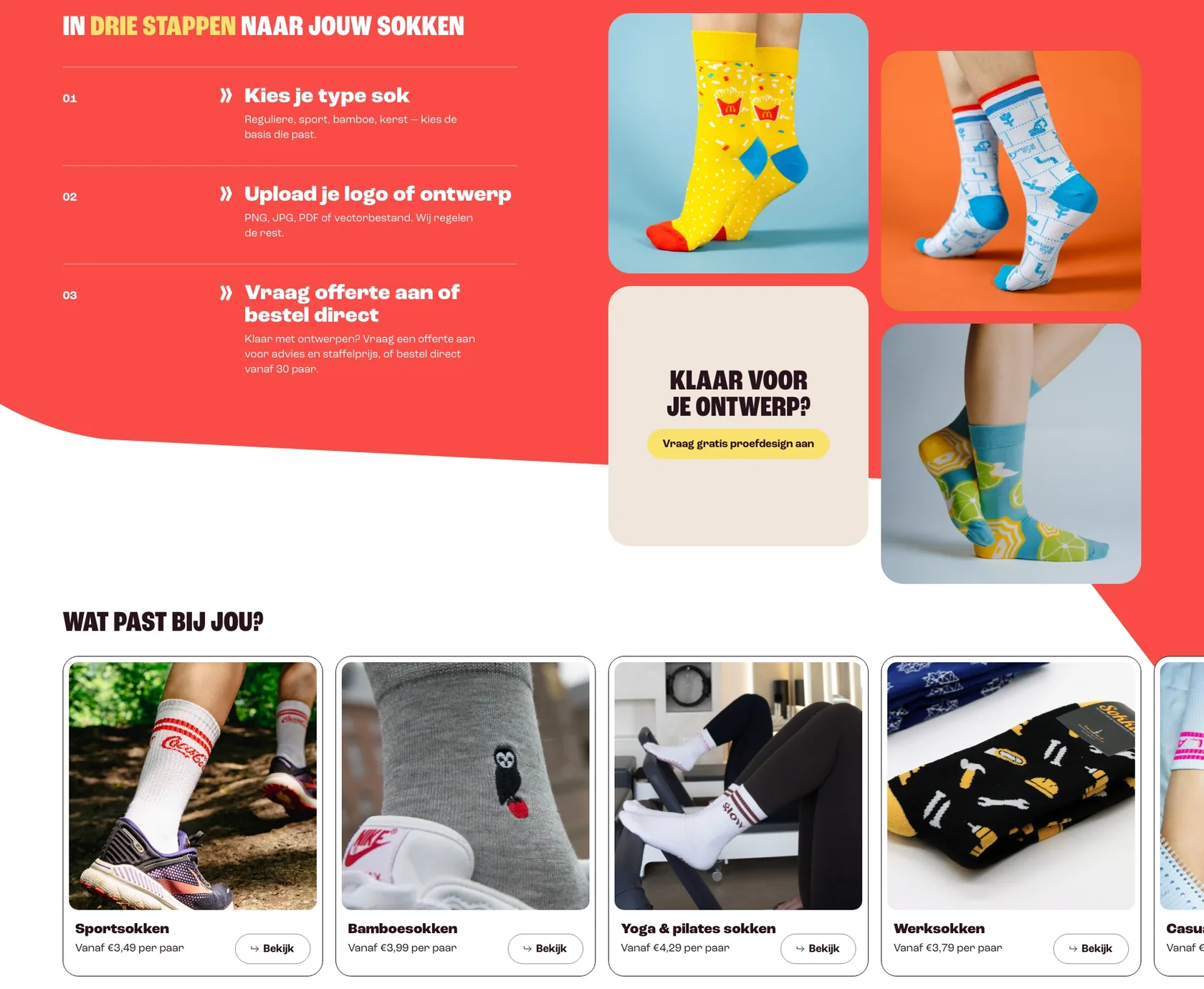

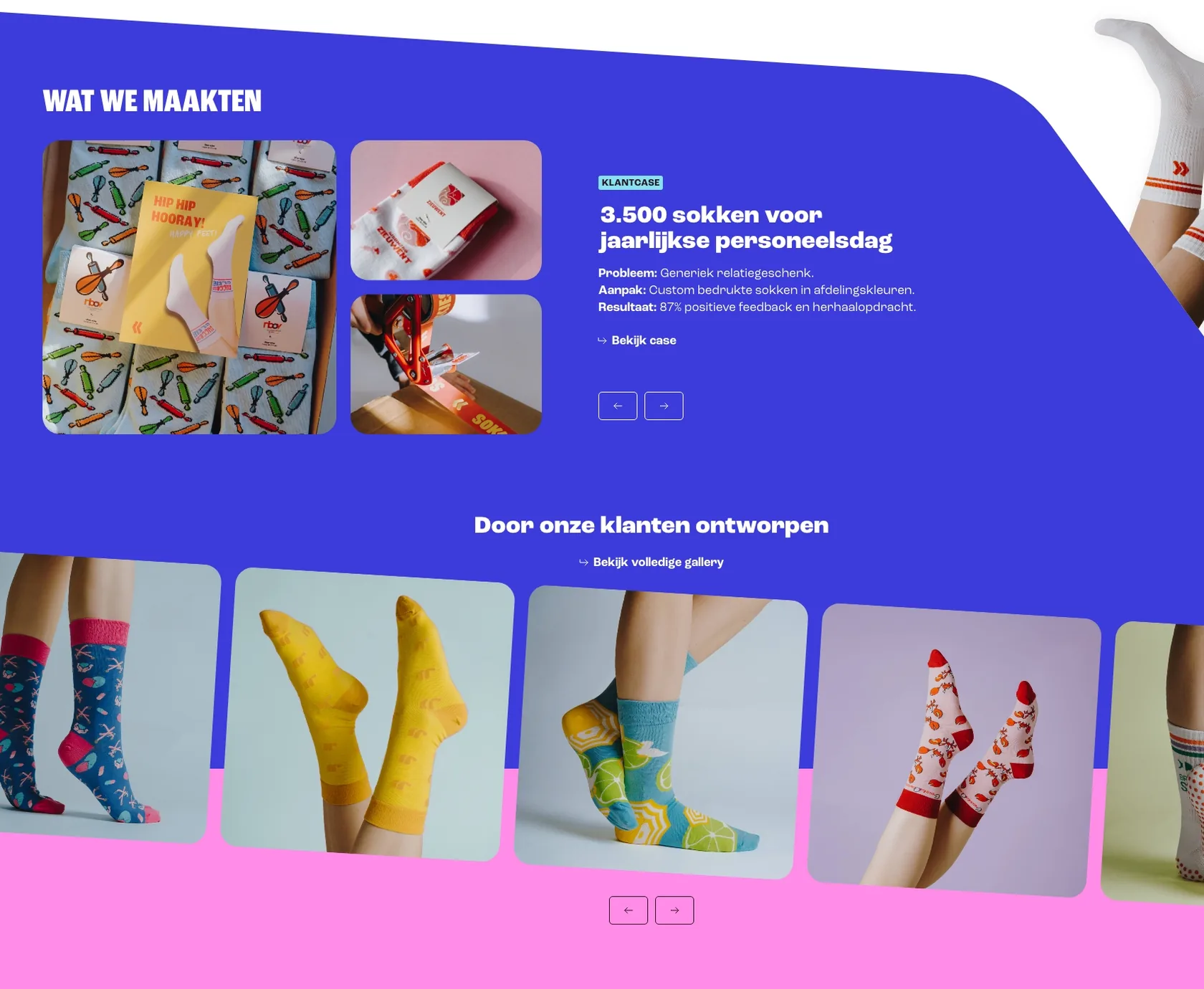
What Sokkies launched with at the end of September:
In practice Sokkies runs its own site now. A price change is made once and shows up everywhere. A new sock type is a new entry, not a new design round. And the site keeps growing without us: it had 31 pages at launch and Rick and Mike are already adding more. After the walkthrough, Rick Vissers, online marketer at Sokkies, put it plainly: “It’s looking very good and very logical for us to work with.”
Next up is the customer portal, where returning clients approve designs, follow orders and reorder. Every screen is wireframed for desktop and mobile, and the build follows now the website is live.

Yes, and for made to order products it often fits better. At Sokkies, visitors choose their socks, add extras and upload a logo, and the order arrives as a request in Pipedrive. Payment isn’t part of the site, because every order starts with a proof design that needs approval first.
We start from the setup that’s already there. At Sokkies an automation partner manages Pipedrive, so we built the forms around their structure and tested the chain together before launch. Every submission also lands in the dataLayer, so tracking doesn’t depend on the CRM.
A proxy runs your translations on a separate domain outside WordPress. At Sokkies, ad and email links ended up on that shadow domain instead of the page people had clicked. TranslatePress keeps everything inside WordPress, with translated slugs and metadata, and automatic translations you can still correct by hand.
Yes. Prices are set once and show up everywhere, FAQs sit in categories you pick per page, and client logos can be switched on per language. New pages are built from sections that already exist, so a campaign page doesn’t need a developer.
No. The website comes first, because it brings in the orders. Once the routes and data flows there are settled, it’s clear what the portal has to do. At Sokkies the portal is wireframed and the build follows the launch.
Then your site should work that way too. Send us a message and tell us how an order runs at your place, from the first click to the approval.
Contact
Not everyone likes to write. Rather talk to someone first? Book a 30 to 45 minute intro call through Calendly. It's free, and by the end you'll know whether a proposal makes sense.
Book a call(opens in a new tab)Tell us what's stuck, what you want to build, or what needs fixing. We usually reply within 1-2 business days.