
Industry:
Athlete management, women's basketball
Timeline:
3 weeks
Impact:
10 days ahead of a key player event
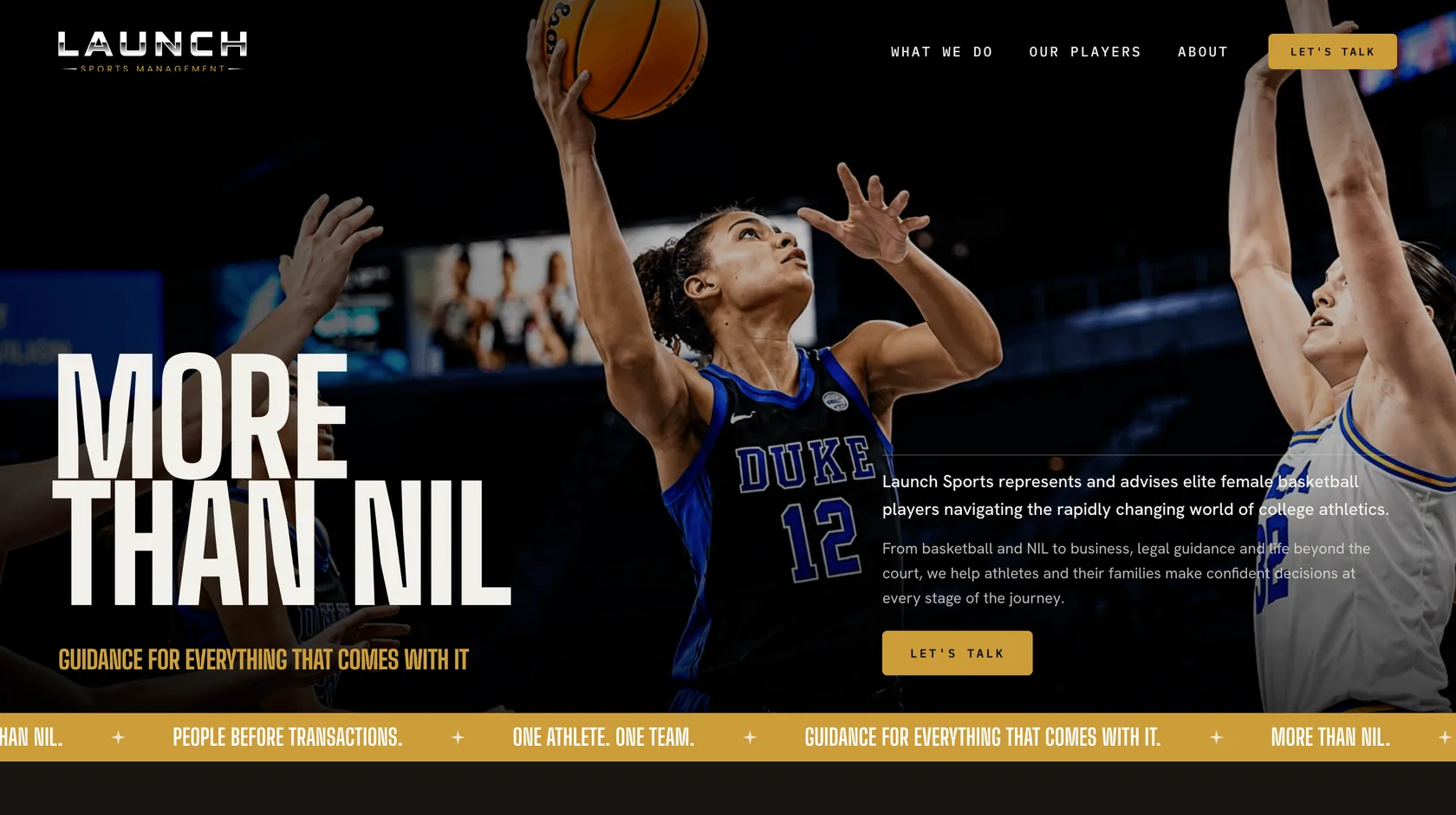
Launch Sports Management needed an athlete management agency website before it had much more than a copy document, two logos and a date in the calendar. Launch represents and advises elite female basketball players in US college athletics, on everything from NIL deals and contracts to transfers, legal questions and the life that comes with a scholarship.
The team behind it already knew us. We built the site for VIA Sports Experiences, so this one started with a short email asking what two small basketball sites would cost. Three weeks of design and WordPress development later, Launch was live. Ten days before an event with a number of high level players, which is the date the client had quietly hoped for.
Running into a date of your own? Tell us which one.
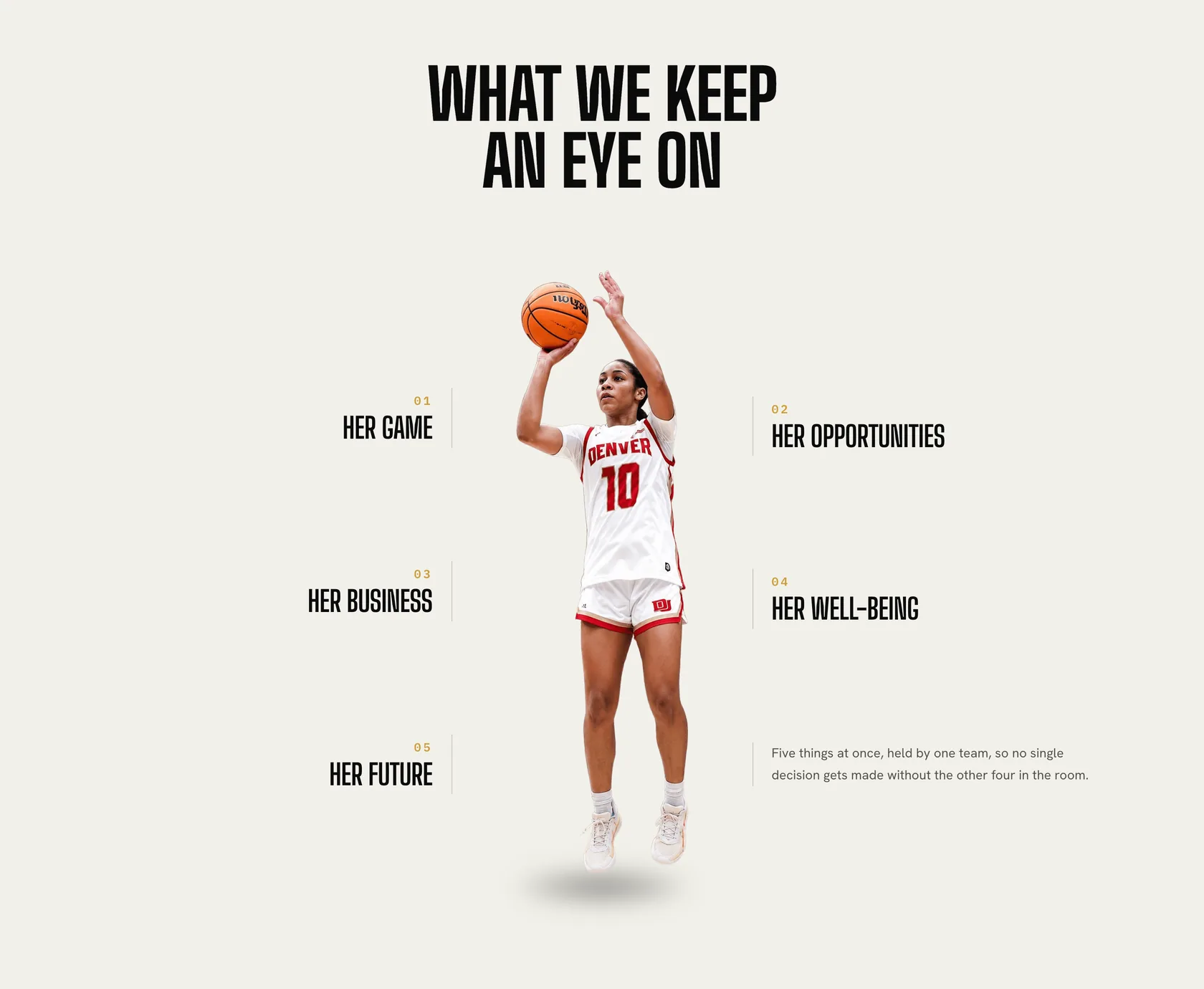
The brief was short and honest. A list of offerings, a short story about the team and a list of the players they had helped so far. English only, no shop, no third party tools at launch, three pages at most. For structure the client pointed at an existing NIL agency site, and for the feel at the VIA site we had built before.
The difficulty sat in what wasn’t there yet. The logos were still with a designer. Player photos and permissions were being collected. And whether one of the partners could be named on the site, or only his firm, wouldn’t be clear until after the design was already on the table.
Then there’s the reader. Parents of a player who is seventeen, deciding where she plays next and what she signs. A site like that runs on credibility, and credibility is lost in small ways: two numbers that disagree, a contact address buried under spam, a player grid with a gap in it. None of those gets fixed with a nicer font.

The copy arrived on 19 August. The same day it came back as a black and white wireframe in Figma, structure only, with a panel of numbered open questions next to the frames. Decisions we couldn’t make for the client, placed where he could answer them one by one instead of in one long email.
Reading the copy changed the scope once. Every Let’s Talk button needed somewhere to land, so three pages became four. An email address in plain sight on a site like this fills with junk within weeks, and a form makes enquiries arrive in a shape someone can act on. It asks who is writing, athlete, parent or coach, and the graduation year, so the first call starts in the right place. After feedback the graduation year became a required field. The client called it the most important piece of information on the form.
The first open question was a number. The copy said more than 175 Division I players, the stat block next to it said 185 and up. On a page that parents read closely, those two have to agree. They do now.
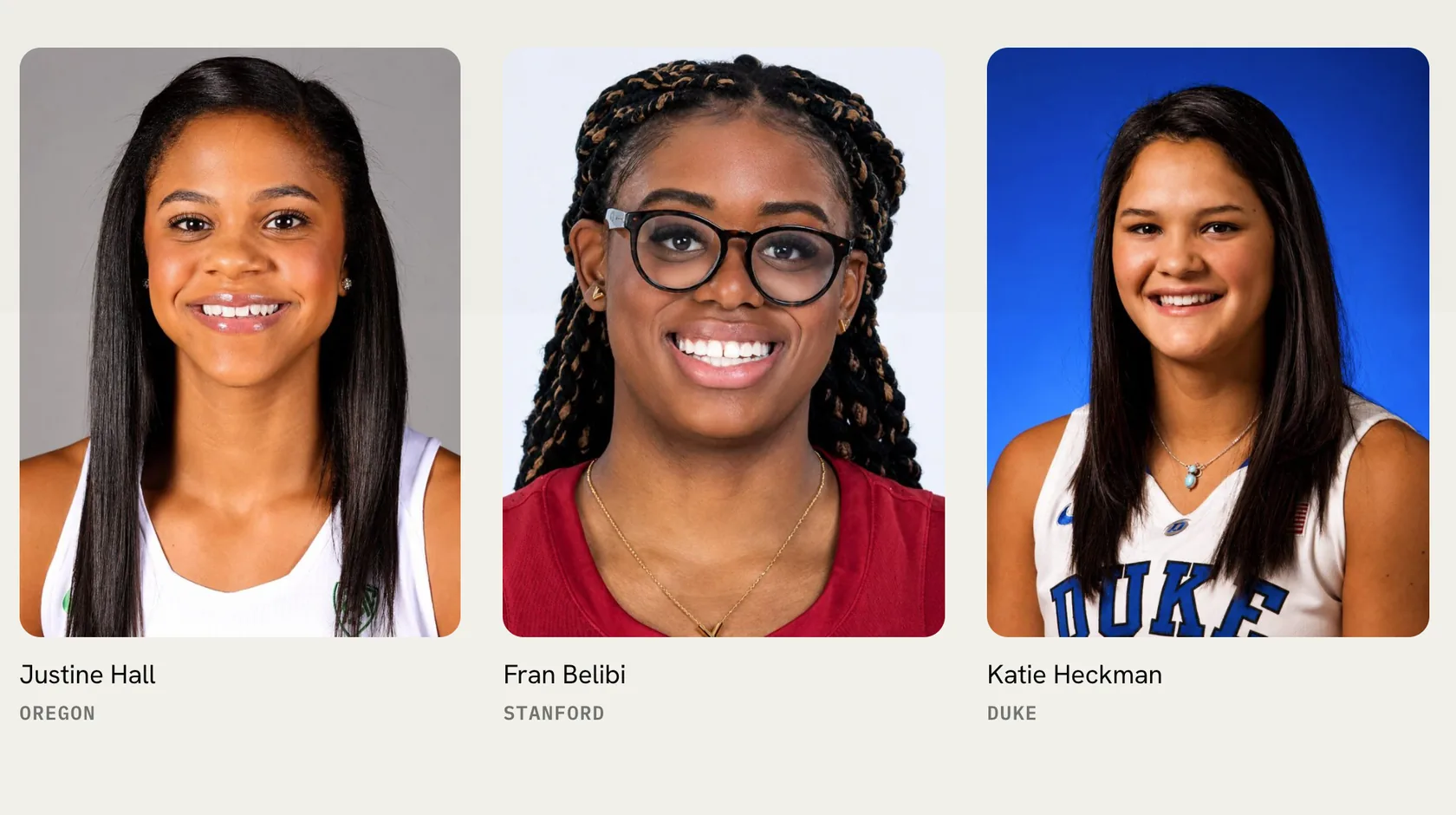
Rather than wait, we built the uncertain parts so either answer would drop straight in. The player grid wraps and stays left aligned, so five, seven or nine players read as a deliberate layout instead of a row that came up short. The legal partner got one fixed slot in the same size and position as the team portraits. Named with a portrait or represented by the firm alone, nothing above or below it moves.
Photos went the same way. We built with grey placeholders and a list of exactly which images were needed, and in which crop: portraits shot the same way, one square photo per player, wide shots for the tops of pages, atmosphere shots and one social share image. Swapping in real photography costs nothing later, so a thin image library never held up the build.
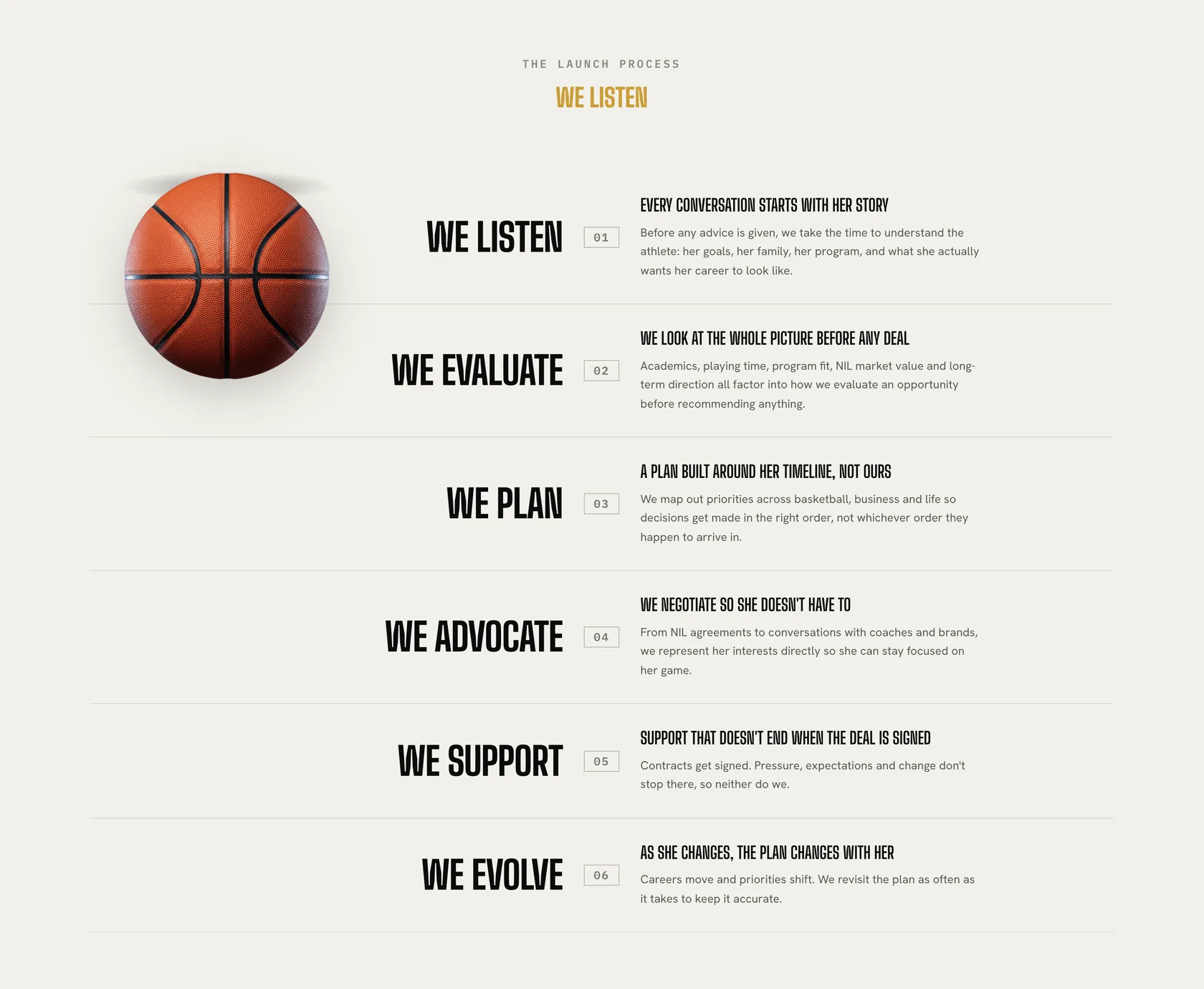
The first HTML version went online on our development server on 24 August. The client’s notes came back within a day and the update followed on 25 August. The Launch Approach became the section title, with four pillars of athlete management underneath. The Whole Athlete graphic moved to the bottom of What We Do, where it stopped repeating those pillars. And Our Players got its own menu link, straight to that part of the homepage.
Player cards can open a YouTube clip. We showed it on one profile first, and in WordPress it became a field per player, next to the photo, name and school. Adding a player is filling in a few fields, not calling a developer.


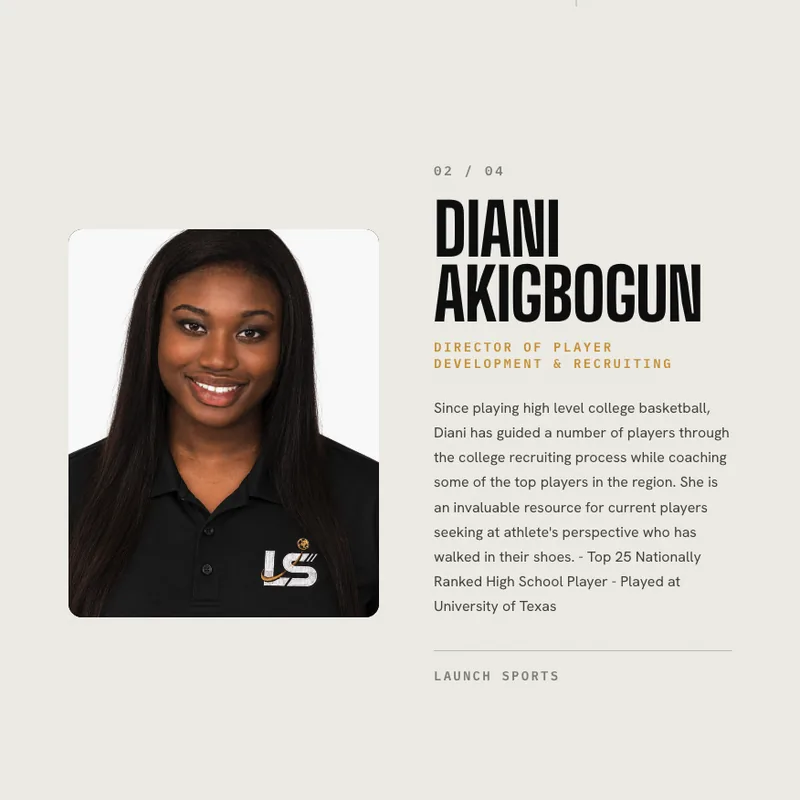

Launch runs on a custom WordPress theme, built from the approved HTML rather than rebuilt in a page builder. The player roster is managed through fields per player, so the part of the site that changes most is also the easiest to change.
The motion is where the design gets its weight. Headings are set in a heavy condensed typeface, so words rise out of their own baseline instead of fading in, and each page gets one loud moment rather than ten polite ones.
The footer effect is also where three.js didn’t make the cut. There is no camera, no geometry and no light in it, and a library of roughly 600 kB to draw one rectangle is a lot of luggage for a short trip.
The calendar, from first email to live site:
Most of the stretch between 9 and 14 September was review time on the client’s side. The site sat ready while it happened, which is the least dramatic way for a deadline to go.
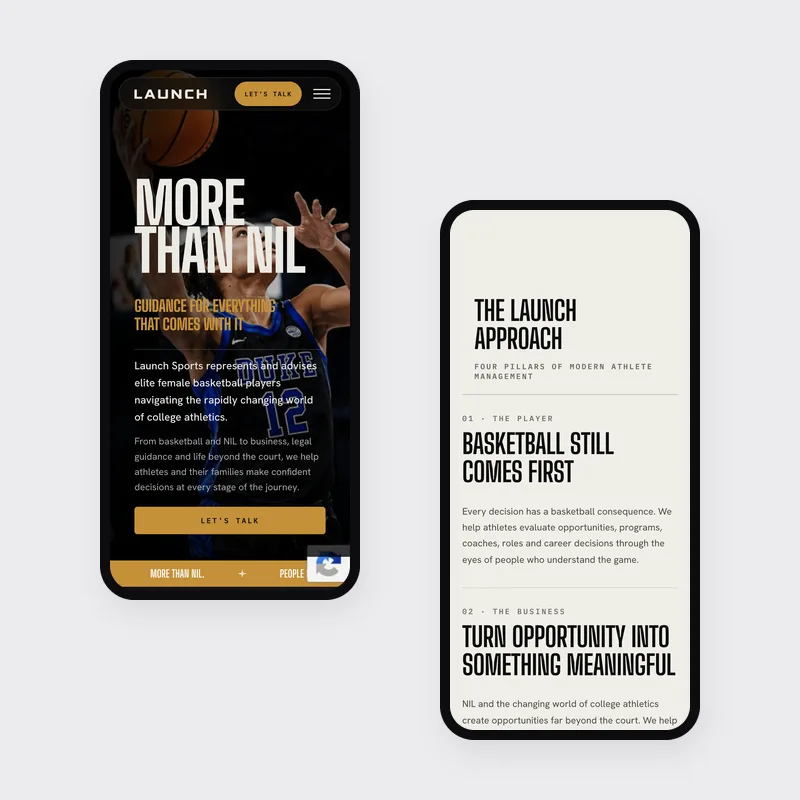
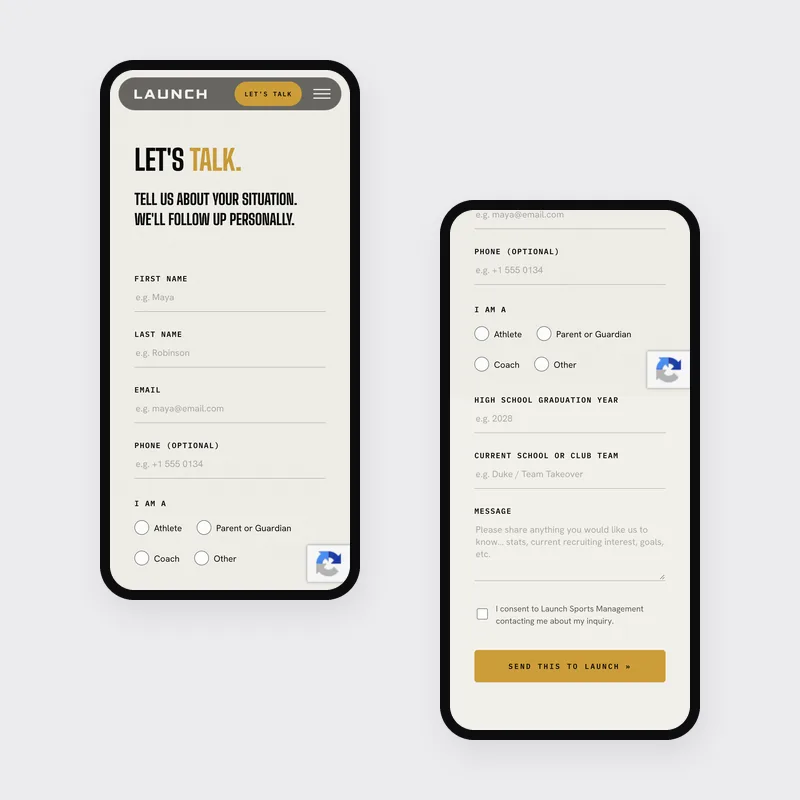
Launch Sports Management went live on 14 September with:
In practice the parts that change most don’t need us. When a new player signs, the team adds her. When a parent writes, the message arrives with the graduation year already in it. What stays with us is the part nobody at a basketball agency wants to think about: updates, backups and the login.
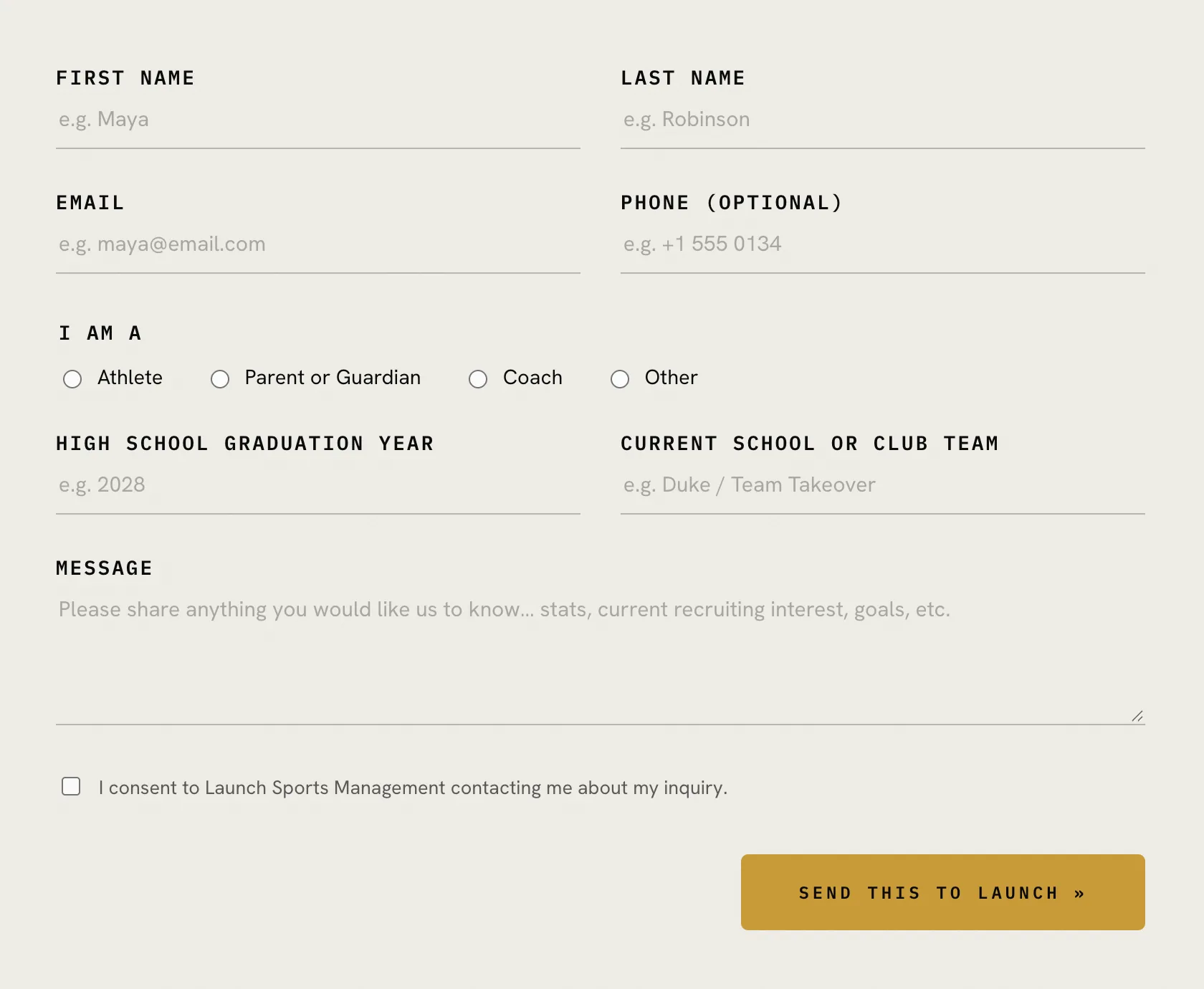
Yes, as long as the copy is roughly there. We build with placeholders and a list of the exact images and crops we need, and swapping in real photography later costs nothing. The logo is the one thing we’d like early, preferably in vector, because the design leans on it.
For Launch it was three weeks of design and development, from copy to a WordPress site ready for review. What usually sets the pace is copy and feedback, so the sooner the text is there, the better a date holds.
Yes. On Launch every player is a set of fields in WordPress: photo, name, school and an optional YouTube link. A new signing doesn’t need a developer.
Yes. Launch is a US agency, and the whole project ran by email, with Figma for the wireframe, across eight hours of time difference.
If you want us to. Launch has technical maintenance with us, the same arrangement the team already had for VIA: updates, security scans and backups on a weekly round. Our website support page explains how that works.
Send both. We’ll tell you what fits before the date, and what it costs before we build it. Start the conversation.








Book a quick 30 min video call, we will show you exactly what to fix. We reply within 24 hours.

