Studio Ubique’s enterprise software development services start with a roadmap workshop that defines goals, identifies risks, and sets the success metrics that matter for the project. Within the first two weeks we typically produce a working proof of concept on the highest-risk component, so the technical approach gets validated before the full build commits to it.
The architecture work covers micro-service blueprints where they pay back, modular monolith where they don’t (small teams shouldn’t pay the operational cost of micro-services), data contracts documented so multiple teams can integrate against the same interfaces, and CI/CD pipelines with feature flags for safe production rollouts. Every commit passes static analysis, unit tests, and integration tests before deployment. Quarterly cost reviews keep cloud spend visible and adjustable.


A small change shouldn’t take three sprints. Most legacy slowdowns come from tightly coupled code, missing automated tests, and manual deployment steps that nobody owns. We refactor into modular services where the modularity pays back, add automated test coverage where the risk justifies it, and rebuild CI/CD so deployments stop being scheduled events. Release cycles typically compress from monthly or quarterly to weekly or daily, depending on how much rework the codebase needs.
Sales runs on Salesforce, operations runs on a custom internal tool, finance runs on Exact or NetSuite, and customer support runs on Zendesk. Every team is working from different data, which is why the monthly reporting meeting feels like four different companies are present. Event streams, unified customer IDs across systems, and centralised data warehouses (Snowflake, BigQuery, Redshift) give every team access to the same truth without ripping out the tools each team actually likes.

Compliance audits go badly when patching is manual, logs are incomplete, and access permissions live in a tribal-knowledge spreadsheet. OWASP-aligned controls in code, automated dependency scanning, regular penetration testing, and zero-trust access control mean the audit becomes a checklist exercise rather than a fire drill. Useful for SOC 2, ISO 27001, NIS2 readiness, and GDPR audits that come up routinely for mid-market companies serving regulated industries.
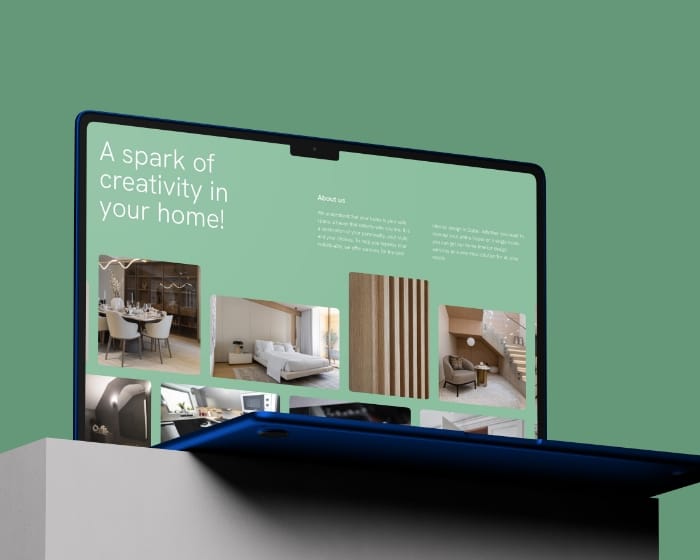
organic traffic grow in 3 months
Custom B2B WordPress website for Pine Tree Lane

average session length, up 61%
Resay: custom web application for smarter workflows
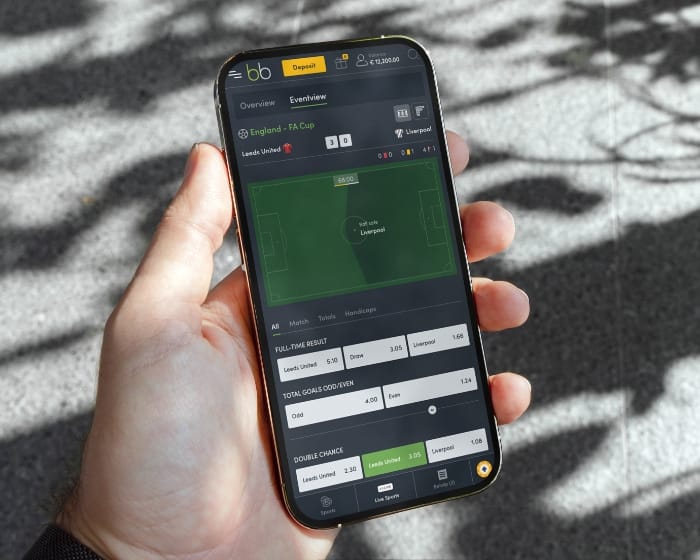
more user actions after redesign
Custom sportsbook platform UX/UI design and development

bounce rate & session duration x3 post-live.
B2B artificial grass eCommerce WordPress UX design and development for AGN

increase in monthly website visits
Book subscription website design and custom development for House of Books
Our enterprise software development company follows a six-step track that keeps risk low and value high.
01
We analyse KPIs, identify stakeholders across business units, audit legacy systems and integration points, and produce a structured project roadmap with measurable success criteria. Output: a clear scope document, an architecture proposal, and a risk register your CTO and CFO can both review.
02
Cloud region selection (typically AWS, Azure, or GCP depending on your existing infrastructure), failover patterns matched to your actual uptime requirement (not the marketing number), data model design that integrates with existing systems, and a documented blueprint your engineering leadership can approve in days rather than weeks. Architecture decisions get documented with rationale, so future changes don’t unravel the original design.
03
Two-week sprint cycles with working software at every demo, burn-down charts that reflect actual progress, and code reviews as standard practice. Scope adjustments happen between sprints, not mid-sprint. Demos happen on the same day every two weeks so your team can plan attendance. This is conventional sprint discipline, applied consistently.
04
Static analysis on every commit, container vulnerability scanning, dependency monitoring for known CVEs, and quarterly red-team exercises on production-equivalent environments. Security work runs inside each sprint, not as a separate phase that gets squeezed when deadlines slip. For regulated industries, we layer in the specific compliance controls your audit requires.
05
Blue-green deployment with automatic rollback if health checks fail, global CDN for static assets, feature flags for controlled feature rollouts, and load testing against the actual traffic patterns we expect. Production deployment becomes a routine event, not a high-risk Friday night affair. Post-launch monitoring active from day one.
06
Monthly infrastructure cost reports with breakdown by service, quarterly capacity reviews against actual usage growth, and roadmap grooming based on real product analytics rather than initial guesses. The platform evolves with your business instead of locking in the original assumptions. Optimisation work is ongoing, not a project phase.
FlevoDirect, University of Twente (UT), VIA Sports Experiences, Sokkies. And a few hundred other companies you might not know, but which have certainly been well served. That, on reflection, is the whole story.







Studio Ubique works with mid-market companies and growth-stage businesses that have outgrown packaged SaaS but don’t need the overhead of Big Four consulting. Manufacturing, financial services, healthcare technology, recruitment platforms, hospitality. Specific case studies and reference clients available under NDA on request.
5.0


“Studio Ubique brought our vision to life with skill, passion, and precision, our website now truly reflects the soul of House of Books.”
5.0

“Studio Ubique revamped our brewery site with stunning UX/UI. Engagement, speed, and mobile retention soared, plus they nailed the brief on time, on budget, and with true creative flair.”
5.0

“Studio Ubique continue to do really excellent work! They are great at taking direction, but also willing to advise when ideas clash with good design. A great team to work with.”
5.0
“Simply outstanding. I am blown away by the not only the design expertise, but also the site functionality. Worth every dollar, and I will be coming back for more business. Do not look further - you found your developer here.”
5.0

“Fastest time ever for a premium website. Willing to make changes, always friendly and helpful - 100% recommend for start-ups and large businesses alike.”
5.0
“Studio Ubique’s flexible, creative approach and seamless collaboration boost our site’s design and impact, truly a trusted digital partner.”
5.0
“Great ideas, smooth communication, and a pleasure to work with, Studio Ubique made building our new website a seamless, collaborative process.”
5.0
“Studio Ubique boosted our site’s speed, security, and UX. With timely delivery, proactive updates, and expert execution, they’ve become a trusted partner in our digital growth.”
The questions that come up most often, answered here. Yours not among them? Just ask, there's a human on the other end.
Hourly rates run €60 to €65 across all engineering and design roles. Enterprise software project totals depend heavily on scope. A focused enterprise tool (single business unit, defined integrations, moderate complexity) sits between €40.000 and €100.000. A multi-team platform (multiple user roles, several ERP and CRM integrations, custom workflows, real-time features) lands between €100.000 and €250.000. A complex enterprise platform (multi-tenancy, regulatory compliance work, multiple integrations, mobile plus web access) starts around €200.000 and can extend significantly higher depending on requirements. Studio Ubique’s mid-market positioning means rates run 30 to 40 percent below equivalent Western European consulting firms (Accenture, Capgemini, Sopra Steria) for comparable scope, while delivering the same architectural discipline and operational standards. Our pricing page covers the broader rate and retainer structure.
Honest answer: Studio Ubique is mid-market with enterprise-grade engineering practices. The right fit profile is companies with 50 to 2.000 employees, revenue between €5 million and €500 million, and software projects in the €40.000 to €500.000 range. Below this size, packaged SaaS plus light integration work usually beats custom builds economically. Above this size, the procurement processes, internal IT governance requirements, and project scale typically favour Big Four consulting firms or large systems integrators (Accenture, Capgemini, Cognizant, Infosys). Where Studio Ubique fits best: mid-market companies that have outgrown SaaS, need custom software discipline (architecture, security, compliance, sprint delivery), and want senior engineers on the work rather than junior consultants billed at senior rates. Our case studies show concrete examples of this profile.
99.9% annual uptime means up to 8 hours and 45 minutes of allowed downtime per year, which is a credible mid-market SLA. The number applies to managed infrastructure where Studio Ubique handles hosting, monitoring, and incident response. Coverage includes platform availability (the application is reachable and functional), database availability, and core API endpoints. Coverage does not include scheduled maintenance windows announced in advance, third-party service outages (if your payment provider goes down, that’s their SLA), or user-side network issues. For applications requiring 99.99% uptime (52 minutes annual downtime), we structure that as a dedicated SLA tier with active-active multi-region failover, 24/7 on-call response, and the infrastructure cost that makes it possible. Most mid-market applications run perfectly well on 99.9% with significantly lower operational cost. Our maintenance and support page covers SLA tier structure.
Integration is typically 30 to 50 percent of total enterprise project effort, more than clients usually expect at initial scoping. Common integration patterns: REST or GraphQL APIs to ERPs (NetSuite, SAP, Microsoft Dynamics, Exact, Odoo), CRMs (Salesforce, HubSpot, Pipedrive, Microsoft Dynamics 365), accounting systems (Exact, Twinfield, QuickBooks, Xero), HR and payroll (AFAS, Nmbrs, Workday), data warehouses (Snowflake, BigQuery, Redshift, Databricks), authentication providers (Microsoft Entra ID, Auth0, Okta, Ping Identity), document management (SharePoint, M-Files, OnBase), and analytics platforms (Tableau, Power BI, Looker). For legacy systems without modern APIs, we build adapters or middleware layers. The integration architecture decision (event-driven versus request-response, sync versus async, point-to-point versus message bus) happens during the architect phase based on data volume, latency requirements, and operational complexity tolerance.
Security and compliance work integrates into every sprint rather than running as a separate phase. Standard practices: OWASP Top 10 controls in application code, automated dependency vulnerability scanning, static code analysis on every commit, regular penetration testing, role-based access control, encrypted data at rest and in transit, comprehensive audit logging, and incident response procedures documented and tested. For specific compliance regimes: GDPR (data minimisation, purpose limitation, right-to-erasure workflows, data processing agreements with all sub-processors), SOC 2 Type II (control documentation, evidence collection, audit trail systems), ISO 27001 (information security management system controls, risk assessments, annual reviews), NIS2 (the EU cybersecurity directive applicable to medium and large entities in critical sectors, with reporting and risk management requirements). We work alongside your existing security team or compliance consultant, not in place of them. Compliance certification itself happens through accredited third-party auditors, not through Studio Ubique. Our general FAQ page covers more on security practices.
Enterprise procurement cycles are typically longer than Studio Ubique’s other client work, with vendor qualification, security questionnaires, background checks, insurance verification, master services agreements, statements of work per phase, and references checks all happening before the first line of code gets written. We handle this routinely. Standard documentation includes: signed mutual NDA before discovery, master services agreement (MSA) governing the engagement, statement of work (SOW) per project phase or per sprint cluster, data processing agreement (DPA) where personal data is involved, professional indemnity and cyber liability insurance certificates, security questionnaire responses (SIG, CAIQ, or custom), and reference contacts under NDA. Payment terms typically Net 30 with monthly invoicing for ongoing work, milestone-based invoicing for fixed-scope phases. Most procurement processes resolve in 4 to 12 weeks depending on your internal cycle.
Three common arrangements. First, managed support: Studio Ubique handles infrastructure, monitoring, incident response, dependency updates, and routine maintenance under a website support package (Care, Growth, or Partnership), with a three-month minimum before the standard one-month notice applies. Suits enterprise software where the build team needs to keep operational knowledge active. Second, development retainer: dedicated engineering capacity for new features, performance work, and roadmap items, typically 4 to 15 days per month, structured as Partnership tier. Suits platforms with ongoing development needs. Third, project-by-project: scoped engagements as new requirements come up, with your internal team or another vendor handling routine maintenance between projects. Suits companies with strong in-house IT teams. Most enterprise engagements end up combining managed support plus a development retainer because the operational and product roadmap concerns are both ongoing. Our maintenance and support page covers the tier structure and pricing.
Contact
Not everyone likes to write. Rather talk to someone first? Book a 30 to 45 minute intro call through Calendly. It's free, and by the end you'll know whether a proposal makes sense.
Book a call(opens in a new tab)Tell us what's stuck, what you want to build, or what needs fixing. We usually reply within 1-2 business days.