Off-the-shelf applicant tracking systems force your team to adapt to their limitations, where buttons live, which fields are mandatory, what counts as a “stage” in the pipeline. A custom applicant tracking system gets built around the hiring funnel you already have, so the software disappears and the hiring work shows up.
A custom ATS connects with payroll tools, HRIS, communication platforms (Slack, Teams), and talent acquisition software through one integration layer, so vacancies post once and updates flow everywhere without copy-paste between three tools.


Legacy applicant tracking system forms make candidates quit after screen three while recruiters copy data by hand. A custom-built applicant tracking system trims clicks to five, auto-parses CVs, and typically lifts completion rates by 20 to 40 percent.
When ATS integration fails, recruiters juggle email, spreadsheets, and chat. A custom ATS links your talent acquisition software to HRIS, payroll, and Slack through one API layer, so a vacancy posts once and updates flow everywhere within a minute.

Off-the-shelf dashboards bury insights and hide bottlenecks. A custom applicant tracking system shows real-time time-to-hire, source quality, and diversity metrics, so you steer the funnel with facts, not guesses.
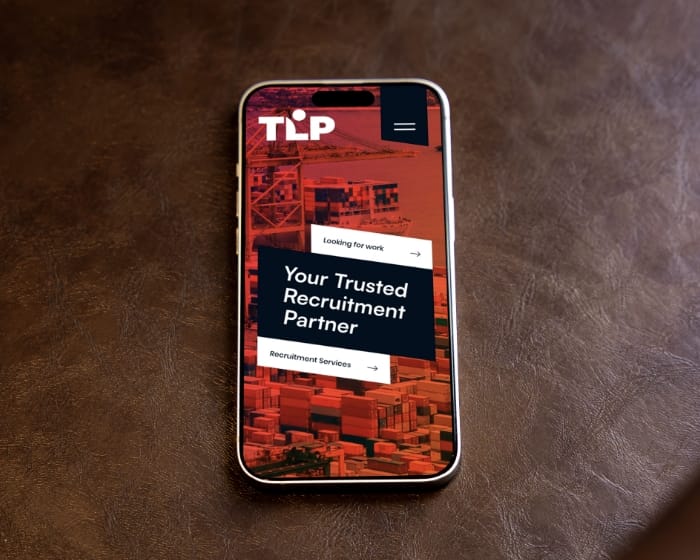
longer time spent on job detail pages
Recruitment website design with ATS integration for staffing agencies
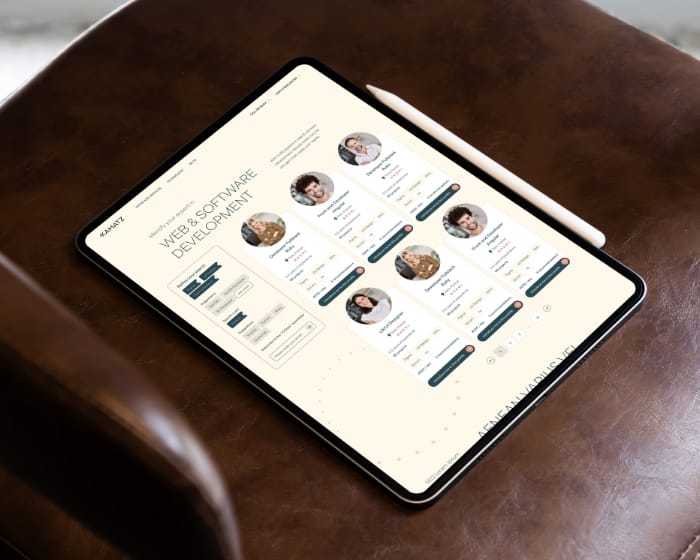
more job applications in first 6 months
Recruitment platform UX/UI design for HR tech companies | Kamatz
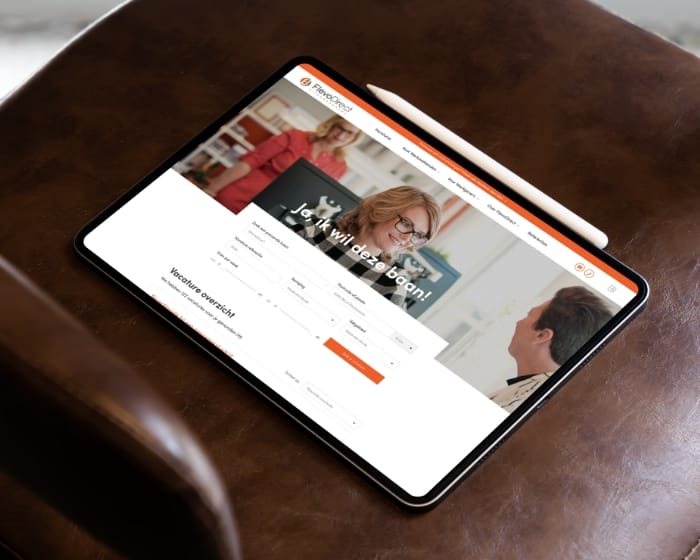
drop in job listing bounce rates
FlevoDirect: recruitment website with ATS integration
We build custom applicant tracking systems by pairing Dutch product strategy with an India sprint crew. Result, custom ATS live in ten to twelve weeks, fully documented, yours to scale.
01
We map your hiring funnel from first click to signed offer. We find where candidates drop, where recruiters bottleneck, and what your KPIs actually measure. Then we sanity-check what off-the-shelf ATS would force you to change, and where custom-built beats the workarounds you already have.
02
We design clickable Figma prototypes and walk through them with actual recruiters and hiring managers, not just decision makers. The flow gets tested with real vacancy data, real candidate scenarios, and real edge cases, before any production code gets written.
03
Microservices, event bus, audit logs, and GDPR-compliant data retention sit at the core of the architecture. Recruiter actions, candidate state changes, and integration events flow through the event bus. Audit logs cover every data change, so GDPR audits stop being a panic. New integrations plug in via the bus without rewriting existing tools.
04
REST and GraphQL endpoints, LinkedIn integration, payroll systems, candidate assessment APIs, plus multi-posting to job boards. Need multi-posting? We connect your ATS to job board aggregators that hit 400+ destinations from one post, plus each integration ships with a retry strategy and audit trail, so silent failures stop hiding in your inbox.
05
Go-live includes hands-on training with the recruiters who will use the system daily, not just admin handover docs. Fortnightly feature sprints run under Care, Growth, or Partnership packages for the first 6 months. New endpoints, additional integrations, and workflow tweaks get scoped per sprint, with concrete deliverables instead of vague consulting hours. The ATS code stays yours, no vendor lock-in, no per-seat licensing once you walk away.
FlevoDirect, University of Twente (UT), VIA Sports Experiences, Sokkies. And a few hundred other companies you might not know, but which have certainly been well served. That, on reflection, is the whole story.








Studio Ubique builds custom applicant tracking systems for HR teams, scale-ups, and staffing agencies. We have shipped recruitment platforms since 2012, from agency career sites to full ATS replacements. Hiring-team feedback gets baked into every sprint.
The questions that come up most often, answered here. Yours not among them? Just ask, there's a human on the other end.
Custom ATS projects are bigger investments than standard recruitment websites. Standard custom applicant tracking system with single-organisation use, 5 to 10 integrations (payroll, HRIS, Slack, LinkedIn, plus job board aggregator), and a clean candidate portal: €30.000 to €60.000. Full build with multi-tenant support (for staffing agencies serving multiple client companies), advanced reporting dashboards, candidate matching algorithms, multilingual interface: €60.000 to €120.000. Enterprise-scale ATS with complex workflows, multiple legal entities, custom permissions matrices, plus migration from existing ATS: €100.000 to €200.000+. Hourly rates €60 to €65 across product strategy, UX, development, integration engineering, and project management. Ongoing post-launch sprints scoped separately under Care, Growth, or Partnership packages. Our pricing page covers the broader rate structure.
Yes, with caveats. The 12-week timeline applies to a standard custom applicant tracking system with one organisation, well-defined hiring stages, 5 to 8 integrations, and a stakeholder team that can give feedback within 48 hours. What typically extends timelines: 3 or more legal entities with different workflows (add 4 to 8 weeks), multi-tenant architecture for staffing agencies (add 6 to 12 weeks), migration from existing ATS with historical candidate data (add 4 to 10 weeks for data audit, mapping, parallel running, cutover), or custom matching algorithms beyond standard filtering (add 4 to 8 weeks). Discovery and KPI mapping takes weeks 1 to 2, wireframes and user testing weeks 3 to 4, architecture and core development weeks 5 to 8, integrations weeks 9 to 10, launch preparation plus training weeks 11 to 12. Full feature backlog rolls into fortnightly sprints after go-live.
Off-the-shelf ATS platforms work well for organisations with standard hiring flows that match the vendor’s assumptions. Custom build makes sense when off-the-shelf forces too many workarounds. Common signals: recruiters maintain shadow spreadsheets because the ATS cannot represent your real workflow, multiple legal entities each need different fields and permissions but the vendor only offers one taxonomy, per-seat licensing costs scale faster than your hiring volume, integration limits mean recruiters spend 20 to 40 percent of their day copy-pasting between tools, reporting cannot answer questions specific to your industry (staffing agency placement margins, scale-up cohort analysis, public sector compliance reporting). Custom build also makes sense when the ATS is a differentiator (HR tech companies building products around recruitment data) or when data sovereignty requirements (defence, healthcare, financial services) rule out third-party SaaS. For organisations without those signals, sticking with Bullhorn or Recruitee plus a strong integration layer is usually cheaper.
Standard migration approach. First, data audit on the existing ATS: what records exist (candidates, applications, notes, attachments, status history), what data quality looks like (duplicates, incomplete fields, abandoned records), what must move versus what gets archived. Second, target data model in the custom ATS: design fields and relationships that fit how your team actually works, not just a copy of the old structure. Third, mapping document covering every field, status, taxonomy term, and edge case. Fourth, automated migration scripts plus manual data cleanup for ambiguous records. Fifth, parallel running period (typically 2 to 4 weeks) where both systems stay live to catch any data gaps. Sixth, cutover with recruiter training on the new system. Seventh, decommission old ATS after a verification period. Migration timelines depend on data volume and source ATS API quality. Bullhorn has thorough export tools but data volumes are typically larger. Recruitee and Teamtailor have cleaner APIs but specific data restrictions. OTYS exports are thorough but require careful field mapping. Migration scope typically €15.000 to €40.000 separate from the ATS build itself, depending on data volume and complexity.
Standard integrations included in most custom ATS builds. LinkedIn job posting via official API (post once, push to LinkedIn jobs). Job board multi-posting via aggregators like Broadbean or Adway (reach 400+ boards from one vacancy). Calendar integration (Google Workspace, Microsoft 365) for interview scheduling. Communication platforms (Slack, Microsoft Teams) for hiring team notifications. Standard candidate assessment tools (HackerRank, Codility for technical roles, TestGorilla for general assessments). Email and SMS notifications via SendGrid, Postmark, or Twilio. Standard payroll integration (Visma, Loket.nl, Nmbrs in the Netherlands, ADP for international). Custom integrations that add to scope. Proprietary HRIS systems (custom mappings, often XML or SOAP). Government job board APIs (varies per country). Industry-specific assessment platforms (clinical assessments for healthcare, security clearance checks for defence). CRM integration for staffing agencies (Salesforce, HubSpot) with bidirectional candidate plus client sync. Each custom integration typically adds €3.000 to €15.000 depending on API quality and data complexity of the partner system.
Standard 30-day post-launch monitoring and bug fixes window after go-live. During this window: daily check of error logs and sync status, weekly review of recruiter feedback and adoption metrics, immediate response to broken integrations during business hours. After 30 days, ongoing work moves into Care, Growth, or Partnership packages or fortnightly sprint contracts. Custom ATS systems need active maintenance: third-party API changes (LinkedIn auth updates, payroll provider field additions, job board aggregator changes) require integration updates, GDPR or local employment law changes can require workflow adjustments, recruiter teams find edge cases that need new features. Most clients with active recruitment operations choose fortnightly sprint contracts (typically 30 to 80 hours per sprint) for the first 12 months, then move to Care or Growth packages once the system stabilises. New major features (multi-tenant rollout, new integrations, mobile recruiter app) get scoped as separate projects outside ongoing support.
Contact
Not everyone likes to write. Rather talk to someone first? Book a 30 to 45 minute intro call through Calendly. It's free, and by the end you'll know whether a proposal makes sense.
Book a call(opens in a new tab)Tell us what's stuck, what you want to build, or what needs fixing. We usually reply within 1-2 business days.