Seen on top review platforms


Most B2B websites look fine in a portfolio screenshot and lose their job when a CFO opens them on a Monday morning. Studio Ubique starts elsewhere: how your buyers actually decide, where in the funnel they get stuck, and which pages quietly cost you pipeline. Case studies live where buyers can find them, forms ask only what your sales team actually uses, and form submissions land in HubSpot, Salesforce or Pipedrive without anyone filing a ticket.
Designers handle typography and motion that fit your market, not your designer’s portfolio. Engineers ship CMS blocks your marketing team can swap before each quarter without waiting on a developer. The point isn’t to win design awards. The point is that fewer prospects bounce, more book a call, and your sales team stops complaining about the website during standup.






B2B copy often hides the actual offering under three layers of consultant-speak. Studio Ubique writes value propositions a buyer can grasp in fifteen seconds: what it does, who it’s for, what changes after they buy. ROI calculators and plain-language case studies fill in the proof for the CFO who eventually sees it.
Asking ten mandatory fields on a first visit is how you turn a serious buyer into a bounce. Studio Ubique builds B2B forms with three required fields on visit one, more on visit three, and pre-fill where possible. The data your SDRs actually use gets captured eventually, just not all in the first interaction.

The best proof on most B2B sites is the case study from three years ago when your team had different clients and different numbers. Studio Ubique builds CMS modules your marketing team can update in minutes: logos, KPIs, screenshots, testimonials, all without a developer ticket. The site stays as current as your pipeline.
A B2B agency should function as a partner your sales team trusts, not an expense your finance team questions every quarter. Here’s how a project runs from kickoff to launch.
01
A one-day workshop maps your ICP, the metrics that actually drive the business (not the vanity ones), and the technical constraints we’ll have to work around. We audit your current site for the traffic that arrives but doesn’t convert, which is usually a lot.
02
Wireflows, content hierarchy, and gated-asset plans. You get a scope, a price, and a timeline you can take to procurement. No moving targets, no surprise integrations that suddenly need their own scope document mid-project.
03
High-fidelity comps, a component library, and motion that fits the brand without distracting from the buying decision. Most design rounds happen with screenshots in your shared Slack or Teams channel, not in week-long approval cycles.
04
Headless or standard WordPress CMS, CRM integrations, performance budgets that don’t get blown on launch day. QA happens automatically with visual diffs across devices, so the screens that ship match the screens that got approved.
05
Blue-green deployment so launch doesn’t break what was already working. SEO schemas, analytics dashboards, and lead routing live before anyone refreshes the homepage. If something goes wrong, the rollback plan takes minutes, not days.
06
Quarterly CRO sprints, A/B tests on the pages that matter, and content updates aligned with what’s actually ranking and converting. Optional service. Some teams handle this in-house after launch, others keep us on a retainer. Either works.
We’ve been building and maintaining digital products long enough to know what breaks, what scales, and what “urgent” actually means.


Clients choose our B2B web design services for on-time launches, transparent scope, and landing pages that print pipeline. Need hard numbers? We share dashboards within 24 hours.
5.0

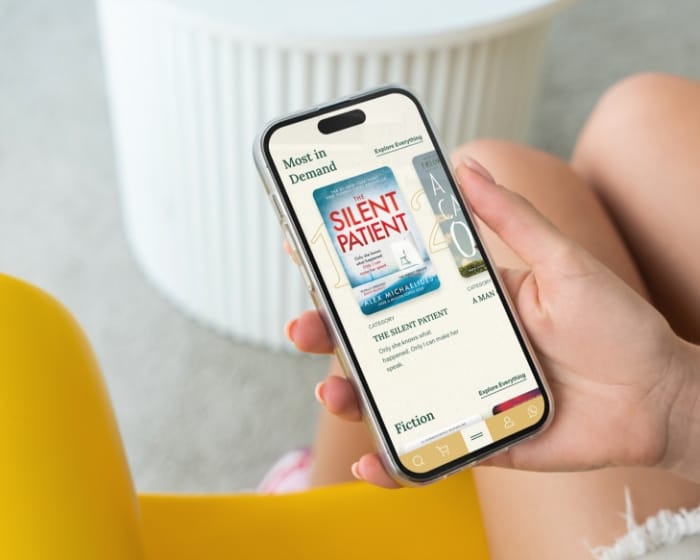
“Studio Ubique brought our vision to life with skill, passion, and precision, our website now truly reflects the soul of House of Books.”
5.0
“Project meets my expectations, good communication with the designer.”
5.0
“Despite our delays and unclear vision, Studio Ubique delivered a flawless site with creativity, patience, and total professionalism.”
5.0
“Studio Ubique continue to do really excellent work! They are great at taking direction, but also willing to advise when ideas clash with good design. A great team to work with.”
5.0
“Studio Ubique earned our trust with their expertise and results. What started as one project grew into a long-term collaboration thanks to their consistent delivery and professionalism.”
5.0
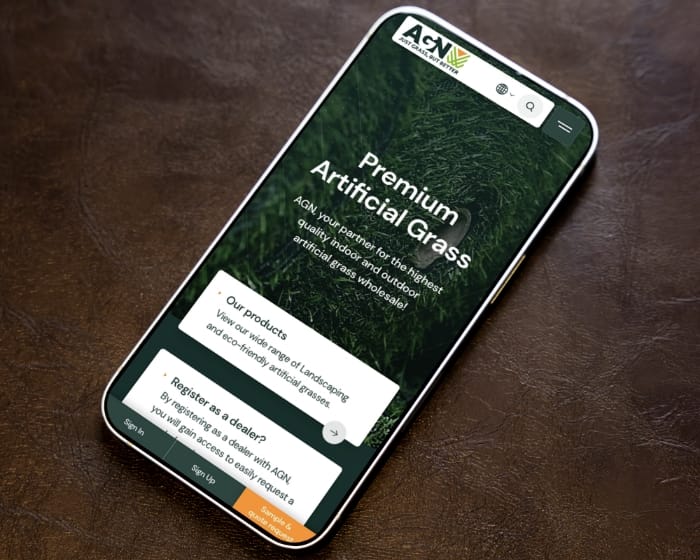
“Studio Ubique understood our vision, responded fast to feedback, and kept the AGN website redesign smooth and efficient. A seamless, goal-driven collaboration from start to finish.”
The questions that come up most often, answered here. Yours not among them? Just ask, there's a human on the other end.
Most B2B web design projects sit between €10.000 and €30.000 for the build. A clean B2B site with one CRM integration, three to five landing pages, and a CMS your marketing team can actually use lives at the lower end. Multilingual builds with ABM landing page systems, advanced lead routing logic, and multiple platform integrations climb higher. Hourly rates run €60 to €65 across all roles, NL and India teams combined. The variable that moves the budget most is integration count: one CRM connection is straightforward, four or five platform integrations (CRM, marketing automation, ABM platform, product analytics, customer data platform) is a different scope. A short intake call with your tech stack and rough goals usually maps to a realistic range within a week.
A typical B2B marketing site with CMS and one CRM integration takes ten to fourteen weeks from kickoff to launch. Adding multilingual support, advanced lead routing, or custom integration logic pushes that to four to six months. Complex B2B builds with multiple platform integrations, ABM segmentation, and bespoke content management requirements run six to eight months. The biggest variable is rarely on our side. B2B projects with one decision-maker and a clear brief move significantly faster than those with four department heads who each want their section reviewed before sign-off. Studio Ubique runs in two-week sprints with weekly demos, so progress is visible from week one rather than as a launch-day surprise.
B2B web design optimises for considered purchases with multiple stakeholders, long sales cycles, and trust-driven decisions. B2C optimises for individual emotional decisions made in seconds. That changes everything downstream. B2B pages need proof bars, case studies surfaced in context, ROI calculators, gated assets for nurture sequences, lead routing logic, and CRM-integrated forms that pass detailed lead data to sales. B2C pages need product clarity, price visibility, fast checkout flows, and immediate trust signals. B2B also deals with longer content (white papers, technical specs, comparison documents) and more complex navigation (industries, use cases, products, integrations as parallel axes). Our B2B case studies show how the structure differs in practice, including Pine Tree Lane’s custom B2B WordPress site and AGN’s B2B turf platform.
HubSpot, Salesforce, Pipedrive, Microsoft Dynamics 365, Zoho CRM, Copper, Close, and most modern B2B CRMs. For marketing automation: HubSpot Marketing Hub, Marketo, Pardot, ActiveCampaign, Mautic, and Klaviyo (where B2B teams use it). Forms pass clean, normalised data into the CRM, not generic blob submissions. Lead routing rules can apply at the form level (vertical, company size, geography, ICP fit) before data reaches sales. UTM parameters, GCLID, and other attribution data carry through to the deal record so marketing knows which content drove which deal, not just which form was filled. For ABM platforms (Demandbase, 6sense, RollWorks), we connect site behaviour signals to account-level scoring where the platform supports it.
B2B lead generation through the site comes down to three things. First, value propositions clear enough that a stranger reading for thirty seconds can tell whether you fit their problem. Second, conversion paths short enough that motivated buyers can request a demo or whitepaper without filling in a marriage application. Third, proof assets surfaced in context so buyers can validate their interest before talking to sales. Studio Ubique builds B2B sites with conversion-focused design from day one: short forms with progressive profiling (one field on visit one, more on visit three), case studies surfaced near related CTAs, industry-specific content tracks for different ICPs, and CTAs that match buyer journey stage. The technical foundation matters equally: GA4 events that fire on submission not click, server-side conversion tracking for Google Ads and LinkedIn, and CRM-attached lead routing so MQLs reach SDRs in minutes. Our digital marketing services cover the campaign and attribution layers that sit on top.
Yes. Roughly a third of Studio Ubique’s B2B work runs internationally: France, Germany, Switzerland, the US and Canada are recurring markets. Multilingual B2B sites are a standard project type rather than an edge case. We build with hreflang correct from day one, language switchers that respect user choice (no auto-redirect based on IP, which infuriates international travelers), locale-specific content (translated body plus adjusted CTAs, pricing displays, case study selection, and trust signals), and CMS structure that lets your team add new languages without architectural rework. The trickiest part is usually translation workflow, which we build to match how your team actually translates: in-house, agency, freelance, or AI-assisted with human review. Studio Ubique works in English and Dutch internally and coordinates with translators in most major European languages for the content itself. Multilingual SEO setup is a separate service that often goes hand in hand with international B2B sites.








Book a quick 30 min video call, we will show you exactly what to fix. We reply within 24 hours.