Jump to
Nov 06, 2026
What is Diwali? Why our team in India is lighting the lamps this week
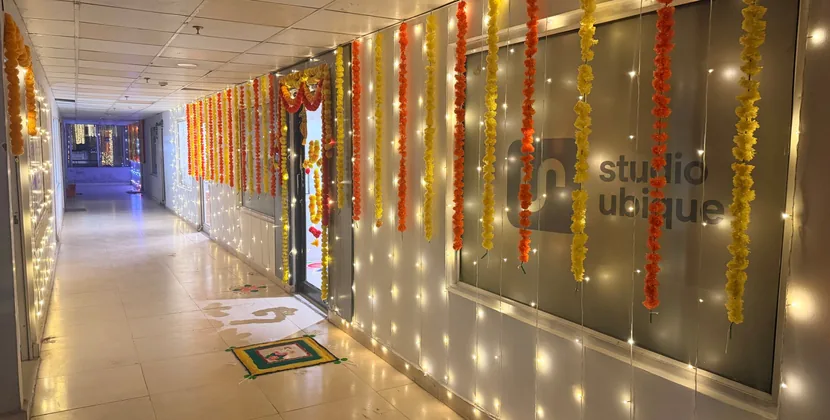
Diwali is one of the biggest festivals in India: five days of oil lamps, family visits, sweets and fireworks, building up to one evening when every home makes as much light as it can. At Studio Ubique we notice it every autumn in the planning, because our team in Chandigarh celebrates it. Studio Ubique is a web design and SEO agency from Zwolle in the Netherlands, active since 2012, with one team in two places, Zwolle and Chandigarh, building custom websites, webshops and applications.
Cleaning the house, giving presents, setting off fireworks and having the whole family over. Sounds familiar, except India fits it into one week.
Update 6 November 2026: how to reach us during Diwali
On Friday 6 and Monday 9 November our team in India is off for Diwali. Regular work waits for those two days, which is also why there’s no new post today or Monday, apart from this one. Anything urgent gets picked up as fast as usual. Our colleagues will step out of the celebrations for it.
- Email [email protected]
- Call +31 85 0607 436 and Bella, our AI receptionist, will pick up
- Chat with Bella using the button in the bottom right corner of the site
If you have website support with us, nothing changes for you.
What Diwali actually is
Diwali, in full Deepavali, literally means a row of lamps. It’s a festival for Hindus, Sikhs and Jains, and the core is the same for all of them: light pushing back the dark, good winning over evil.
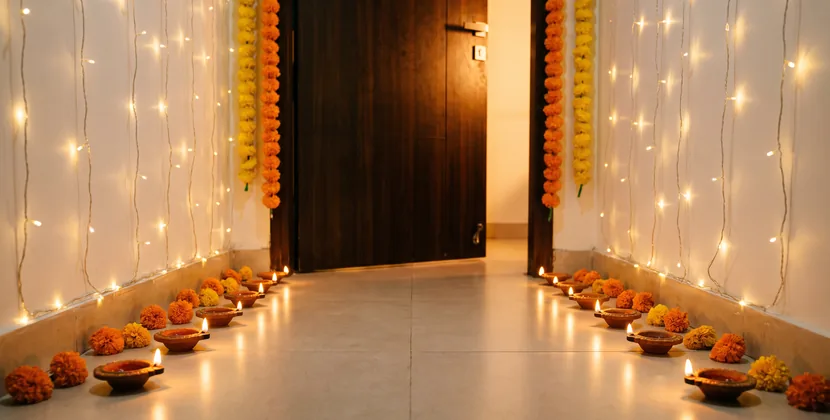
The best-known story is about Prince Rama. After fourteen years in exile and a won battle against the demon king Ravana, he returns to his city of Ayodhya, and the people line the road with oil lamps to welcome him home. Those lamps, diyas, are small clay bowls with oil and a cotton wick. Around Diwali you see them everywhere: on windowsills, balconies, stairs and rooftops.
Sikhs celebrate Bandi Chhor Divas on the same day, marking the release of Guru Hargobind from imprisonment. Jains remember the moment Mahavira reached nirvana. Chandigarh is the capital of both Punjab and Haryana, so there those celebrations simply run into each other.
Diwali has no fixed date. It follows the Hindu lunar calendar and falls in October or November, on the night of the new moon. In 2026 the main day is Sunday 8 November.
Five days, each with its own purpose
This year Diwali starts on Friday 6 November with Dhanteras, the day people buy gold, silver or new kitchenware. A new purchase on that day brings luck, and the shops know it. Saturday is Choti Diwali, little Diwali: the house gets a thorough clean and the first lamps go on.
Sunday is the big evening, Lakshmi Puja. Families pray to Lakshmi, the goddess of prosperity, and to Ganesha. The house is full of light and there’s a rangoli by the entrance, a pattern of coloured powder or petals, so Lakshmi can find her way in. Then there’s dinner, presents, and the fireworks go up.
Monday is Govardhan Puja, a day of gratitude that many places celebrate with Annakut, literally a mountain of food. On Tuesday, Bhai Dooj closes the week, a day for brothers and sisters.
That our colleagues are off on Friday and Monday fits right in. Saturday and Sunday are the weekend, and the main evening is Sunday.
There’s no single Western holiday that matches it. You get closest if you squeeze Christmas, New Year’s Eve and Thanksgiving into one week.
Christmas is the best first comparison. It has religious roots but is also celebrated by plenty of people who don’t do much with those. Everyone goes home to family, there are presents, there are lights everywhere and the table is too full. And just like the last week of December in the West, work in India quietly empties out.
New Year’s Eve is in the fireworks and in the feeling of a clean slate. With Diwali that second part is fairly literal. In Gujarat and Rajasthan, traders traditionally open a new account book on the evening of Lakshmi Puja, a ritual called Chopda Pujan, and that’s where the new business year starts. We open a new financial year in our accounting software on 1 January, without incense. On fireworks, our two countries went separate ways this year: in the Netherlands, consumers haven’t been allowed to set off their own fireworks since 1 August 2026, while in India they’re part of Diwali.
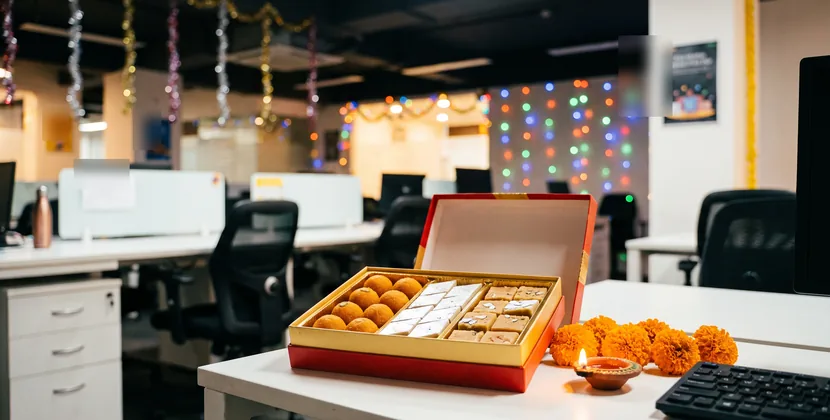
Thanksgiving is in the food and the gratitude. Boxes of mithai, Indian sweets like laddoo and barfi, go round to family and neighbours, and Govardhan Puja is a whole day built around thankfulness and far too much to eat.
The Dutch have one more comparison that falls in the same week. On 11 November, Sint-Maarten, children walk door to door with lanterns and get sweets in return. Light on a dark autumn evening, and treats at the door.
Then there’s the big clean. In the Netherlands that’s a spring ritual. In India it happens right before Diwali, because Lakshmi walks into a clean house and skips a messy one. We’ve never come up with a better reason to clear out the attic.
Only Bhai Dooj, the day for brothers and sisters, has no Dutch equivalent at all. You could fairly call that a gap.
Diwali is closer to home for us than you might expect. In Suriname, the former Dutch colony in South America, the festival is called Divali and it’s a national holiday. Many Hindustani Dutch people with Surinamese roots celebrate it in the Netherlands too, at home and in the mandirs, the Hindu temples. In past years The Hague and Rotterdam have hosted large celebrations in theatres and cultural centres.
So if you walk through a neighbourhood in The Hague in November and see lights on the windowsills that aren’t Christmas lights, you’re looking at Divali.
What Diwali means for a team in two countries
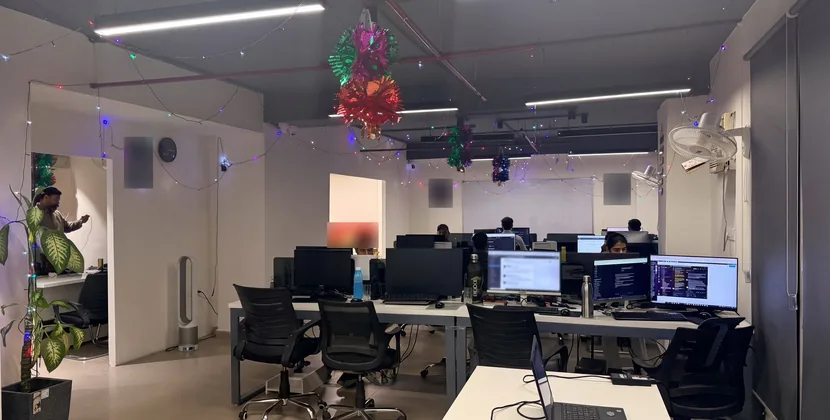
Studio Ubique is one team in two places. The team in Chandigarh has worked with us since 2015 and, depending on the projects, is fifteen to twenty people. They build, test and maintain a large part of what we deliver. A team in two countries also has two holiday calendars. In December the Dutch disappear for a few days behind the oliebollen, the doughnuts we eat at New Year. In November it’s our colleagues in Chandigarh, behind the diyas.
There’s nothing wrong with that. Behind every ticket and every pull request are people, and this weekend those people are at the table with their families, putting lamps on the balcony and probably eating too much laddoo. We think that’s a fine reason to let regular work wait for two days.
What doesn’t wait is what can’t wait. If something urgent comes up, someone steps in, even in the middle of Diwali. That’s not heroics, that’s how a team works.
Diwali, also called Deepavali or Divali, is the five-day Festival of Lights celebrated by Hindus, Sikhs and Jains, with Lakshmi Puja as the main evening. In 2026 the main day falls on Sunday 8 November. Studio Ubique, a web design and SEO agency with one team in Zwolle and Chandigarh, compares Diwali to Christmas, New Year’s Eve and Thanksgiving in one week.
FAQs
When is Diwali?
Diwali follows the Hindu lunar calendar and falls in October or November each year, on the night of the new moon; in 2026 the main day is Sunday 8 November and in 2027 it’s Friday 29 October.
Is Diwali the same as Deepavali and Divali?
Yes, Deepavali is the original name, still widely used in South India, and Divali is the spelling used in Suriname and by many Hindustani Dutch people.
Who celebrates Diwali?
Diwali is celebrated by Hindus, Sikhs and Jains, with Sikhs marking Bandi Chhor Divas on the same day and Jains remembering Mahavira reaching nirvana.
What is Diwali similar to?
Christmas, New Year’s Eve and Thanksgiving rolled into one: family and presents like Christmas, fireworks and a fresh start like New Year’s Eve, and sweets and gratitude like Thanksgiving.
How do you wish someone a happy Diwali?
“Happy Diwali” always works, and if you want to be more traditional, say “Shubh Deepavali”.
Lamps on the windowsill
If you see a box of sweets on a colleague’s, supplier’s or neighbour’s desk in October or November, or lamps on a windowsill that aren’t Christmas lights, you now know what’s going on. Happy Diwali always works. A box of stroopwafels in return does too.